Empirical Conquests, Legal Reforms, and European Hegemony
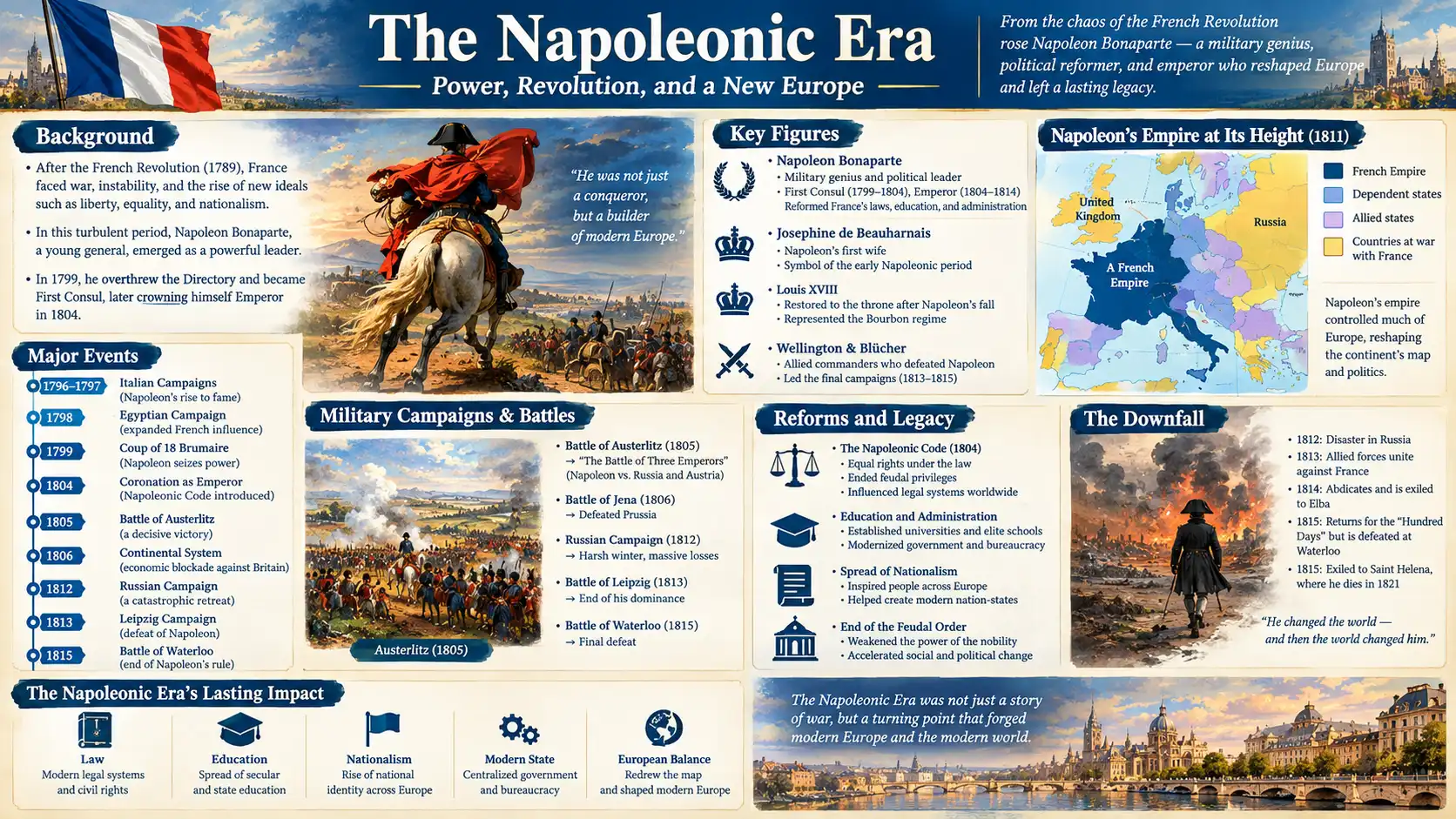
Napoleon Bonaparte
A military officer and politician who rose to prominence during the French Revolution, he established the Consulate and became First Consul following the Coup of 18 Brumaire in 1799. In 1804, he was crowned as Napoleon I, Emperor of the French, and conducted large-scale military campaigns across Europe. Securing major victories such as the Battle of Austerlitz, he temporarily brought a vast expanse of the European continent under French influence. However, following the failure of the Russian campaign and the counteroffensive by the Sixth Coalition, he abdicated in 1814. Although he returned from the Isle of Elba to establish the Hundred Days, he was defeated at the Battle of Waterloo in 1815 and exiled to the island of Saint Helena. Through reforms such as the Napoleonic Code, administrative systems, and educational systems, he exerted a long-lasting influence not only on France but also on European legal, political, and social institutions.
Timeline
| Category | |
|---|---|
| Element |
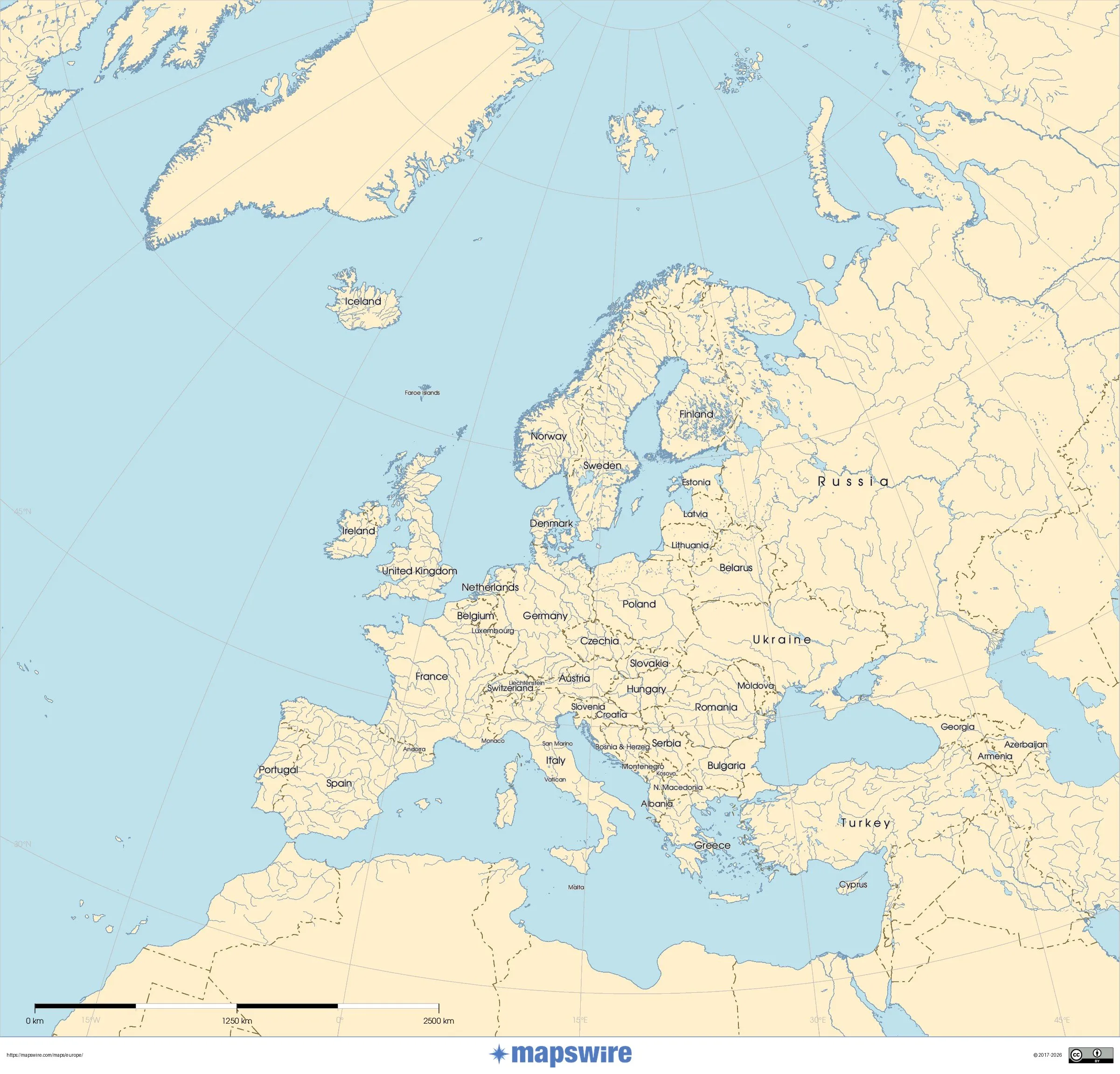
Map
| Category | |
|---|---|
| Element |
Europe
World

Comments