Music in the Era of Revolution
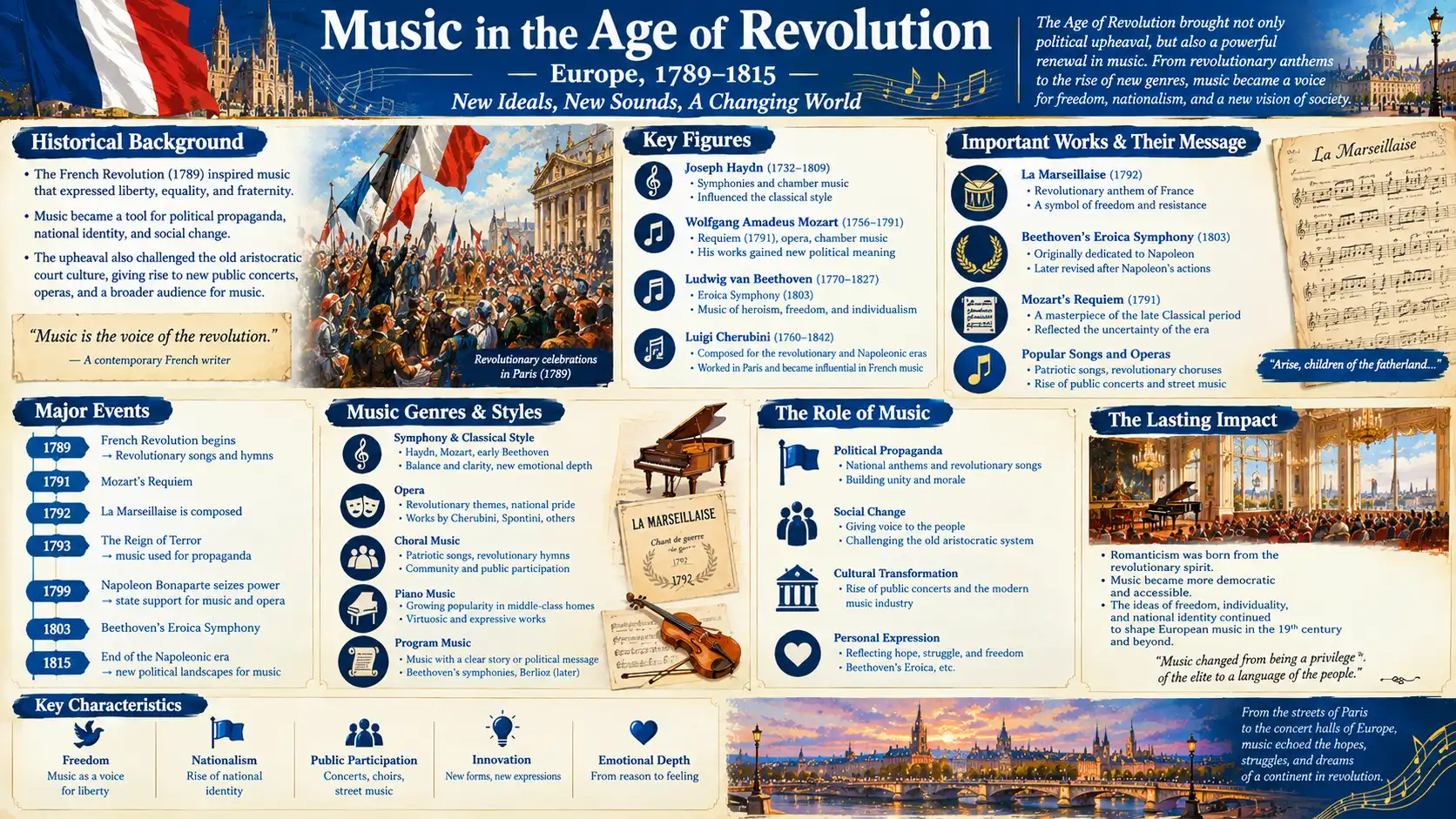
Music
During the Era of Revolution, European music underwent a profound transformation, shifting from the refined balance of the Classical tradition to the passionate emotional expression of Romanticism. Swept up by the ideals of the French Revolution, nationalism, and individual liberty, composers began using music as a medium for dramatic storytelling, political ideas, and intense personal feelings. Orchestra sizes expanded dramatically, instrumental techniques reached new heights, and novel genres like the symphonic poem emerged. Classical forms were stretched to their limits, laying the groundwork for modern musical expression.
People
Birth
Death
Origin
Age (Death)
| 1770 | |
|---|---|
| 1797 | |
| 1803 | |
| 1810 | |
| 1811 | |
| 1813 | |
| 1818 | |
| 1833 |
Timeline
| Category | |
|---|---|
| Element |
| Year | Music |
|---|---|
| 1770 |
Music Education from Early Childhood (Ludwig van Beethoven, Period: 1770s–1780s, Location: Bonn)
Birth of Ludwig van Beethoven (Period: Around December 16, 1770 (Baptized on December 17, 1770. Since there is no record of his exact date of birth, December 16 is generally estimated), Location: Bonn (present-day North Rhine-Westphalia, Germany))
|
| 1784 |
Commencement of Activity as Court Musician (Ludwig van Beethoven)
|
| 1787 |
First Visit to Vienna (Ludwig van Beethoven)
|
| 1792 |
War of the First Coalition
Permanent Relocation to Vienna (Ludwig van Beethoven)
|
| 1794 |
French Occupation of the Rhineland
|
| 1795 |
Establishment of Reputation as Pianist (Ludwig van Beethoven)
Success of Vienna Public Concert (Ludwig van Beethoven)
|
| 1796 |
Beethoven's Progressing Hearing Loss
|
| 1797 |
Birth of Franz Schubert (Period: January 31, 1797, Location: Vienna, Austria (present-day Himmelpfortgrund, Alsergrund district))
|
| 1798 |
War of the Second Coalition
|
| 1800 |
Premiere of Symphony No. 1
|
| 1802 |
Heiligenstadt Testament
|
| 1803 |
Napoleonic Wars
Composition of "Eroica" Symphony No. 3
Birth of Hector Berlioz (Period: December 11, 1803, Location: La Côte-Saint-André, France)
|
| 1805 |
War of the Third Coalition
Premiere of Opera "Fidelio"
|
| 1806 |
War of the Fourth Coalition
|
| 1808 |
Enrollment in Stadtkonvikt (Franz Schubert)
Premiere of Fifth and Sixth Symphonies
|
| 1809 |
War of the Fifth Coalition
Completion and Premiere of "Emperor" Concerto
1809 French Occupation of Vienna
|
| 1810 |
Formation of Schubertiades (Franz Schubert)
Birth of Frédéric Chopin (Period: March 1, 1810 (Baptismal and birth records also state February 22, 1810), Location: Żelazowa Wola, Poland (present-day near Sochaczew, Sochaczew County))
Relocation to Warsaw (Fryderyk Chopin, Period: c. October 1810, Location: Warsaw, Poland)
|
| 1811 |
Birth of Franz Liszt (Period: October 22, 1811, Location: Raiding, Austria (Doborján, Kingdom of Hungary at the time of his birth))
|
| 1812 |
"Immortal Beloved" Letter
Studies under Antonio Salieri (Franz Schubert)
Death of Mother Maria Magdalena (Franz Schubert)
|
| 1813 |
Birth of Wilhelm Richard Wagner (Period: May 22, 1813, Location: Leipzig, Germany)
Death of Father Carl Friedrich Wagner (Period: c. November 23, 1813, Location: Leipzig, Germany)
Success of "Wellington's Victory"
|
| 1814 |
Congress of Vienna
Teaching Career at Father's School (Franz Schubert)
Marriage (Franz Schubert, Therese Grob)
|
| 1815 |
Composition of "Erlkönig"
|
| 1816 |
Departure from Teaching at Father's School (Franz Schubert)
Studies under First Piano Teacher Wojciech Żywny (Fryderyk Chopin)
|
| 1818 |
Birth of Charles Gounod (Period: June 17, 1818, Location: Paris, France)
|
| 1821 |
Career Change from Medicine to Music (Hector Berlioz)
|
| 1822 |
Childhood Success as Prodigy in Vienna (Franz Liszt)
Studies under Carl Czerny (Franz Liszt)
|
| 1823 |
Composition of "Die schöne Müllerin"
Relocation to Paris (Franz Liszt)
Commencement of Musical Activities in Paris (Franz Liszt)
|
| 1824 |
Creation of Late String Quartets
Musical education in childhood (Johannes Brahms)
Premiere of Symphony No. 9 "Choral"
|
| 1826 |
Enrollment in Paris Conservatoire (Hector Berlioz)
Music Education at Warsaw Conservatory (Fryderyk Chopin)
|
| 1827 |
Composition of "Winterreise"
Meeting with Harriet Smithson (Hector Berlioz)
Death of Ludwig van Beethoven
Attendance at Beethoven's Funeral (Franz Schubert)
Death of Father Adam Liszt (Franz Liszt)
|
| 1828 |
Creation of Works in Final Years (Franz Schubert)
Public Concert of Own Works (Franz Schubert)
Death of Franz Schubert
Death and Burial Near Beethoven (Franz Schubert)
|
| 1829 |
Concert Activities in Vienna (Fryderyk Chopin)
Encounter with Wilhelmine Schröder-Devrient (Wilhelm Richard Wagner)
|
| 1830 |
Political and Military Tensions in France During July Monarchy
Winning Prix de Rome (Hector Berlioz)
Activities as Music Critic (Hector Berlioz)
Development of Works Themed on Poland (Fryderyk Chopin)
European Concert Tours and Establishment as Virtuoso (Franz Liszt)
July Revolution
Polish–Russian War
Departure from Warsaw and Farewell to Homeland (Fryderyk Chopin)
Outbreak of Warsaw Uprising and November Uprising
Premiere of "Symphonie fantastique"
|
| 1831 |
Cancellation of Engagement to Marie Moke and Revenge Plan (Hector Berlioz)
Studies in Italy (Hector Berlioz)
Studies at Leipzig University (Gottfried Wilhelm Leibniz)
Fall of Warsaw
Settling in Paris (Fryderyk Chopin)
|
| 1832 |
Commencement of Activities as Composer and Piano Teacher in Paris (Fryderyk Chopin)
Encounter with Paganini's Performance (Franz Liszt)
|
| 1833 |
Birth of Johannes Brahms (Period: May 7, 1833, Location: Hamburg, Germany)
Marriage (Hector Berlioz, Harriet Constance Smithson)
Praise from Niccolò Paganini (Hector Berlioz)
|
| 1835 |
Breakdown of Engagement with Maria Wodzińska (Fryderyk Chopin)
Travels Leading to "Années de pèlerinage" (Franz Liszt)
Marriage (Franz Liszt, Married Countess Marie d'Agoult)
|
| 1836 |
Beginning of Relationship with George Sand (Fryderyk Chopin)
Engagement to Maria Wodzińska (Fryderyk Chopin)
Bankruptcy of Magdeburg Theatre
Enrollment in Paris Conservatoire (Charles Gounod)
Marriage (Wilhelm Richard Wagner, Minna Planer)
|
| 1837 |
Premiere of "Requiem"
|
| 1838 |
Life Together with George Sand (Fryderyk Chopin)
Completion of "Rienzi" and Activities in Paris (Wilhelm Richard Wagner)
Illness in Majorca (Fryderyk Chopin)
|
| 1839 |
Support for Erection of Beethoven Monument (Franz Liszt)
Flight from Riga (Wilhelm Richard Wagner)
Winning Prix de Rome (Charles Gounod)
Studies in Italy and Encounter with Palestrina's Music (Charles Gounod)
Studies in Rome (Charles Gounod)
Premiere of "Roméo et Juliette"
|
| 1840 |
Separation from Harriet Smithson (Hector Berlioz)
Period Seeking Priesthood (Charles Gounod)
|
| 1841 |
Composition of "Les nuits d'été"
|
| 1842 |
Premiere of "Rienzi"
|
| 1843 |
Activities as Organist and Choir Director (Charles Gounod)
Performance of "Der fliegende Holländer"
|
| 1844 |
Publication of "Treatise on Instrumentation"
Separation from Marie d'Agoult (Franz Liszt)
|
| 1845 |
Premiere of "Tannhäuser"
|
| 1846 |
Premiere of "La damnation de Faust"
|
| 1847 |
Separation from George Sand (Fryderyk Chopin)
Beginning of Relationship with Carolyne zu Sayn-Wittgenstein (Franz Liszt)
Retirement from Virtuoso Activities (Franz Liszt)
Marriage (Franz Liszt, Married Princess Carolyne zu Sayn-Wittgenstein)
|
| 1848 |
Hungarian Revolution and War of Independence of 1848
Activities as Weimar Court Kapellmeister (Franz Liszt)
Completion of "Lohengrin"
Activities Toward Completion of "Der Ring des Nibelungen"
First Schleswig War
Final Public Concert in Paris (Fryderyk Chopin)
Concert Tour of England and Scotland (Fryderyk Chopin)
Final Concert Tour to England and Scotland (Fryderyk Chopin)
|
| 1849 |
Worsening Illness in Final Years and Death (Fryderyk Chopin)
Exile from Germany (Wilhelm Richard Wagner)
Writing of Essays on Art like "Art and Revolution" and "The Artwork of the Future"
Participation in Dresden May Uprising (Wilhelm Richard Wagner)
Death of Frédéric Chopin
Burial at Père Lachaise Cemetery (Fryderyk Chopin)
|
| 1850 |
Establishment of Symphonic Poem
Encounter with Eduard Reményi (Johannes Brahms)
|
| 1852 |
Conductor of Orphéon de la Ville de Paris (Charles Gounod)
Creation of "Ave Maria"
Marriage (Charles Gounod, Anna Zimmermann)
|
| 1853 |
Encounter with Joseph Joachim (Johannes Brahms)
Concert Tour with Eduard Reményi (Johannes Brahms)
Encounter with Robert Schumann (Johannes Brahms)
Schumann's Review "Neue Bahnen"
|
| 1854 |
Mental Illness and Death of Robert Schumann
Close Relationship with Clara Schumann (Johannes Brahms)
Marriage (Johannes Brahms, Clara Schumann)
Death of Harriet Smithson (Hector Berlioz)
Marriage (Hector Berlioz, Marie Recio)
Success of "L'enfance du Christ"
|
| 1856 |
Completion of "Les Troyens"
|
| 1857 |
Composition of "Tristan und Isolde"
Activities at Detmold Court (Johannes Brahms)
|
| 1858 |
Election to Institut de France (Hector Berlioz)
|
| 1859 |
Establishment of International Fame Through "Faust" (Charles Gounod)
Premiere and Success of "Faust"
Death of Son Daniel Liszt (Franz Liszt)
|
| 1860 |
Cancellation of Marriage Plan with Carolyne (Franz Liszt)
Wars of German Unification and Franco-Prussian War
|
| 1861 |
Retirement from Weimar (Franz Liszt)
|
| 1862 |
Settling in Vienna (Johannes Brahms)
Premiere of "Béatrice et Bénédict"
|
| 1863 |
Partial Premiere of "Les Troyens"
|
| 1864 |
Encounter with King Ludwig II of Bavaria
|
| 1865 |
Completion of "A German Requiem"
Ordination to Minor Orders in Rome (Franz Liszt)
Premiere of "Tristan und Isolde"
|
| 1866 |
Member of Académie des Beaux-Arts (Charles Gounod)
Death of Minna Wagner
|
| 1867 |
Final Russian Concert Tour (Hector Berlioz)
Success of "Roméo et Juliette" (Charles Gounod)
|
| 1868 |
Premiere of "A German Requiem"
|
| 1869 |
Publication of "Hungarian Dances"
Death of Hector Berlioz
|
| 1870 |
Involvement with Budapest Academy of Music (Franz Liszt)
Evacuation to England Due to Franco-Prussian War
Stay in London and Choral Activities (Charles Gounod)
Marriage (Wilhelm Richard Wagner, Cosima von Bülow)
|
| 1871 |
Construction of Bayreuth Festspielhaus
Relationship and Breakup with Georgina Weldon (Charles Gounod)
|
| 1874 |
Return to France (Charles Gounod)
|
| 1876 |
First Bayreuth Festival and Complete Premiere of "Der Ring des Nibelungen"
|
| 1877 |
Completion of Symphony No. 2
|
| 1879 |
Premiere of Violin Concerto
|
| 1880 |
Return to Sacred Music in Final Years
|
| 1882 |
Completion of "Parsifal"
Premiere of "Parsifal"
|
| 1883 |
Completion and Premiere of Symphony No. 3
Death of Wilhelm Richard Wagner
|
| 1884 |
Completion and Premiere of Symphony No. 4
|
| 1886 |
Participation in Bayreuth Festival (Franz Liszt)
Death of Franz Liszt
|
| 1893 |
Death of Charles Gounod
|
| 1896 |
Death of Clara Schumann and Final Works (Johannes Brahms)
Death of Clara Schumann
|
| 1897 |
Death of Johannes Brahms
|
| Unknown |
Marriage (Ludwig van Beethoven, None, Period: Lifelong unmarried, Location: N/A)
Marriage (Franz Schubert, None, Period: Lifelong unmarried, Location: None)
Marriage (Johannes Brahms, None, Period: Lifelong unmarried, Location: None)
Marriage (Franz Liszt, None, Period: No Formal Marriage Throughout Life, Location: None)
Marriage (Fryderyk Chopin, None, Period: Unmarried Throughout Life, Location: None)
|
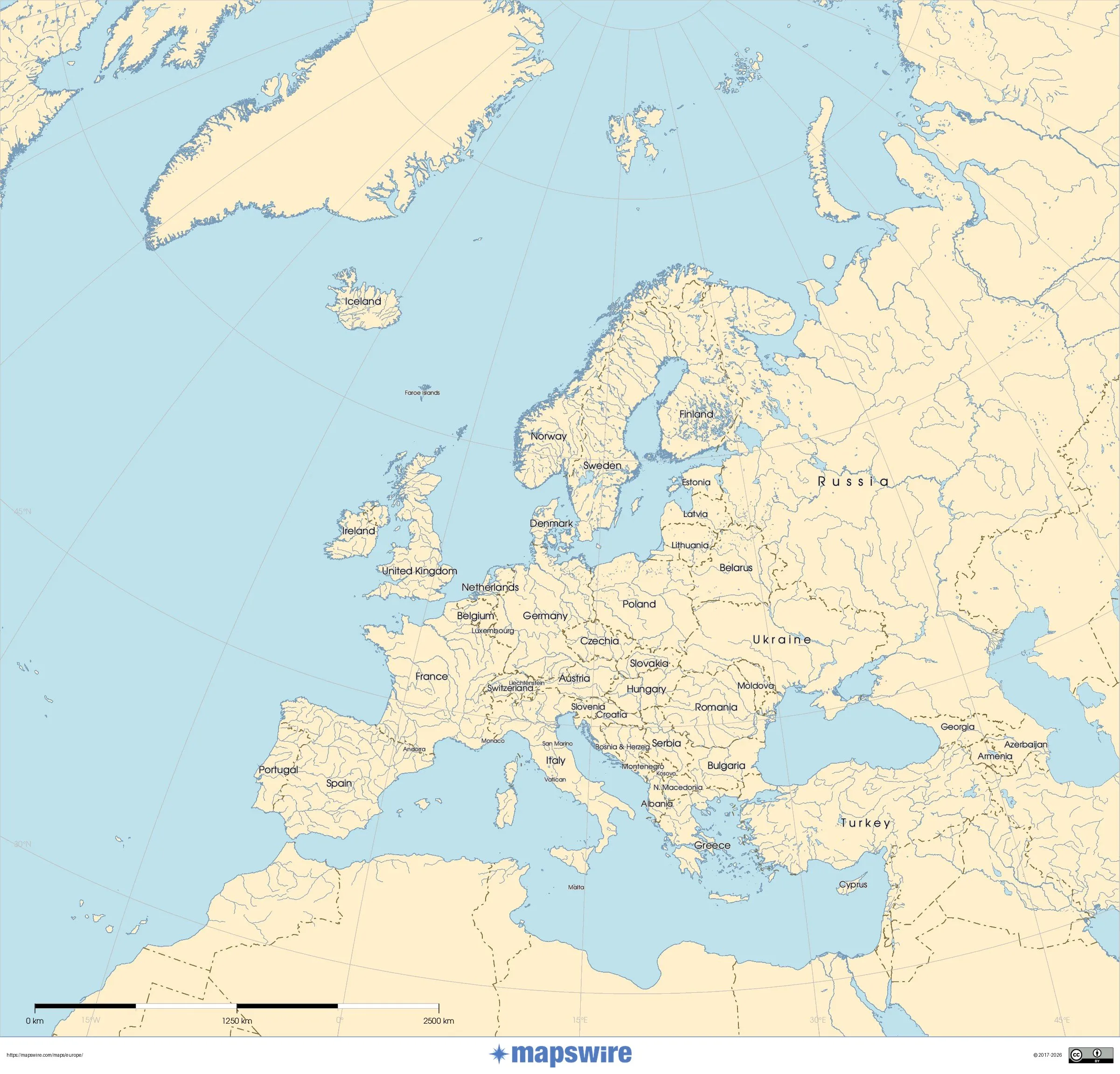
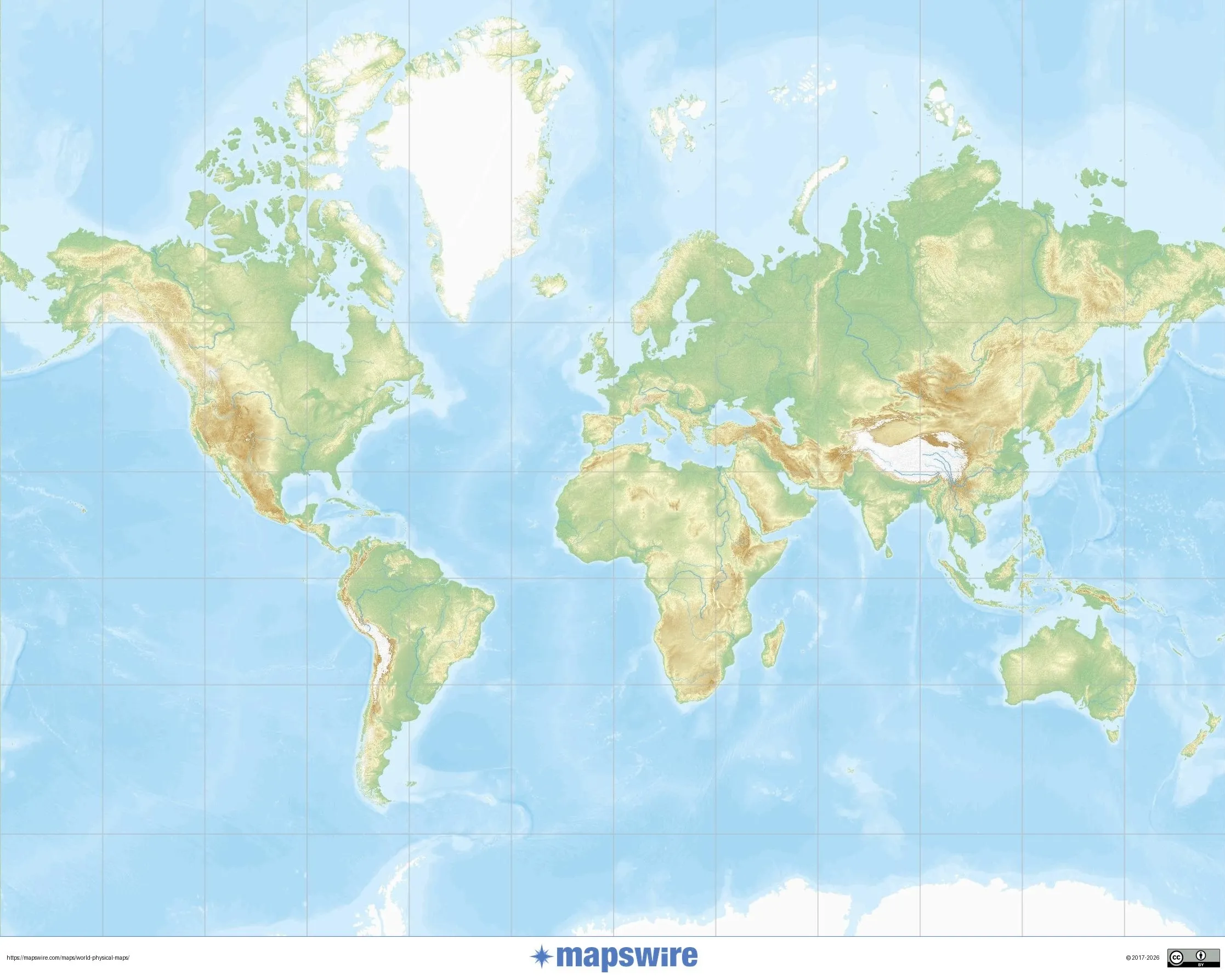
Map
| Category | |
|---|---|
| Element |
Europe
World
Related Links
| Group | List |
|---|---|
| Western Europe | Napoleonic Era Victorian Era Music |
| Central Europe | liberalism German Empire Musical Revolution Marxism |
Comments