Scientific Knowledge Expands
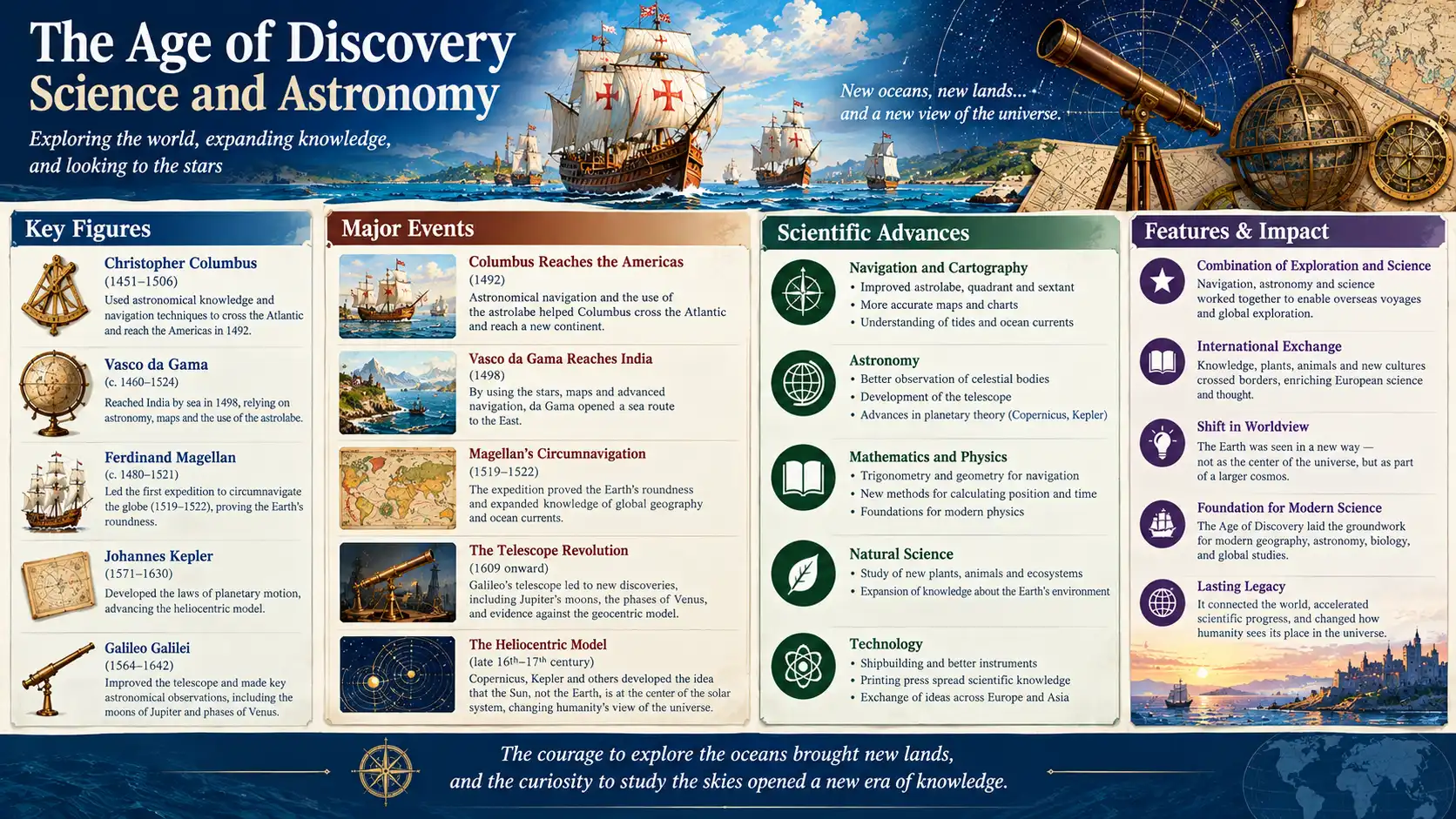
Science and Astronomy
During the Age of Discovery, European science and astronomy underwent a profound transformation driven by global exploration and technological innovation. Oceanic navigation demanded precise instruments, advancing field research in cartography, optics, and celestial tracking. Scholars discarded ancient doctrines in favor of empirical observation and mathematical models, laying the groundwork for the Scientific Revolution. Improved telescopes and observational data expanded humanity's understanding of the cosmos, shifting views from a geocentric universe to a sun-centered model. This intellectual awakening bridged traditional natural philosophy with modern empirical methodology.
People
Birth
Death
Origin
Age (Death)
| 1561 | |
|---|---|
| 1564 | |
| 1571 | |
| 1578 | |
| 1596 | |
| 1627 | |
| 1629 | |
| 1632 | |
| 1635 | |
| 1643 | |
| 1646 |
Timeline
| Category | |
|---|---|
| Element |
| Year | Science and Astronomy |
|---|---|
| 1561 |
Birth of Francis Bacon (Period: January 22, 1561, Location: London (England, near present-day City of Westminster))
|
| 1564 |
Birth of Galileo Galilei (Period: February 15, 1564, Location: Pisa, Italy)
|
| 1568 | |
| 1571 |
Birth of Johannes Kepler (Period: December 27, 1571, Location: Weil der Stadt (now Baden-Württemberg, Germany))
|
| 1573 |
Studies at Trinity College (Francis Bacon)
|
| 1576 |
Accompanying the Embassy to France (Francis Bacon)
|
| 1578 |
Birth of William Harvey (Period: April 1, 1578, Location: Folkestone (now Kent, England))
|
| 1584 |
Commencement of Activities as a Member of Parliament (Francis Bacon)
|
| 1585 | |
| 1589 |
Studies at the University of Tübingen (Johannes Kepler)
|
| 1590 |
Political Relationship with the Earl of Essex
|
| 1593 |
Studies at Gonville and Caius College, Cambridge (William Harvey)
|
| 1594 |
Becoming a Teacher of Mathematics and Astronomy in Graz (Johannes Kepler)
Nine Years' War in Ireland
|
| 1596 |
Birth of René Descartes (Period: March 31, 1596, Location: Descartes (Indre-et-Loire, France); known as La Haye en Touraine at the time of his birth.)
|
| 1597 |
Publication of the First Edition of Essays
Marriage (Johannes Kepler, Barbara Müller)
|
| 1599 |
Medical Studies at the University of Padua (William Harvey)
|
| 1600 |
Exile from Graz (Johannes Kepler)
Joint Research with Tycho Brahe in Prague (Johannes Kepler)
|
| 1601 |
Activities as Imperial Mathematician (Johannes Kepler)
Essex's Rebellion
Trial of the Earl of Essex for High Treason
Death of Tycho Brahe and Kepler's Appointment as Imperial Mathematician (Johannes Kepler)
|
| 1602 |
Return to London and Admission to the Royal College of Physicians (William Harvey)
|
| 1603 |
Knighthood Conferment (Francis Bacon)
|
| 1604 |
Marriage (William Harvey, Elizabeth Browne)
|
| 1605 |
Gunpowder Plot (Francis Bacon)
|
| 1606 |
Marriage (Francis Bacon, Alice Barnham)
|
| 1607 |
Education at the Collège de La Flèche (René Descartes)
|
| 1609 |
Establishment of Kepler's First and Second Laws of Planetary Motion
Appointment as Physician at St Bartholomew's Hospital (William Harvey)
|
| 1610 |
Establishment of the Theory of Blood Circulation
|
| 1612 |
Relocation to Linz and Research Activities (Johannes Kepler)
|
| 1613 |
Appointment as Attorney General (Francis Bacon)
Marriage (Johannes Kepler, Susanna Reuttinger)
|
| 1615 |
Witch Trial of Kepler's Mother, Katharina
Intervention in the Witch Trial of His Mother Katharina
Law Studies at the University of Poitiers (René Descartes)
Appointment as Lumleian Lecturer (William Harvey)
|
| 1617 |
Appointment as Lord Chancellor (Francis Bacon)
|
| 1618 |
Religious Conflicts in Linz and the Impact of War
Enlistment in the Army of the Dutch States-General (René Descartes)
Joint Research with Isaac Beeckman (René Descartes)
Appointment as Physician to King James I (William Harvey)
|
| 1619 |
Publication of Kepler's Third Law of Planetary Motion
Conception of Universal Science (René Descartes)
Three Dreams of 1619
|
| 1620 |
Battles during the Thirty Years' War and the Bohemian Revolt
Publication of Novum Organum
The Advancement of Learning and the Plan for the Reform of Knowledge
Philosophical and Mathematical Research in Paris (René Descartes)
Battle of White Mountain
|
| 1621 |
Accusations of Bribery and Corruption against Bacon
Resignation as Lord Chancellor and Political Downfall (Francis Bacon)
|
| 1625 |
Activities as Physician to Charles I (William Harvey)
|
| 1626 |
Death of Francis Bacon
|
| 1627 |
Publication of the Rudolphine Tables
Birth of Robert Boyle (Period: January 25, 1627, Location: Lismore (now County Waterford, Republic of Ireland))
|
| 1628 |
Move to Wallenstein's Court
Relocation to the Dutch Republic (René Descartes)
War of the Mantuan Succession
Publication of Exercitatio Anatomica de Motu Cordis et Sanguinis in Animalibus
|
| 1629 |
Birth of Christiaan Huygens (Period: April 14, 1629, Location: The Hague, Netherlands)
|
| 1630 |
Relationship with François de La Barre and Development of Cartesiansim in Utrecht
Acceptance of the Theory of Blood Circulation in the Medical Community
Death of Johannes Kepler
|
| 1632 |
Birth of Antonie van Leeuwenhoek (Period: October 24, 1632, Location: Delft, Netherlands)
|
| 1633 |
Abandonment of the Publication of The World Due to the Impact of Galileo's Trial
|
| 1635 |
Education at Eton College (Robert Boyle)
Birth of Robert Hooke (Period: July 18, 1635 (Julian calendar then used in England; July 28 in the Gregorian calendar), Location: Freshwater, Isle of Wight; an area still known today as Freshwater in the western part of the Isle of Wight)
|
| 1637 |
Publication of Discourse on the Method
|
| 1638 |
Educational Tour of Continental Europe (Robert Boyle)
|
| 1639 |
Wars of the Three Kingdoms
|
| 1640 |
Participation in the Oxford Experimental Philosophy Group (Robert Boyle)
Death of Francine
|
| 1641 |
Publication of Meditations on First Philosophy
Irish Rebellion
Interruption of European Travel Due to the Irish Rebellion of 1641
Contact with the Ideas of Galileo Galilei
|
| 1642 |
First English Civil War
Dispersal of Harvey's Research Materials
Move to Oxford and Service to the Royalist Cause (William Harvey)
Death of Galileo Galilei
Battle of Edgehill
|
| 1643 |
Birth of Isaac Newton (Period: December 25, 1642 (Julian calendar; January 4, 1643 in the Gregorian calendar), Location: Woolsthorpe-by-Colsterworth, Lincolnshire; a hamlet located near Grantham, England today)
|
| 1644 |
Publication of Principles of Philosophy
Inheritance of the Stalbridge Estate from His Father (Robert Boyle)
|
| 1645 |
Studies at Leiden University (Christiaan Huygens)
|
| 1646 |
Birth of Gottfried Wilhelm Leibniz (Period: July 1, 1646 (June 21 in the Julian calendar), Location: Leipzig, Germany)
|
| 1648 |
Death of Father John Hooke and Move to London (Robert Hooke)
Apprenticeship as a Merchant in Amsterdam (Antonie Philips van Leeuwenhoek)
|
| 1649 |
Publication of Passions of the Soul
Invitation to the Court of Queen Christina of Sweden (René Descartes)
Beginning of Experimental Research at Stalbridge (Robert Boyle)
|
| 1650 |
Death of René Descartes
|
| 1651 |
Publication of Exercitationes de Generatione Animalium
|
| 1653 |
Beginning of Scientific Research in Oxford (Robert Hooke)
|
| 1654 |
Relocation to Oxford and Experimental Research (Robert Boyle)
Opening of a Shop in Delft (Antonie van Leeuwenhoek)
Marriage (Antonie van Leeuwenhoek, Barbara de Mey)
Delft Gunpowder Explosion
|
| 1655 |
Collaboration on Boyle's Air Pump Experiments
Obtaining Degree from the University of Angers (Christiaan Huygens)
Education at the King's School, Grantham (Isaac Newton)
Discovery of Titan
|
| 1656 |
Elucidation of the True Nature of Saturn's Rings
Invention and Patenting of the Pendulum Clock
Donation of Estate to the Royal College of Physicians and Resignation as Lumleian Lecturer (William Harvey)
|
| 1657 |
Boyle's Air Pump Experiments
Death of William Harvey
|
| 1660 |
Vacuum Controversy with Thomas Hobbes (Robert Boyle)
Publication of New Experiments Physico-Mechanicall, Touching the Spring of the Air, and its Effects
Activities During the Founding Period of the Royal Society (Robert Boyle)
Research in Geology and Paleontology (Robert Hooke)
Taking Office in the Delft City Hall (Antonie van Leeuwenhoek)
|
| 1661 |
Publication of The Sceptical Chymist
Matriculation at Trinity College, Cambridge (Isaac Newton)
Studies at the University of Leipzig (Gottfried Wilhelm Leibniz)
|
| 1662 |
Establishment of Boyle's Law
Appointment as Curator of Experiments for the Royal Society (Robert Hooke)
|
| 1664 |
Observations on the Rotations of Mars and Jupiter
|
| 1665 |
Great Plague of London
Publication of Micrographia
Activities as Gresham Professor of Geometry (Robert Hooke)
Second Anglo-Dutch War
Research Period Known as the "Annus Mirabilis" (Isaac Newton)
|
| 1666 |
Participation in the Reconstruction of London (Robert Hooke)
Invitation to the French Academy of Sciences (Christiaan Huygens)
Activities at the French Academy of Sciences (Christiaan Huygens)
Obtaining Doctorate in Law from the University of Altdorf (Gottfried Wilhelm Leibniz)
Great Fire of London
|
| 1668 |
Relocation to London (Robert Boyle)
Construction of the Reflecting Telescope (Isaac Newton)
Activities as Counselor and Jurist to the Elector of Mainz
|
| 1669 |
Later Research Activities and Retirement from the Royal Society (Robert Boyle)
|
| 1670 |
Newton-Hooke Controversy over Gravitation and Scientific Priority
Priority Dispute between Hooke and Christiaan Huygens over Watchmaker Technology
Beginning of Research Using Self-made Microscopes (Antonie van Leeuwenhoek)
Newton-Hooke Controversy
Development of the "Stepped Reckoner" Calculator and Demonstration at the Royal Society
|
| 1671 |
Leibniz's Proposal for a French Expedition to Egypt
Marriage (Antonie van Leeuwenhoek, Cornelia Swalmius)
|
| 1672 |
Third Anglo-Dutch War
Franco-Dutch War
Rampjaar (Year of Disaster)
Stay in Paris and Interaction with Christiaan Huygens
|
| 1673 |
Publication of Horologium Oscillatorium
Recognition of Research Achievements by the Royal Society of London
|
| 1674 |
Considerations on the Inverse-Square Law of Gravitation and Correspondence with Newton
Observation of Microorganisms (Antonie van Leeuwenhoek)
|
| 1675 |
Handling of Johannes Vermeer's Estate After His Death
Discovery and Systematization of Calculus
|
| 1676 |
Observation of Bacteria (Antonie van Leeuwenhoek)
Meeting between Leibniz and Spinoza
Beginning of Service to the House of Hanover
|
| 1677 |
Observation and Description of Spermatozoa (Antonie van Leeuwenhoek)
|
| 1678 |
Publication of Hooke's Law
Presentation of the Wave Theory of Light
|
| 1680 |
Support for the Irish Language Bible (Robert Boyle)
Research on Mining Technology in the Harz Mountains
|
| 1681 |
Return to The Hague (Christiaan Huygens)
|
| 1684 |
Research on Tubeless Telescopes and Publication of Astroscopia Compendiaria
|
| 1685 |
Revocation of the Edict of Nantes
|
| 1686 |
Composition of Discourse on Metaphysics
|
| 1687 |
Publication of Philosophiæ Naturalis Principia Mathematica
Historical Research on the House of Brunswick
|
| 1688 |
Activities Resident at Hofwijck
Nine Years' War
Glorious Revolution
|
| 1689 |
Scientific Exchange with Newton (Christiaan Huygens)
Member of Parliament for Cambridge University (Isaac Newton)
|
| 1690 |
Newton-Leibniz Calculus Controversy
Newton-Flamsteed Controversy
|
| 1691 |
Appointment as Librarian of the Wolfenbüttel Library (Gottfried Wilhelm Leibniz)
Death of Robert Boyle
|
| 1695 |
Death of Christiaan Huygens
|
| 1696 |
Great Recoinage
Activities at the Royal Mint (Isaac Newton)
|
| 1698 |
Introduction of Microscopic Observation to Peter the Great (Antonie van Leeuwenhoek)
|
| 1699 |
Foreign Correspondent Member of the Dutch Royal Academy of Sciences (Antonie van Leeuwenhoek)
|
| 1700 |
Later Microscopic Research and Extensive Correspondence (Antonie van Leeuwenhoek)
Founding of the Berlin Academy of Sciences
|
| 1701 | |
| 1703 |
Appointment as President of the Royal Society (Isaac Newton)
Death of Robert Hooke
Death of Robert Hooke
|
| 1708 |
Calculus Priority Controversy between Newton and Leibniz
|
| 1710 |
Publication of Théodicée
|
| 1712 |
Stay in Vienna and Appointment as Imperial Counselor (Gottfried Wilhelm Leibniz)
|
| 1714 |
Succession of George I to the British Throne
Composition of Monadology
|
| 1716 |
Final Meeting with Peter the Great
Death of Gottfried Wilhelm Leibniz
Death of Gottfried Wilhelm Leibniz
|
| 1723 |
Death of Antonie van Leeuwenhoek
|
| 1727 |
Death of Isaac Newton
|
| 1743 |
Election as Fellow of the Royal Society (Christiaan Huygens)
|
| Unknown |
Marriage (René Descartes, None, Period: N/A, Location: N/A)
Marriage (Robert Boyle, None, Period: N/A, Location: N/A)
Marriage (Robert Hooke, None, Period: Never married, Location: N/A)
Marriage (Christiaan Huygens, None, Period: Never married, Location: N/A)
Marriage (Isaac Newton, None, Period: Never married, Location: N/A)
Marriage (Gottfried Wilhelm Leibniz, None, Period: Never married, Location: N/A)
|
Map
| Category | |
|---|---|
| Element |
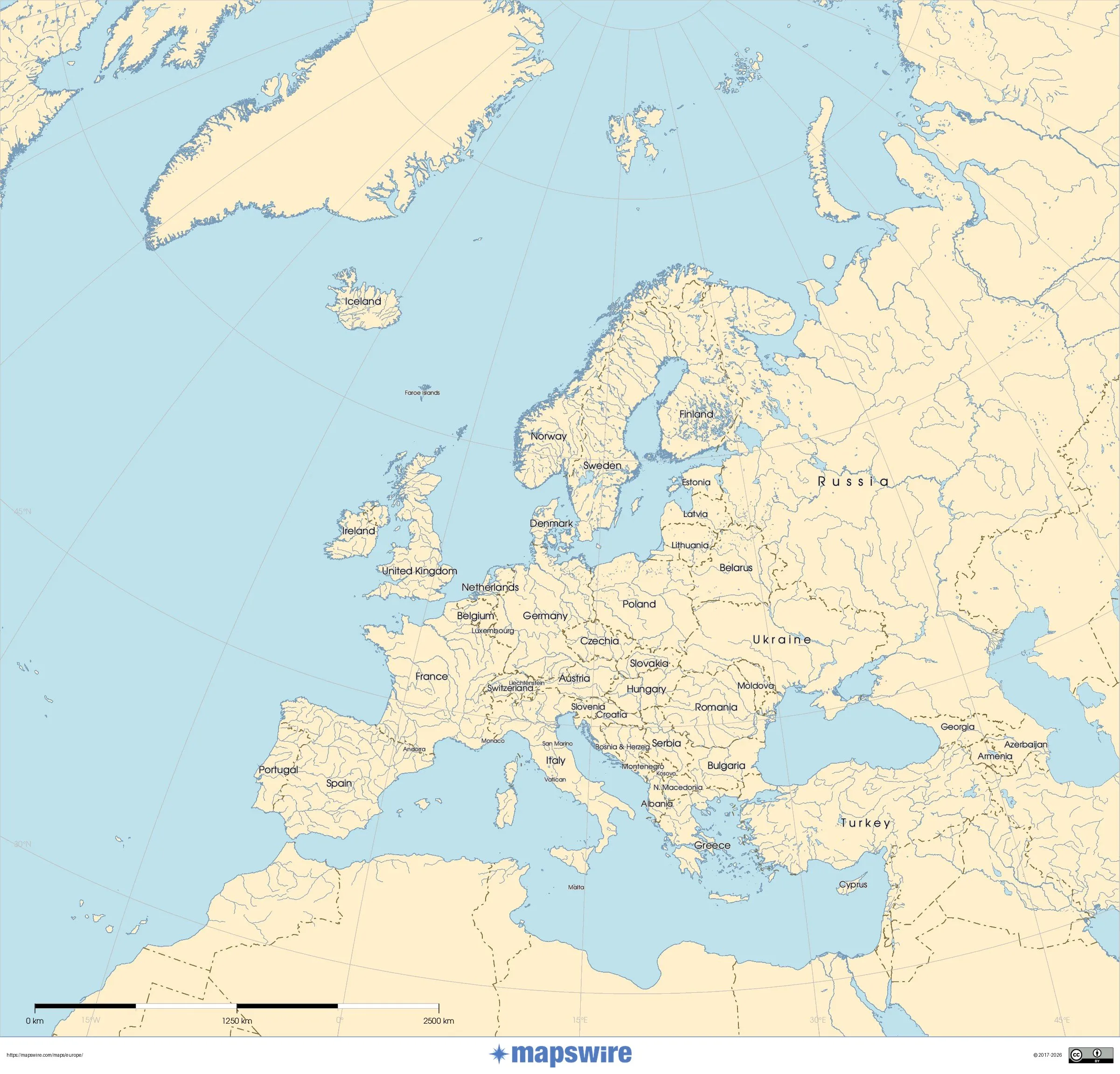
Europe
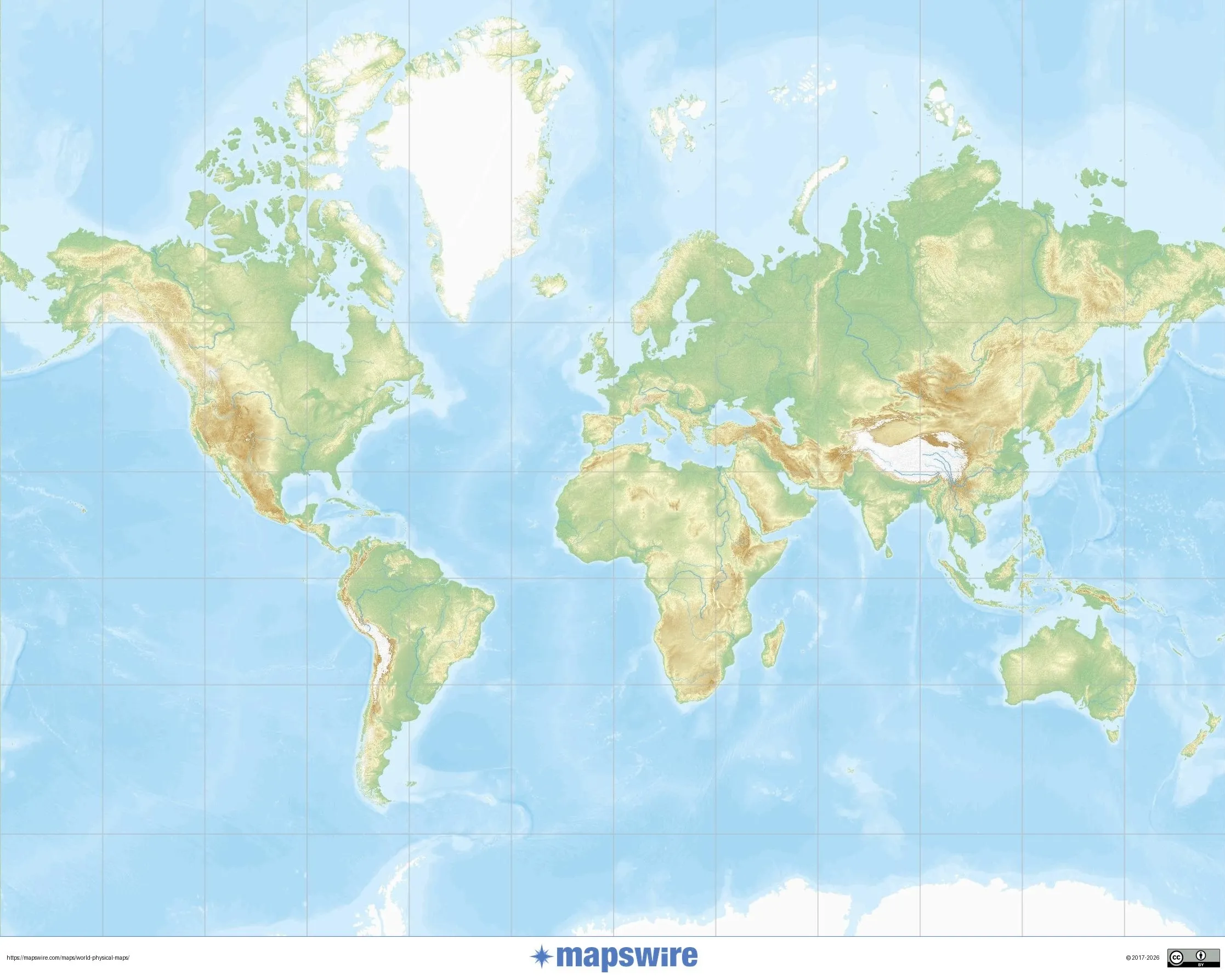
World
Related Links
| Group | List |
|---|---|
| Central Europe | Roman Empire Habsburg Family Science and Astronomy Music & Art |
| Western Europe | East India Company Expansion into North America Science and Astronomy Arts and Culture |
Comments