Arts and Culture in the Age of Discovery
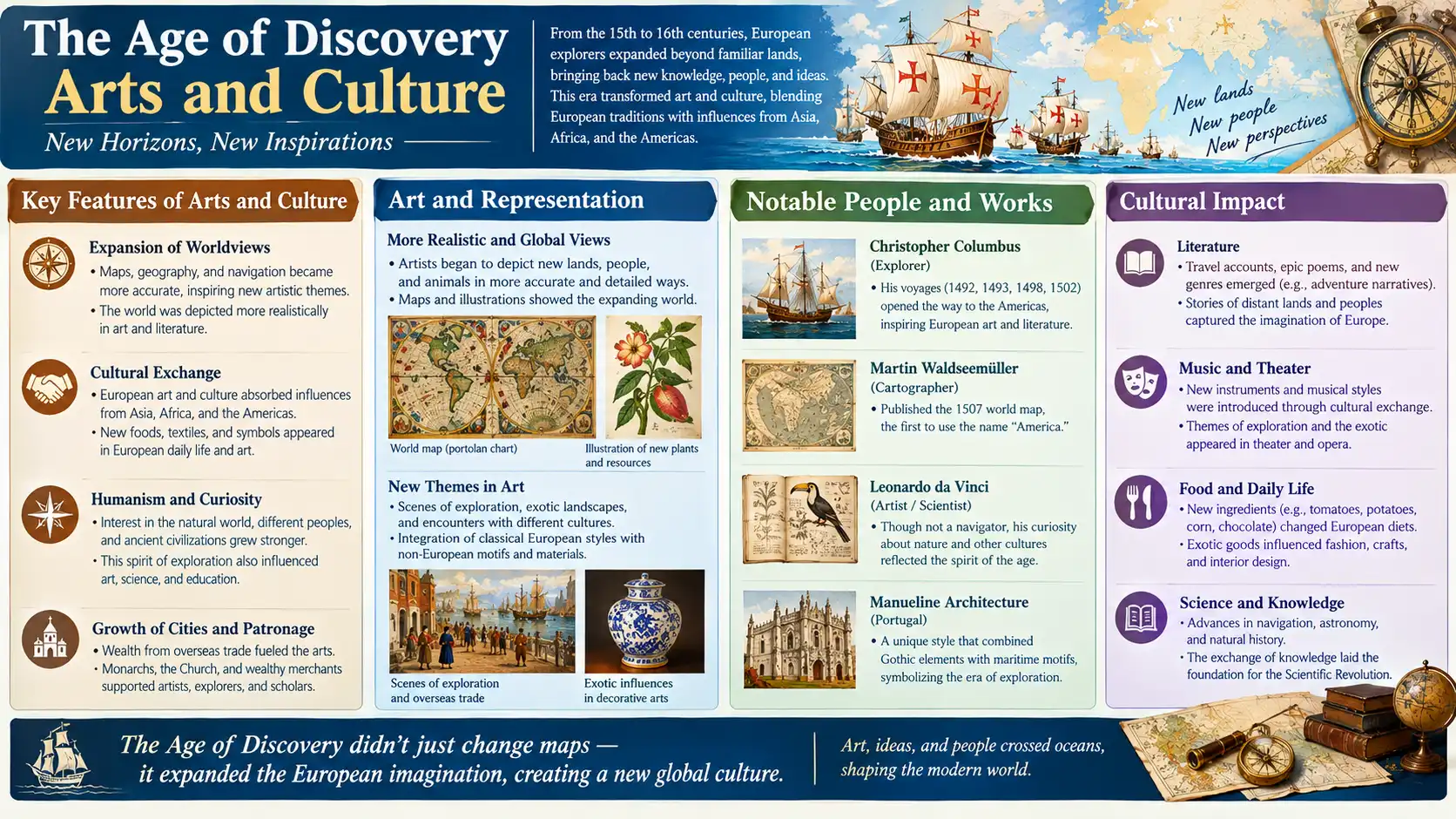
Arts and Culture
During the Age of Discovery, European art and culture transformed through global trade, intellectual expansion, and royal patronage. The influx of new wealth, ideas, and exotic goods enriched the Baroque movement, fostering dramatic artistic styles that reflected power, religious fervor, and cross-cultural contact across global empires.
People
Birth
Death
Origin
Age (Death)
| 1577 | |
|---|---|
| 1599 | |
| 1599 | |
| 1606 | |
| 1632 | |
| 1632 | |
| 1684 |
Timeline
| Category | |
|---|---|
| Element |
| Year | Arts and Culture |
|---|---|
| 1566 |
Beeldenstorm (Iconoclastic Fury in the Netherlands)
|
| 1568 | |
| 1577 |
Birth of Peter Paul Rubens (Period: June 28, 1577, Location: Siegen (Germany, present-day North Rhine-Westphalia))
|
| 1585 | |
| 1598 |
Establishment as an independent painter in Antwerp (Peter Paul Rubens)
|
| 1599 |
Birth of Anthony van Dyck (Period: March 22, 1599, Location: Antwerp (Belgium))
Birth of Diego Velázquez (Period: June 6, 1599 (Baptismal date; birth is thought to have occurred a few days to a few weeks earlier), Location: Seville (Spain))
|
| 1600 |
Stay in Italy and study of art (Peter Paul Rubens)
|
| 1606 |
Birth of Rembrandt van Rijn (Period: July 15, 1606, Location: Leiden (Netherlands))
|
| 1608 |
Return to Antwerp and appointment as court painter (Peter Paul Rubens)
|
| 1609 |
Apprenticeship under Hendrick van Balen (Anthony van Dyck)
Marriage (Peter Paul Rubens, Isabella Brant)
|
| 1610 |
Apprenticeship under Francisco Pacheco (Diego Velázquez)
Working in the workshop of Peter Paul Rubens (Anthony van Dyck)
|
| 1615 |
Opening of an independent workshop (Anthony van Dyck)
|
| 1617 |
Joining the Seville Painters' Guild and authorization as an independent painter (Diego Velázquez)
Beginning of career as an independent painter in Seville (Diego Velázquez)
Registration as a master in the Antwerp Guild of Saint Luke (Anthony van Dyck)
|
| 1618 |
Marriage (Diego Velázquez, Juana Pacheco)
|
| 1620 |
First visit to England (Anthony van Dyck)
|
| 1621 |
End of the Twelve Years' Truce
Execution of the Marie de' Medici cycle
Activities as a diplomat (Peter Paul Rubens)
Stay in Italy (Anthony van Dyck)
|
| 1623 |
Appointment as court painter to Philip IV (Diego Velázquez)
Relocation to Madrid and start of career as court painter (Diego Velázquez)
|
| 1624 |
Plague in Palermo and quarantine
|
| 1625 |
Establishment as an independent painter in Leiden (Rembrandt van Rijn)
|
| 1627 |
Acceptance of his first pupil (Rembrandt van Rijn)
Victory in the court painters' competition (Diego Velázquez)
Return to Antwerp and activity as a portrait painter (Anthony van Dyck)
|
| 1629 |
Praise by Constantijn Huygens and court commissions (Rembrandt van Rijn)
First trip to Italy (Diego Velázquez)
|
| 1630 |
Conferment of knighthoods by Spain and England (Peter Paul Rubens)
Treaty of Madrid
Marriage (Peter Paul Rubens, Helena Fourment)
|
| 1631 |
Relocation to Amsterdam (Rembrandt van Rijn)
|
| 1632 |
Creation of "The Anatomy Lesson of Dr. Nicolaes Tulp"
Appointment as court painter by Charles I (Anthony van Dyck)
Relocation to London and appointment as court painter to Charles I (Anthony van Dyck)
Knighthood (Anthony van Dyck)
Birth of Johannes Vermeer (Period: October 31, 1632 (Baptismal date; exact date of birth unknown), Location: Delft (Netherlands))
Birth and baptism in Delft (Johannes Vermeer, Period: October 31, 1632, Location: Nieuwe Kerk (New Church) in Delft (Dutch Republic))
Birth of Giovanni Battista Lulli (Period: November 28, 1632 (Some sources list November 29), Location: Florence (Florence, Tuscany, present-day Italian Republic))
|
| 1634 |
Acquisition of Amsterdam citizenship and joining the Guild of Saint Luke (Rembrandt van Rijn)
Creation of "The Surrender of Breda"
Marriage (Rembrandt van Rijn, Saskia van Uylenburgh)
|
| 1635 |
Purchase of Het Steen castle (Peter Paul Rubens)
Franco-Spanish War
Creation of "Charles I in Three Positions"
|
| 1638 |
Granting of English denization (Anthony van Dyck)
|
| 1640 |
Reapers' War (Catalan Revolt)
Franco-Spanish War and court political tensions
Marriage (Anthony van Dyck, Mary Ruthven)
Death of Peter Paul Rubens
|
| 1641 |
Family life at his father's inn "Mechelen" (Johannes Vermeer)
Stay in Paris to paint the portrait of Cardinal Richelieu
Death of Anthony van Dyck
|
| 1642 |
Creation of "The Night Watch"
|
| 1644 |
Accompanying the King to Aragon and creation of the military portrait in Fraga
|
| 1646 |
Relocation to France and marriage of Mademoiselle de Montpensier (Giovanni Battista Lulli)
|
| 1648 |
Fronde
|
| 1649 |
Legal dispute with Geertje Dircx (Rembrandt van Rijn)
Second trip to Italy (Diego Velázquez)
|
| 1651 |
Appointment as Grand Marshal of the Palace (Diego Velázquez)
|
| 1652 |
First Anglo-Dutch War
Death of his father, Reijnier Jansz Vermeer
|
| 1653 |
Relocation to the home of Catharina Bolnes's family (Johannes Vermeer)
Conducting the Petit Violons (Giovanni Battista Lulli)
Performance alongside Louis XIV in the "Ballet de la Nuit" (Giovanni Battista Lulli)
Marriage (Johannes Vermeer, Catharina Bolnes)
Joining the Guild of Saint Luke (Johannes Vermeer)
|
| 1654 |
Church censure of Hendrickje Stoffels (Rembrandt van Rijn)
|
| 1656 |
Bankruptcy and sale of property and art collection (Rembrandt van Rijn)
Creation of "Las Meninas"
Creation of major works in the late 1650s
|
| 1658 |
Investiture into the Order of Santiago (Diego Velázquez)
|
| 1659 |
Treaty of the Pyrenees and peace between France and Spain
|
| 1660 |
Establishment of reputation in the Delft art world (Johannes Vermeer)
Creation of "View of Delft"
Participation in the peace ceremony on Pheasant Island
Death of Diego Velázquez
|
| 1661 |
Creation and rejection of "The Conspiracy of Claudius Civilis"
Appointment as Master of the Royal Music (Giovanni Battista Lulli)
Creation of musical plays with Molière
French naturalization (Giovanni Battista Lulli)
|
| 1662 |
Election as an officer of the Guild of Saint Luke (Johannes Vermeer)
Marriage (Giovanni Battista Lulli, Madeleine Lambert)
|
| 1663 |
Plague in Amsterdam and the death of Hendrickje
Marriage (Rembrandt van Rijn, Hendrickje Stoffels)
|
| 1665 |
Second Anglo-Dutch War
Creation of "Girl with a Pearl Earring"
|
| 1666 |
Destruction of his tomb in the Great Fire of London (Anthony van Dyck)
|
| 1668 |
Death of Titus
Creation of "The Astronomer / The Geographer"
|
| 1669 |
Death of Rembrandt van Rijn
|
| 1670 |
Creation of "The Allegory of Faith"
|
| 1671 |
Deterioration of relations between Lully and Molière (Giovanni Battista Lulli)
|
| 1672 |
Franco-Dutch War
The "Disaster Year" (Rampjaar) of 1672
Visit to The Hague for art authentication (Johannes Vermeer)
Financial deterioration in later years (Johannes Vermeer)
Obtaining the exclusive privilege for the Royal Academy of Music (Giovanni Battista Lulli)
|
| 1673 |
Premiere of "Cadmus et Hermione"
|
| 1674 |
Joining the civic guard (Johannes Vermeer)
|
| 1675 |
Death of Johannes Vermeer
|
| 1676 |
Performance of "Atys"
|
| 1677 |
Court scandal surrounding "Isis" (Giovanni Battista Lulli)
|
| 1678 |
Annexation of Valenciennes to France
|
| 1684 |
Birth of Antoine Watteau (Period: October 10, 1684 (Baptismal date; actual birth date is considered to be within October 1684), Location: Valenciennes (Valenciennes, Nord, present-day Hauts-de-France region, French Republic))
|
| 1685 |
Scandal surrounding Lully's private life (Giovanni Battista Lulli)
|
| 1687 |
Performance of "Te Deum" and leg injury
Death of Giovanni Battista Lulli
|
| 1700 |
Break with Claude Gillot
Transfer to the workshop of Claude Audran III (Antoine Watteau)
Creation of military paintings such as "The Departing Regiment"
|
| 1701 | |
| 1702 |
Relocation to Paris (Antoine Watteau)
|
| 1705 |
Training in the workshop of Claude Gillot (Antoine Watteau)
|
| 1709 |
Failure to win the Prix de Rome (Antoine Watteau)
|
| 1710 |
Activities at the residence of Pierre Crozat (Antoine Watteau)
|
| 1712 |
Acceptance as an associate member of the Royal Academy of Painting and Sculpture (Antoine Watteau)
|
| 1717 |
Elevation to full member of the Royal Academy of Painting and Sculpture (Antoine Watteau)
Creation of "The Embarkation for Cythera"
|
| 1720 |
Creation of "Gersaint's Shopsign"
Health trip to London (Antoine Watteau)
|
| 1721 |
Death of Antoine Watteau
|
| Unknown |
Marriage (Antoine Watteau, N/A, Period: No official record of marriage found, Location: N/A)
|
Map
| Category | |
|---|---|
| Element |
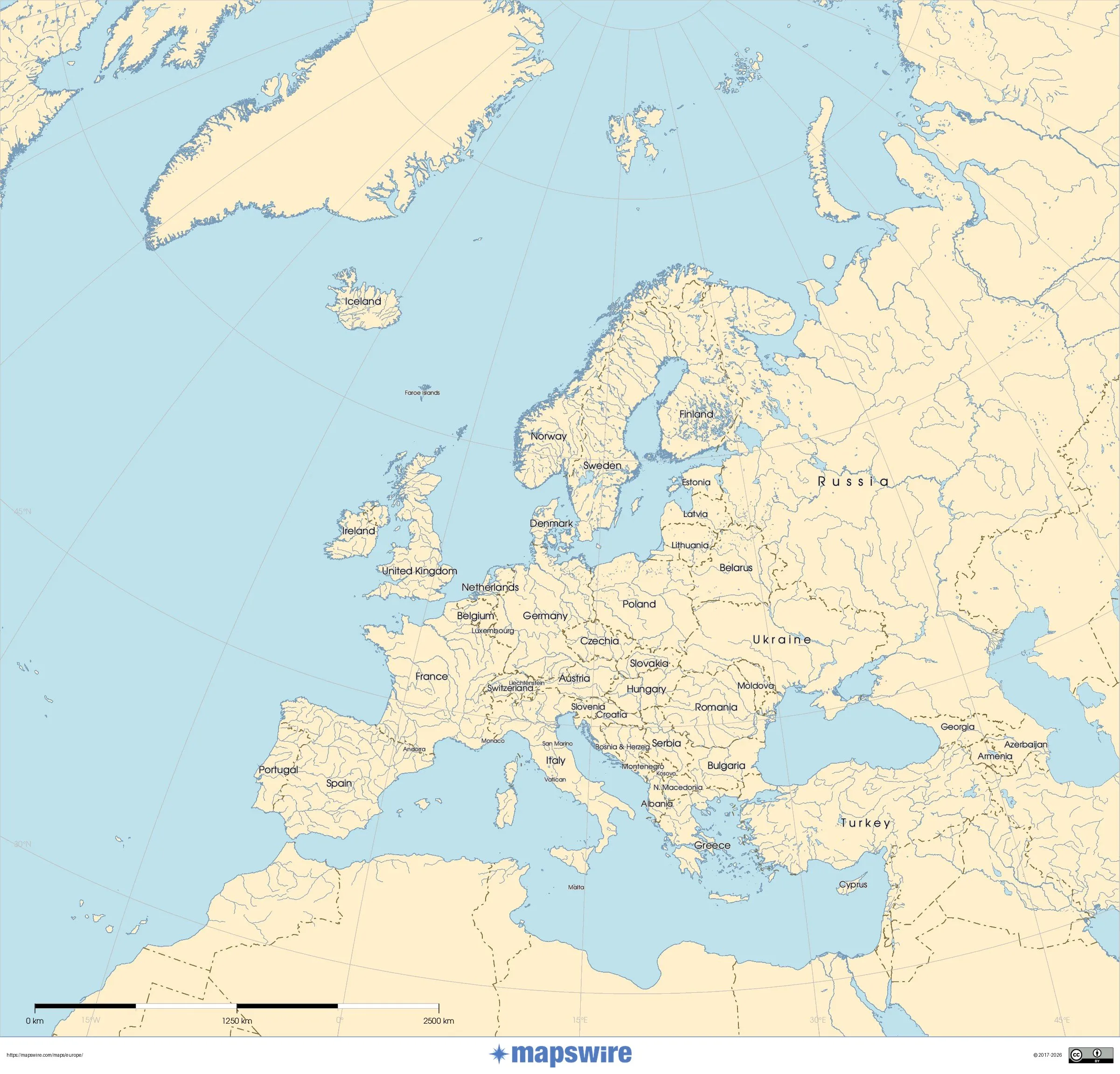
Europe
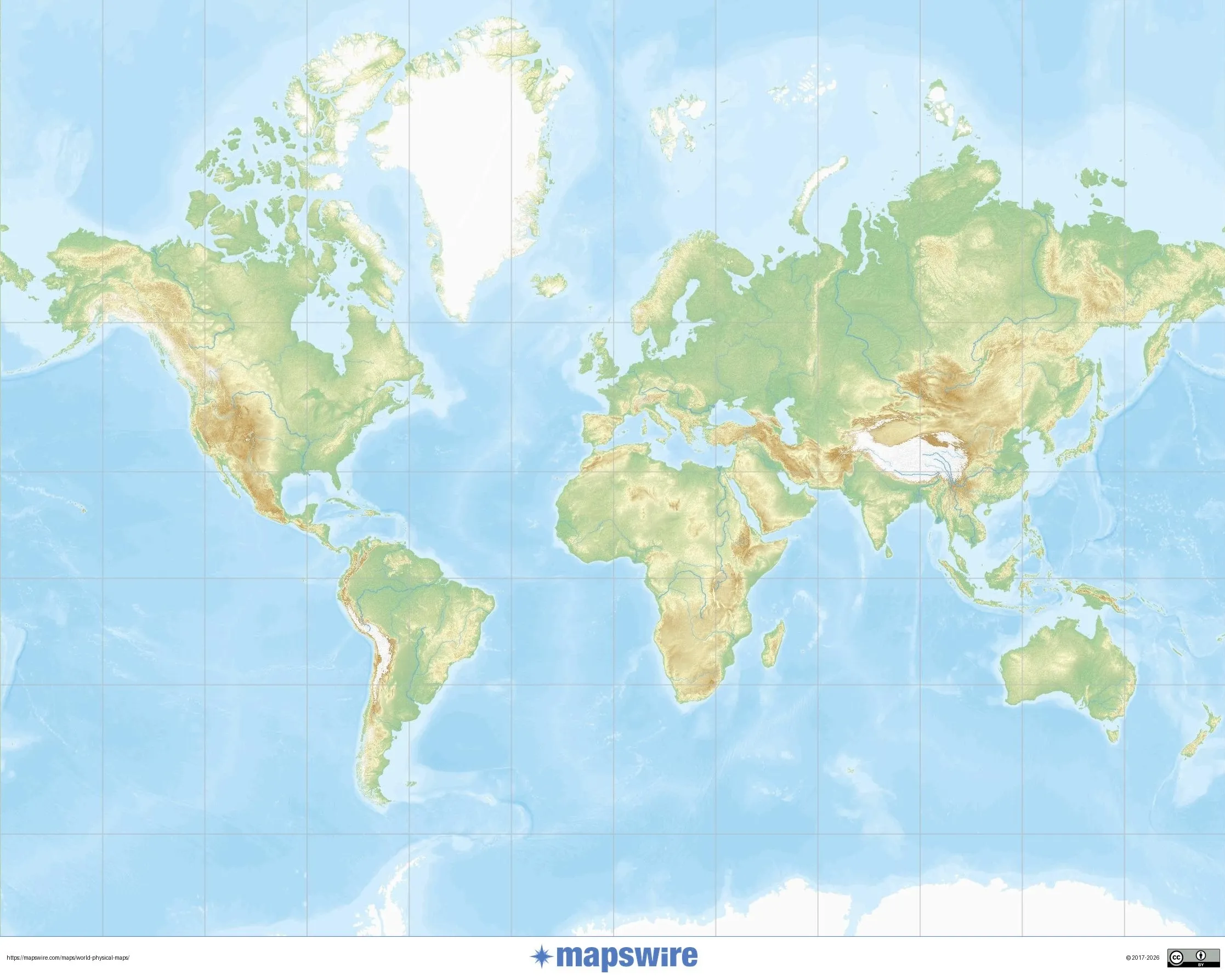
World
Related Links
| Group | List |
|---|---|
| Central Europe | Roman Empire Habsburg Family Science and Astronomy Music & Art |
| Western Europe | East India Company Expansion into North America Science and Astronomy Arts and Culture |
Comments