The Collapse and Dynamics of the Late Ming Era
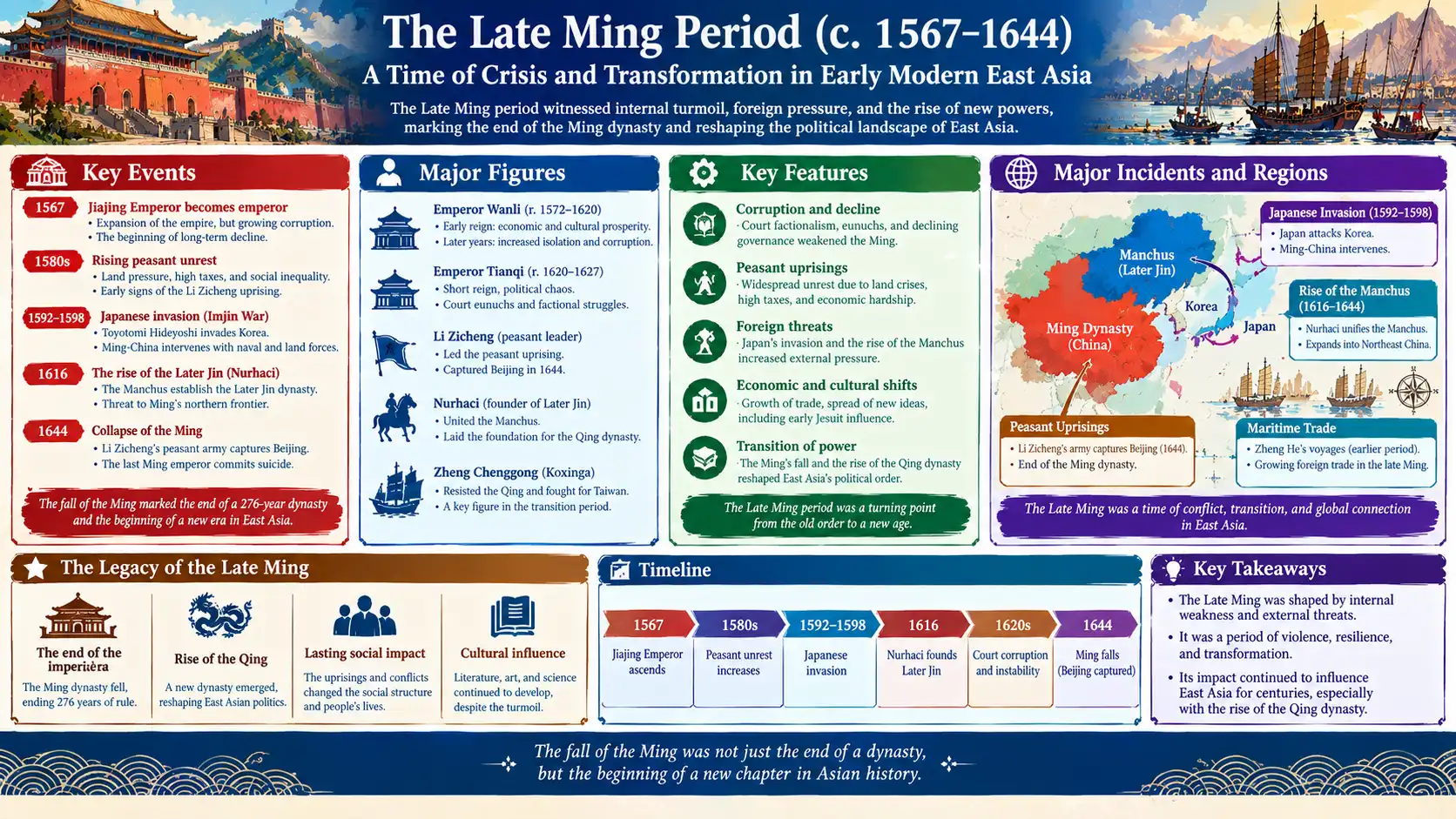
Late Ming period
The Late Ming period was marked by severe social unrest, economic distress, and rampant political corruption. Ravaged by famine, epidemics, and heavy taxation, widespread peasant rebellions emerged across China. Simultaneously, the Jurchen forces under Nurhaci and Hong Taiji mounted formidable military pressure along the northern frontier. Internal strife and external aggression culminated in the fall of Beijing in 1644 and paved the way for the Qing conquest.
People
Birth
Death
Origin
Age (Death)
| 1103 | |
|---|---|
| 1528 | |
| 1559 | |
| 1584 | |
| 1606 | |
| 1606 | |
| 1612 | |
| 1612 | |
| 1623 | |
| 1624 |
Timeline
| Category | |
|---|---|
| Element |
| Year | Late Ming period |
|---|---|
| 1103 |
Birth of Yue Fei (Period: March 24, 1103, Location: Tangyin County, Anyang City, Henan Province, China)
|
| 1122 |
Enlistment in the Song Army (Yue Fei)
|
| 1125 |
Song-Jin Wars
|
| 1126 |
Northern Song Defense Battles Related to the Jingkang Incident
|
| 1127 |
Jingkang Incident
|
| 1129 |
Defense Battles along the Yangtze River Basin
|
| 1130 |
Northern Expeditions of the Southern Ming
Formation of the Yue Family Army and Establishment of Military Discipline
|
| 1140 |
Recall of Yue Fei by Twelve Golden Plaques
Battle of Yancheng
Battle of Yingchang
Advance to Zhuxian Town
|
| 1141 |
Arrest and Execution of Yue Fei
Imprisonment in Lin'an and Final Days
|
| 1142 |
Death of Yue Fei
|
| 1211 |
Rehabilitation and Posthumous Honors for Yue Fei
|
| 1528 |
Birth of Qi Jiguang (Period: November 12, 1528, Location: Luqiao Town, Weishan County, Jining City, Shandong Province, China)
|
| 1544 |
Inheritance of Military House Headship (Qi Jiguang)
Marriage (Qi Jiguang, Lady Wang)
|
| 1548 |
Northern Defense Battles Between Ming and Mongol Forces
|
| 1550 |
Ming Anti-Wokou Measures and Coastal Defense Battles
Jingxu Incident
Taking the Military Imperial Examination and Participating in Beijing's Defense
Organization of the Qi Family Army
|
| 1557 |
Capture and Execution of Wang Zhi
|
| 1559 |
Birth of Nurhaci (Period: May 14, 1559, Location: Xinbin Manchu Autonomous County, Fushun City, Liaoning Province, China (near the former Hetu Ala))
|
| 1560 |
Compilation of *Ji Xiao Xin Shu*
|
| 1561 |
Battle of Taizhou
|
| 1563 |
Battle of Pinghaiwei
|
| 1567 |
Transfer of Qi Jiguang to the North
Repair of the Great Wall and Strengthening of the Defense System
|
| 1577 |
Marriage (Nurhaci, Primary Wife Haha Jacing)
|
| 1580 |
Jurchen Unification War
Beginning of the Unification of Jurchen Tribes
|
| 1582 |
Downfall After the Death of Zhang Juzheng
|
| 1583 |
Final Years and Death
|
| 1584 |
Birth of Yuan Chonghuan (Period: June 6, 1584, Location: Dongguan City, Guangdong Province, China)
|
| 1585 |
Marriage (Nurhaci, Successor Wife Gundai)
|
| 1588 |
Marriage (Nurhaci, Empress Xiaocigao Mongo Jerjer)
Death of Qi Jiguang
|
| 1590 |
Border Conflicts with the Joseon Dynasty
|
| 1601 |
Marriage (Nurhaci, Empress Xiaolie Wu Abahai)
|
| 1606 |
Birth of Zhang Xianzhong (Period: September 18, 1606, Location: The area around Dingbian County, Yulin City, Shaanxi Province, People's Republic of China (believed to be the location of Liushujian at the time))
Birth of Li Zicheng (Period: September 22, 1606, Location: Near Mizhi County, Yulin City, Shaanxi Province, China (Lijiachengzhai, belonging to Yan'an Prefecture in the Ming era))
|
| 1612 |
Birth of Wu Sangui (Period: June 8, 1612, Location: Near Suizhong County, Huludao City, Liaoning Province, China (Liaoxi region in the Ming era))
Birth of Dorgon (Period: November 17, 1612, Location: Yenden (near present-day Xinbin Manchu Autonomous County, Fushun City, Liaoning Province, China))
|
| 1615 |
Establishment of the Eight Banners System
|
| 1616 |
Establishment of Later Jin
|
| 1618 |
Battle of Fushun
Ming-Later Jin War
|
| 1619 |
Battle of Sarhu
Passing the Imperial Examination and Becoming an Official
|
| 1620 |
Strengthening of Liaodong Defenses
|
| 1621 |
Conquest of Kaiyuan and Tieling
Creation of the Manchu Script
|
| 1622 |
Battle of Guangning
|
| 1623 |
Birth of Zhu Youlang (Period: November 1, 1623, Location: Beijing, China)
|
| 1624 |
Birth and Early Childhood in Hirado (Period: 1624–1631, Location: Hirado City, Nagasaki Prefecture, Japan)
Birth of Zheng Chenggong (Period: August 27, 1624, Location: Hirado City, Nagasaki Prefecture, Japan)
|
| 1625 |
Transfer of the Capital to Shenyang
|
| 1626 |
Battle of Ningyuan
Burial in Fuling
Promotion to Governor of Liaodong (Yuan Chonghuan)
Death of Nurhaci
Death of Nurhaci and Succession of the Heir
|
| 1627 |
Military Appointment and Promotion (Wu Sangui)
Battle of Ning-Jin
|
| 1628 |
Late Ming Peasant Rebellions
Plan to Recover Liaodong in Five Years
|
| 1629 |
Jisi Incident
Execution of Mao Wenlong and Conflict Over Military Command (Yuan Chonghuan)
Dispatch for the Defense of Beijing
|
| 1630 |
Battles Around Tong Pass
Li Zicheng's Joining of the Rebellion and Uprising
Service in the Ming Dynasty Postal Relay System
Expansion of Power Championing Equal Land Distribution
Desertion from the Ming Army and Joining the Rebellion
Arrest of Yuan Chonghuan
Death of Yuan Chonghuan
Execution of Yuan Chonghuan
|
| 1631 |
Independent Organization of Rebel Forces
|
| 1635 |
Conquest War of Chahar Mongols
Earning Military Distinction in the War Against the Chahar Mongols
Rebel Attack on the Ming Ancestral Tombs and Shrine in Fengyang
|
| 1636 |
Qing Invasion of Joseon
Execution of Gao Yingxiang and the Rise of Li Zicheng
|
| 1638 |
Temporary Submission to the Ming Army and Resumption of Rebellion
Imperial Examinations and Scholarly Studies
|
| 1640 |
Marriage (Zheng Chenggong, Concubine)
Battle of Xing Shan
|
| 1641 |
Battle of Luoyang
Battle of Kaifeng
Capture of Xiangyang and Execution of Prince Xiang
Defeat in the Battle of Song-Jin
Marriage (Zheng Chenggong, Lady Dong)
|
| 1643 |
Imperial Succession Dispute After Hong Taiji's Death (Dorgon)
Assumption of the Regency for the Shunzhi Emperor (Dorgon)
Battle of Xiangyang
Regime Governance Based in Xi'an
Capture of Wuchang and Execution of Prince Chu
Proclamation of the Title of King of the West
|
| 1644 |
Battle of Shanhai Pass
Entry into Beijing and the Start of Qing Dynasty Rule over the Capital
Expansion of Qing Control Based in Beijing
Pursuit of the Dashun Army by Qing Forces
Use of the Yongchang Era Name
Turning Point Toward the Establishment of the Qing Dynasty
Massacres and Population Decline in Sichuan
Establishment of the Great Xi Regime and Enthronement as Emperor
Qing Suppression of Dashun Army and Southern Ming Forces
Cooperation with Qing Forces at Shanhai Pass
Execution of His Father Wu Xiang
Fall of Beijing and Declaration of Loyalty to the Southern Ming
Establishment of Dashun
Battle of Beijing
Jiashen Incident (Fall of Beijing and Collapse of the Ming Dynasty)
Withdrawal from Beijing
|
| 1645 |
Implementation of the Haircutting Edict
Traditions Regarding Li Zicheng's Final Days
Bestowal of the Imperial Surname Zhu by the Longwu Emperor
|
| 1646 |
Surrender of Zheng Zhilong to the Qing Dynasty
Death of Lady Tagawa, Mother of Zheng Chenggong
Southern Ming Anti-Qing War
Inheritance of the Title of Prince of Gui (Zhu Youlang)
Establishment of the Southern Ming Yongli Regime
Enthronement as the Yongli Emperor
|
| 1647 |
Qing Invasion and Death of Zhang Xianzhong
Death of Zhang Xianzhong
|
| 1650 |
Pursuit of the Southern Ming Yongli Emperor
Relocation to Yunnan and Local Governance
Naval War Between the Zheng Fleet and the Dutch East India Company
Anti-Qing Counteroffensive Led by Li Dingguo and Others
Death of Dorgon
Accident During Hunting and Death
|
| 1651 |
Strip of Posthumous Titles and Desecration of Dorgon's Remains
|
| 1655 |
Ennoblement as Prince of Yanping
|
| 1658 |
Retreat from Yunnan
|
| 1659 |
Battle of Nanjing
Plan for an Expedition to Taiwan
|
| 1660 |
Armed Conflicts Between Southern Ming Exiles and the Burmese Kingdom
|
| 1661 |
Flight of the Yongli Emperor to Burma (Zhu Youlang)
Siege of Fort Zeelandia
Zheng Chenggong's Landing in Taiwan
|
| 1662 |
Execution of the Yongli Emperor
Coastal War Between the Zheng Regime and the Qing Dynasty
Establishment of the Zheng Regime in Taiwan
Concept for an Expedition to the Philippines
Ming Restoration Movement Continuing After the Death of the Yongli Emperor
Surrender of the Yongli Emperor to Qing Forces
Death of Zhu Youlang
Death of Zheng Chenggong
Death of Zheng Chenggong
|
| 1673 |
Revolt of the Three Feudatories
Outbreak of the Revolt of the Three Feudatories
Rebellion Against the Qing Dynasty and the Zhaowu Regime
|
| 1674 |
Death of Li Zicheng
|
| 1678 |
Enthronement as Emperor of Zhou
Death of Wu Sangui
Death of Wu Sangui and Continuation of the Revolt of the Three Feudatories
|
| 1778 |
Posthumous Rehabilitation by the Qianlong Emperor
|
| Unknown |
Ming-Qing Transition (Period: 1643-1661), Location: Northeast China, North China, Central China, South China, etc.)
Marriage (Dorgon, Borjigit Clan, Period: Details Unknown; Considered to Be Early to Mid-17th Century, but Dates of Individual Marriages Are Unconfirmed, Location: Details Unknown)
Marriage (Nurhaci, Consort Shoukang, Period: Exact Year Unknown, Location: Specific Location Unknown; Related to Relations with Khorchin Mongol Forces)
Marriage (Wu Sangui, Lady Zhang, Period: Exact Year Unknown, Location: Specific Location Unknown; Considered to Be Ming-era China)
Marriage (Li Zicheng, Gao Guiying, Period: Exact Year Unknown; Considered to Be Prior to or During Li Zicheng's Rise as a Rebel Leader, Location: Specific Location Unknown; Considered to Be Around Shaanxi Province)
Marriage (Wu Sangui, Chen Yuanyuan, Period: Exact Year Unknown; Related to the Period Wu Sangui Was a Ming General, Location: Formal Marriage Location Unknown; Anecdotes Involve Beijing or Wu Sangui's Residence)
Posthumous Reassessment as a Loyal Minister (Period: Late Ming Onward, Especially in Later Historiography, Location: Various Regions Across China)
Marriage (Yue Fei, Lady Liu, Li Wa, Period: Marriage to Lady Liu Said to Be in His Youth; Exact Date of Marriage to Li Wa Unclear, Location: Specific Location Cannot Be Identified with Certainty from Reliable Records; Possibly Related to Tangyin County, Henan Province, Yue Fei's Hometown, but Unconfirmed)
Marriage (Zhang Xianzhong, Chen Marriage, Period: No Reliable Records Confirmed, Location: No Reliable Records Confirmed)
Marriage (Zhu Youlang, Empress Xiaogangkuang, Period: No Reliable Records Confirmed, Location: No Reliable Records Confirmed)
Marriage (Yuan Chonghuan, Reliable Information Unconfirmed, Period: Unknown, Location: Unknown)
|
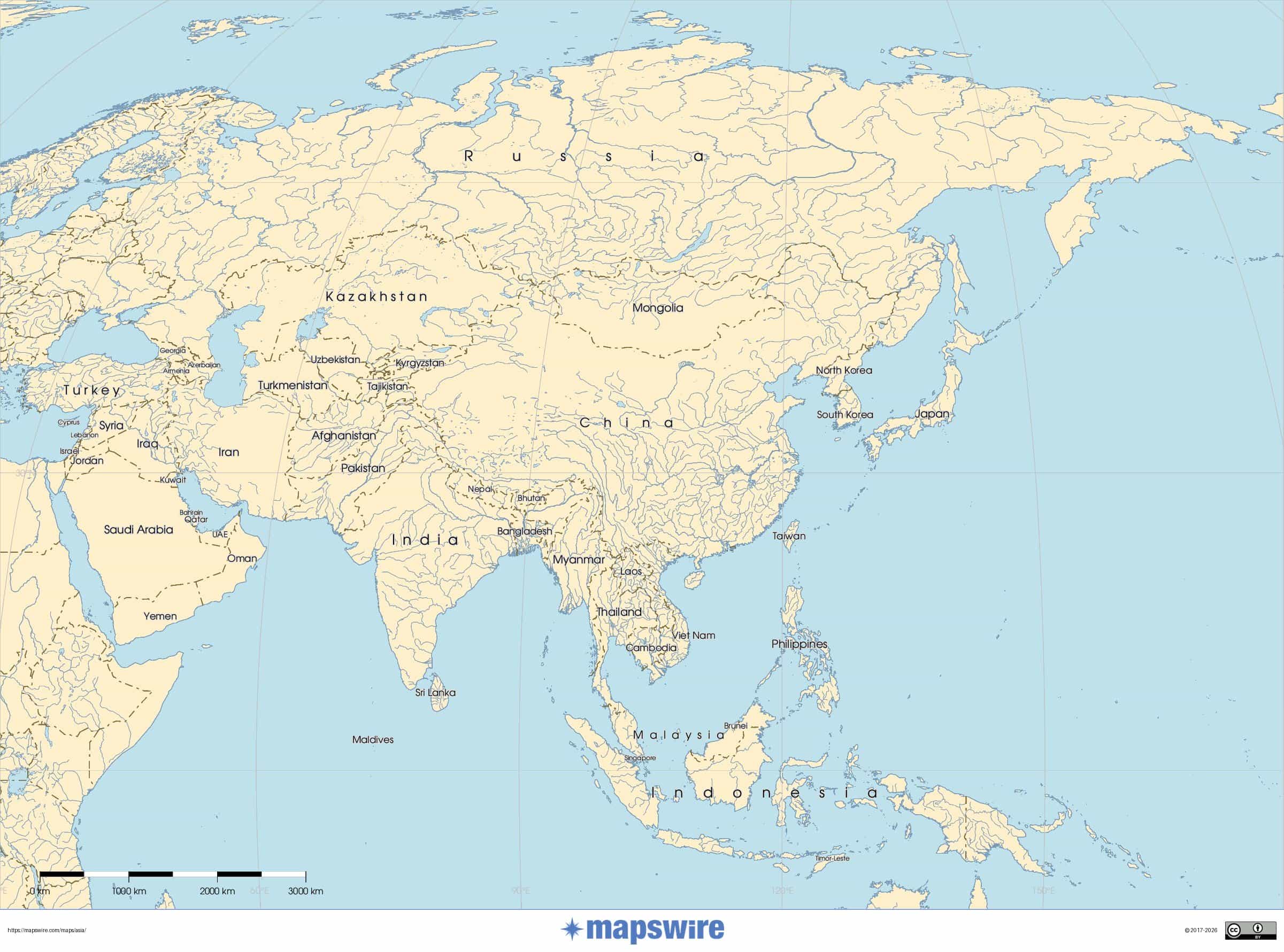
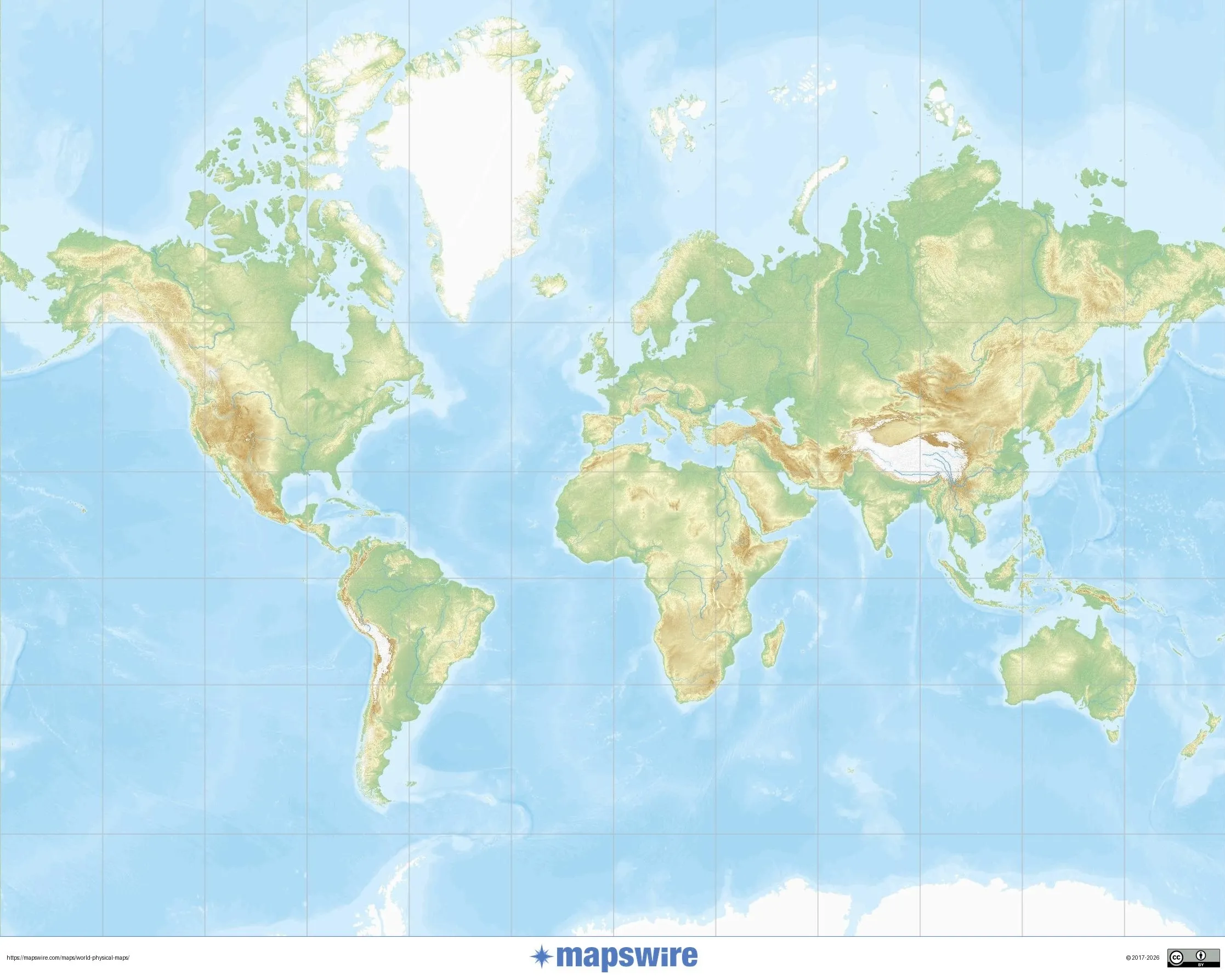
Map
| Category | |
|---|---|
| Element |
Asia
World
Related Links
| Group | List |
|---|---|
| East Asia | Ming and Qing Emperors Late Ming period Maritime trade Joseon Dynasty |
| West Asia | Ottoman Empire Safavid dynasty Trade and Diplomacy |
Comments