Ming and Qing Rulers: Legacy of Early Modern Empire
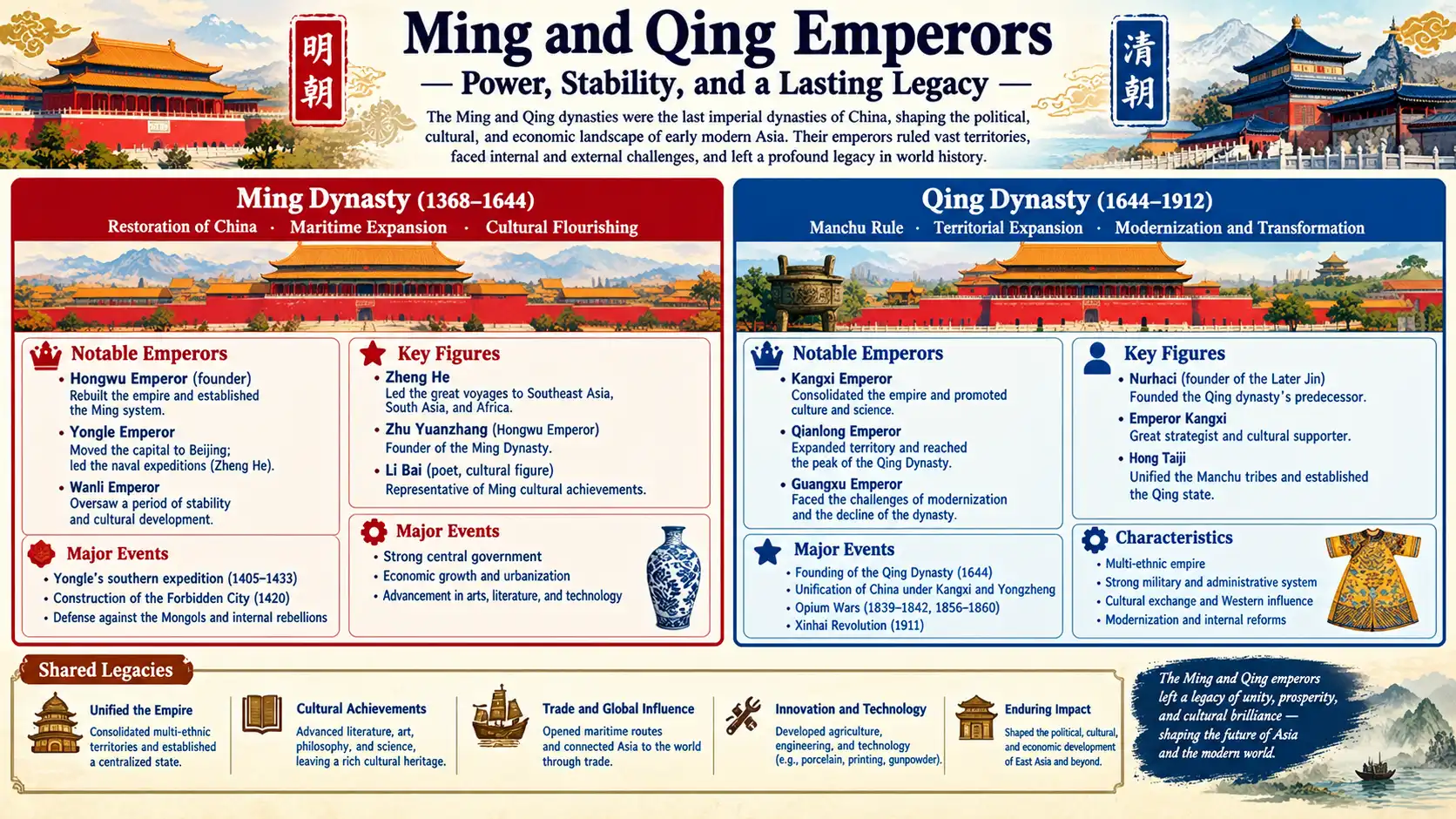
Ming and Qing Emperors
The Ming and Qing emperors shaped early modern East Asia through centralized autocratic rule and vast territorial growth. They built iconic monuments like the Forbidden City, refined bureaucratic systems, and expanded China's borders to their greatest extent, leaving a profound impact on regional governance, trade, and culture.
People
Birth
Death
Origin
Age (Death)
| 1328 | |
|---|---|
| 1360 | |
| 1378 | |
| 1399 | |
| 1427 | |
| 1470 | |
| 1563 | |
| 1592 | |
| 1611 | |
| 1638 | |
| 1654 | |
| 1678 | |
| 1711 |
Timeline
| Category | |
|---|---|
| Element |
| Year | Ming and Qing Emperors |
|---|---|
| 1328 |
Birth of Hongwu Emperor (Period: October 21, 1328, Location: Zhongli County, Haozhou (near present-day Fengyang County, Anhui Province, People's Republic of China))
|
| 1350 |
War between Zhu Yuanzhang and Chen Youliang
War between Zhu Yuanzhang and Zhang Shicheng
|
| 1351 |
Red Turban Rebellion
|
| 1352 |
Zhu Yuanzhang's Joinder of the Rebel Forces
Marriage (Hongwu Emperor and Empress Ma)
|
| 1356 |
Expansion of Power Based in Nanjing
|
| 1360 |
Compilation of the Great Ming Code
Birth of Yongle Emperor (Period: May 2, 1360, Location: Nanjing, China (then Yingtian Prefecture))
|
| 1367 |
Ming Dynasty's Overthrow of the Yuan Dynasty's Rule over the Chinese Mainland
|
| 1368 |
Ming-Northern Yuan War
Reorganization of the Military System and the Weisuo System
Development of Nanjing as Capital of the Ming Dynasty
Establishment of the Ming Dynasty and Enthronement of the Hongwu Emperor
Capture of Dadu, Capital of the Yuan Dynasty
|
| 1370 |
Enfeoffment as Prince of Yan
Mass Purge of Founding Meritorious Officials of the Ming Dynasty
Compilation of Household Registers and Land Registers
|
| 1376 |
Marriage (Yongle Emperor and Empress Xu)
|
| 1378 |
Birth of Hongxi Emperor (Period: August 16, 1378, Location: Nanjing, the capital of the Ming dynasty (present-day Nanjing City, Jiangsu Province, People's Republic of China))
|
| 1380 |
Case of Hu Weiyong
Abolition of the Prime Minister System and Concentration of Imperial Power
|
| 1381 |
Conquest of Yunnan by the Ming Army
|
| 1390 |
Execution of Li Shanchang
|
| 1392 |
Death of Zhu Biao and Change of the Heir to the Throne
Designation of Zhu Yunwen as Imperial Grandson and Heir
|
| 1393 |
Case of Lan Yu
|
| 1396 |
Marriage (Hongxi Emperor and Empress Zhang)
|
| 1398 |
Death of Hongwu Emperor
Death of the Hongwu Emperor and Imperial Succession
Death of the Hongwu Emperor
|
| 1399 |
Jingnan Campaign
Birth of Xuande Emperor (Period: March 16, 1399, Location: Beijing, China)
|
| 1402 |
Disappearance of the Jianwen Emperor in the Jingnan Campaign
Political Purges after the Cases of Hu Weiyong and Lan Yu and Yongle Emperor's Punishment of the Jianwen Faction
Court Conflict over the Succession of the Crown Prince
Enthronement of the Yongle Emperor
|
| 1403 |
Compilation of the Yongle Encyclopedia
|
| 1404 |
Investiture as Crown Prince
|
| 1405 |
Commencement of Zheng He's Treasure Voyages
|
| 1406 |
Ming Invasion of Vietnam / Ming-Dai Viet War
Construction of the Imperial Palace in Beijing (Forbidden City)
Ming-Dai Viet War
|
| 1409 |
Yongle Emperor's Military Campaigns against the Mongols
|
| 1411 |
Investiture as Imperial Heir Apparent
|
| 1417 |
Marriage (Xuande Emperor and Empress Hu Shanxiang)
|
| 1420 |
Establishment of the Eastern Depot
Failure of Paper Money Policy and Changes in Currency Circulation
|
| 1421 |
Transfer of the Ming Capital to Beijing
|
| 1424 |
Ming-Mongol Military Campaigns
Suspension of Zheng He's Treasure Voyages
Review of Fiscal and Tax Systems and Policy for People's Livelihood
Death of the Yongle Emperor and Succession to the Throne
Death of Yongle Emperor
Death during the Mongol Campaign
Enthronement of the Hongxi Emperor
|
| 1425 |
Plan to Relocate the Capital Back to Nanjing
Ming-Mongol Border Conflicts
Rebellion of Zhu Gaoxu
Death of Hongxi Emperor
Sudden Death of the Hongxi Emperor and Enthronement of the Xuande Emperor
Enthronement of the Xuande Emperor
|
| 1426 |
Tax Reductions and Administrative Improvements in Jiangnan
|
| 1427 |
Administrative and Military Reforms
Birth of Emperor Yingzong of Ming (Period: November 29, 1427, Location: Beijing, Ming Dynasty (present-day Beijing, People's Republic of China))
|
| 1428 |
Deposition of Empress Hu and Investiture of Empress Sun
Marriage (Xuande Emperor and Empress Sun)
|
| 1431 |
Zheng He's Final Treasure Voyage
|
| 1432 |
Progress in Diplomatic Relations with Japan
|
| 1435 |
Death of Xuande Emperor
Death of the Xuande Emperor and Enthronement of the Zhengtong Emperor (Emperor Yingzong)
Enthronement as the Zhengtong Emperor
|
| 1436 |
Marriage (Emperor Yingzong and Empress Qian)
|
| 1442 |
Rise of the Eunuch Wang Zhen
|
| 1449 |
Ming-Oirat War
Oirat Expedition and Personal Military Campaign
Tumu Crisis
Capture of Emperor Yingzong in the Tumu Crisis
Shift of the Imperial Throne to the Jingtai Emperor
Defense of Beijing
|
| 1450 |
Return and House Arrest of Emperor Yingzong
Release from the Oirats and Return to Beijing
|
| 1452 |
Replacement of the Crown Prince by the Jingtai Emperor
|
| 1457 |
Couplist Restoration (Restoration of Emperor Yingzong)
Restoration as the Tianshun Emperor
|
| 1461 |
Rebellion of Cao Qin
|
| 1464 |
Abolition of the Practice of Human Sacrifice upon Imperial Death
Death of Emperor Yingzong of Ming
Death of Emperor Yingzong and Enthronement of the Chenghua Emperor
|
| 1470 |
Imperial Succession Issue surrounding the Influence of Noble Consort Wan (Period: 1470-1475, Location: Ming Imperial Court in Beijing, China)
Birth of Hongzhi Emperor (Period: July 30, 1470, Location: Beijing, China)
|
| 1475 |
Death of Consort Ji
|
| 1487 |
Hongzhi Restoration and Improvement of Bureaucratic Governance
Marriage (Hongzhi Emperor and Empress Zhang)
Enthronement of the Hongzhi Emperor
|
| 1489 |
Ming-Turpan Military Conflicts over Hami
|
| 1490 |
Revision of the Great Ming Code and Compilation of Legal Statutes
Readjustment of the Tea-Horse Trade
|
| 1492 |
Catastrophic Flooding of the Yellow River and Flood Control Projects
|
| 1499 |
Rebellion of Milu
|
| 1500 |
Li Minority Rebellion in Hainan Island
|
| 1503 |
Resumption of Copper Coinage and Monetary Policy
|
| 1505 |
Death of Hongzhi Emperor
Death of the Hongzhi Emperor and Enthronement of the Zhengde Emperor
|
| 1563 |
Birth of Wanli Emperor (Period: September 4, 1563, Location: Shuntian Prefecture (around present-day Beijing, People's Republic of China))
|
| 1572 |
Zhang Juzheng's Reforms and Posthumous Fall from Grace
Administrative and Fiscal Reforms by Zhang Juzheng
Enthronement of the Wanli Emperor
|
| 1578 |
Marriage (Wanli Emperor and Empress Xiaoduanxian)
Marriage (Wanli Emperor and Empress Xiaojing)
|
| 1580 |
Conflict over the Succession of the Crown Prince (Guoben Controversy)
Matteo Ricci's Missionary Activities in China
Marriage (Wanli Emperor and Noble Consort Zheng)
|
| 1582 |
Ming-Burmese Border Conflicts
|
| 1590 |
Banzhou Rebellion
|
| 1592 |
Imjin War (Japanese invasions of Korea)
Three Great Campaigns of the Wanli Era
Ningxia Rebellion
Birth of Hong Taiji (Period: November 28, 1592, Location: Xinbin Manchu Autonomous County, Fushun City, Liaoning Province, China (near the former Hetu Ala))
|
| 1596 |
Eunuch Collection of Mining and Commercial Taxes and Popular Backlash
|
| 1600 |
Conflict between the Donglin Faction and Court Bureaucrats
Wanli Emperor's Prolonged Neglect of Imperial Duties
|
| 1601 |
Investiture of Zhu Changluo as Crown Prince
|
| 1611 |
Birth of Chongzhen Emperor (Period: February 6, 1611, Location: Beijing, China)
|
| 1614 |
Marriage (Hong Taiji and Empress Jerjer)
|
| 1616 |
Rebellions by the White Lotus Sect and Other Groups
|
| 1618 |
Ming-Later Jin War
|
| 1619 |
Battle of Sarhū
Battle of Sarhu and Deterioration of the Situation in Liaodong
|
| 1620 |
Li Zicheng's Peasant Rebellion
Rebellion of Zhang Xianzhong
Wars with Inner Mongolian Factions
Integration of Inner Mongolian Tribes
Death of Wanli Emperor
Death of the Wanli Emperor and Enthronement of the Taichang Emperor
|
| 1622 |
Enfeoffment as Prince of Xin
|
| 1625 |
State-Building Based in Shengjing
Marriage (Hong Taiji and Empress Bumbutai)
|
| 1626 |
Marriage (Chongzhen Emperor and Empress Zhou)
Succession of the Later Jin after the Death of Nurhaci
Establishment of the Eight Banners System and Administrative Structure
Enthronement as the Second Khan of the Later Jin
|
| 1627 |
Peasant Rebellions in the Late Ming and Suppression of Local Uprisings
Fall of Wei Zhongxian and Madame Ke
Bureaucratic Reforms and Factual Strife
First Manchu Invasion of Korea (Dingmao Horan)
Enthronement of the Chongzhen Emperor
|
| 1630 |
Fiscal Crisis and Delayed Payment of Military Wages
Expeditions to the Amur River Basin and Subjugation of the Evenki Forces
Execution of Yuan Chonghuan
|
| 1633 |
Great Plague of Beijing
|
| 1634 |
Marriage (Hong Taiji and Empress Harjol)
|
| 1635 |
Change of the Ethnic Name from Jurchen to Manchu
|
| 1636 |
Establishment of the Qing Dynasty
Second Manchu Invasion of Korea (Byeongja Horan)
Adoption of the Chongde Era Name and Institutional Development of the Qing Dynasty
Change of the State Title to Great Qing and Assumption of the Imperial Title
|
| 1638 |
Birth of Shunzhi Emperor (Period: March 15, 1638, Location: Yongfu Palace, Mukden Palace, Shengjing (present-day Shenyang City, Liaoning Province, People's Republic of China))
|
| 1640 |
Qing Conquest of Guangdong and Guangxi
Marriage (Shunzhi Emperor and Other Imperial Concubines)
|
| 1642 |
Surrender of the Ming General Hong Chengchou to the Qing
|
| 1643 |
Li Zicheng's Occupation of Xi'an and Establishment of the Shun Dynasty
Regency of Dorgon
Death of Hong Taiji
Death of Hong Taiji and Enthronement of the Shunzhi Emperor
Enthronement of the Shunzhi Emperor
|
| 1644 |
Li Zicheng's Rebellion and Qing Army's Advance into Beijing
War against the Southern Ming
Choices of Former Ming Officials Regarding Surrender to the Qing
Recruitment of Han Bureaucrats and Development of the Governance System
Fall of Beijing and Demise of the Ming Dynasty
Fall of Beijing and Suicide of the Chongzhen Emperor
Death of Chongzhen Emperor
Establishment of the Southern Ming Regime
Qing Army's Entry into Beijing
|
| 1645 |
Resistance in Jiading and Suppression by the Qing Army
Issuance of the Queue Order and Widespread Resistance
Occupation of Nanjing and Collapse of the Southern Ming Regime
Battle of Yangzhou
|
| 1646 |
War between Zheng Chenggong and the Qing Dynasty
|
| 1650 |
Death of Dorgon and his Posthumous Demotion
|
| 1651 |
Beginning of Personal Rule by the Shunzhi Emperor
Personal Rule after Dorgon's Death
Marriage (Shunzhi Emperor and Deposed Empress of the Borjigit Clan)
|
| 1653 |
Deposition of the Empress
Marriage (Shunzhi Emperor and Empress Xiaokangzhang)
|
| 1654 |
Marriage (Shunzhi Emperor and Empress Xiaohuizhang)
Birth of Kangxi Emperor (Period: May 4, 1654, Location: Beijing, China)
|
| 1656 |
Marriage (Shunzhi Emperor and Empress Xiaoxian)
|
| 1661 |
Zheng Chenggong's Expansion into Taiwan
Smallpox Epidemic and Death of the Shunzhi Emperor
Enthronement of the Kangxi Emperor and Inauguration of the Regency System
Enthronement of the Kangxi Emperor
Death of Shunzhi Emperor
|
| 1665 |
Marriage (Kangxi Emperor and Empress Hesheri)
Marriage (Kangxi Emperor and Empress Niohuru)
|
| 1669 |
Beginning of Kangxi Emperor's Personal Rule and Fall of Oboi
|
| 1673 |
Revolt of the Three Feudatories
Suppression of the Rebellion of the Three Feudatories
|
| 1678 |
Birth of Yongzheng Emperor (Period: December 13, 1678, Location: Yonghe Palace inside the Forbidden City, Beijing, China)
|
| 1680 |
Qing-Russian Border Conflicts
|
| 1683 |
Conquest of the Zheng Regime in Taiwan
Lifting of the Great Clearance and Resettlement of Coastal Areas
Incorporation of Taiwan into the Qing Empire
|
| 1688 |
Dzungar-Qing Wars
|
| 1689 |
Signing of the Treaty of Nerchinsk
|
| 1708 |
Deposition of Crown Prince Yinreng and Imperial Succession Issue
|
| 1710 |
Compilation of the Kangxi Dictionary
|
| 1711 |
Birth of Qianlong Emperor (Period: September 25, 1711, Location: Beijing, China (then the Residence of Prince Yong, present-day Yonghe Temple))
|
| 1720 |
Military Intervention in Tibet
|
| 1722 |
Late Years of the Kangxi Emperor and Imperial Succession to the Yongzheng Emperor
Death of Kangxi Emperor
|
| 1735 |
Death of Yongzheng Emperor
|
| 1799 |
Death of Qianlong Emperor
|
| Unknown |
Restoration and Dredging of the Grand Canal (Period: Early 15th Century, Especially Reign of the Yongle Emperor, Location: Grand Canal Connecting North China and Jiangnan in Eastern China)
Ming-Qing Transition (Period: 1643-1661), Location: Northeast China, North China, Central China, South China, etc.)
Marriage (Hong Taiji and Side Consorts/Imperial Concubines, Period: Early 17th Century to 1640s, Location: Courts of Later Jin and Qing (Individual Wedding Locations Uncertain))
Chinese Rites Controversy (Period: Late 17th Century to Early 18th Century, Location: Qing Imperial Court Centered in Beijing, China and Catholic Churches in Various Regions)
Introduction of Western Science and Development of Court Culture (Period: Late 17th Century to Early 18th Century, Location: Beijing, China)
Marriage (Hongwu Emperor and Noble Consort Guo, Period: Exact Date Unknown, Location: Ming Imperial Court (Exact Wedding Location Uncertain))
Marriage (Emperor Yingzong and Noble Consort Zhou, Period: Exact Date Unknown; Entered Palace during Zhengtong Era, Location: Ming Imperial Court, Beijing)
Marriage (Chongzhen Emperor and Noble Consort Tian, Period: Exact Marriage Date Unknown, Location: Ming Imperial Court, China (Exact Wedding Location Uncertain))
Marriage (Kangxi Emperor and Empress Tunggiya, Period: Exact Marriage Date Unknown, Location: Qing Imperial Court in Beijing, China)
Marriage (Kangxi Emperor and Empress Uya, Period: Exact Marriage Date Unknown, Location: Qing Imperial Court in Beijing, China)
|
Map
| Category | |
|---|---|
| Element |
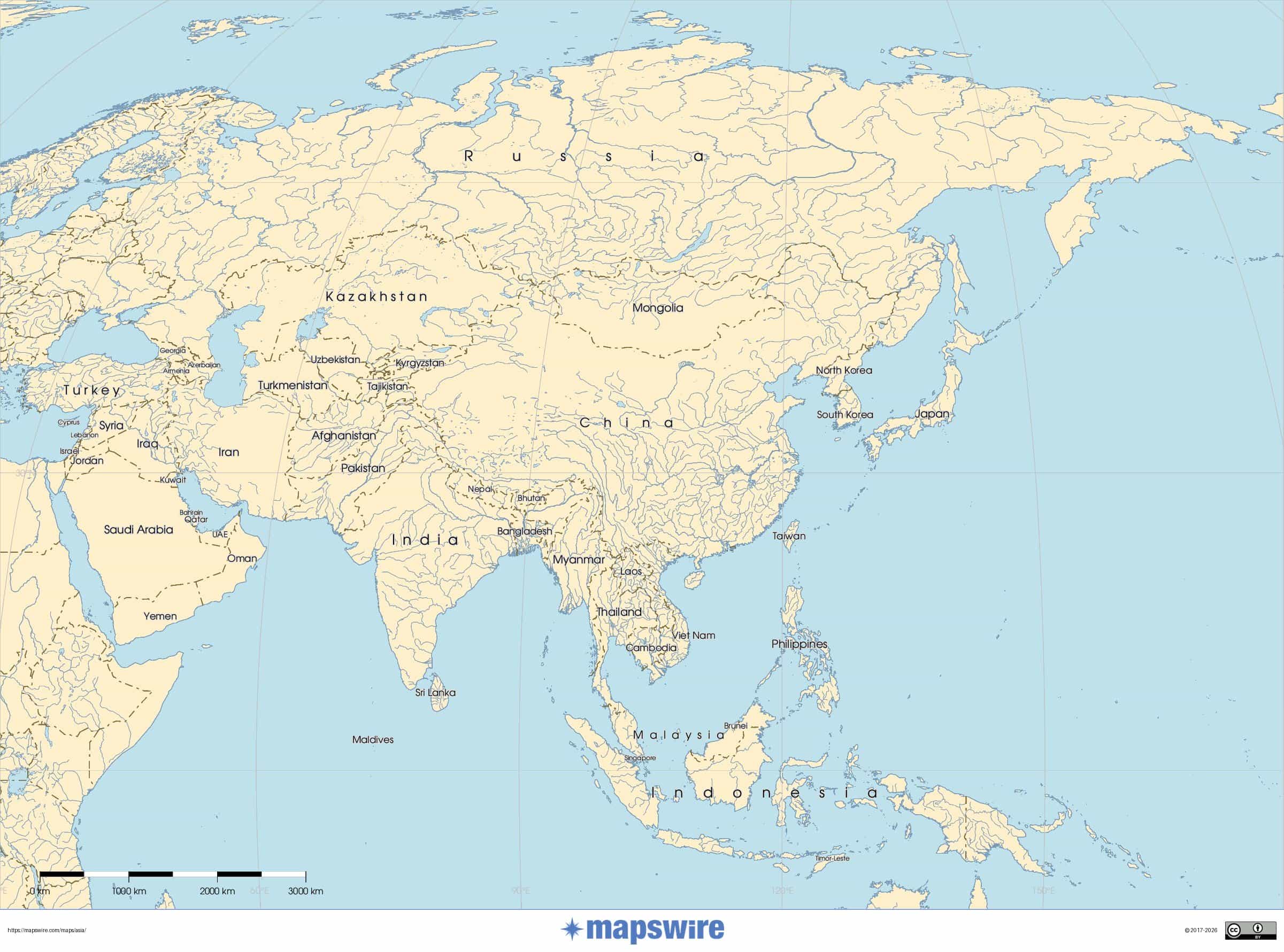
Asia
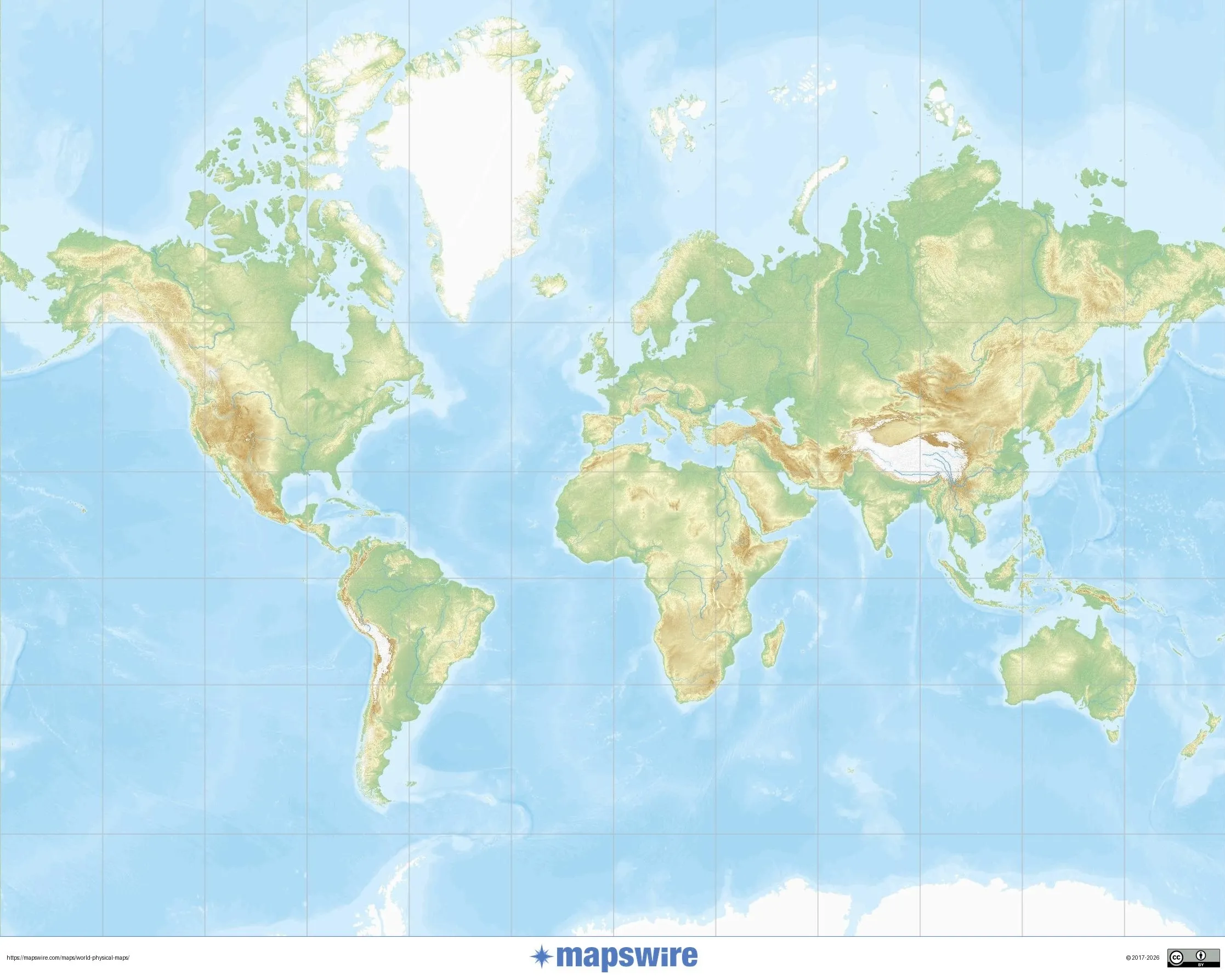
World
Related Links
| Group | List |
|---|---|
| East Asia | Ming and Qing Emperors Late Ming period Maritime trade Joseon Dynasty |
| West Asia | Ottoman Empire Safavid dynasty Trade and Diplomacy |
Comments