German Leaders of World War I

German Leaders of World War I

German Leader

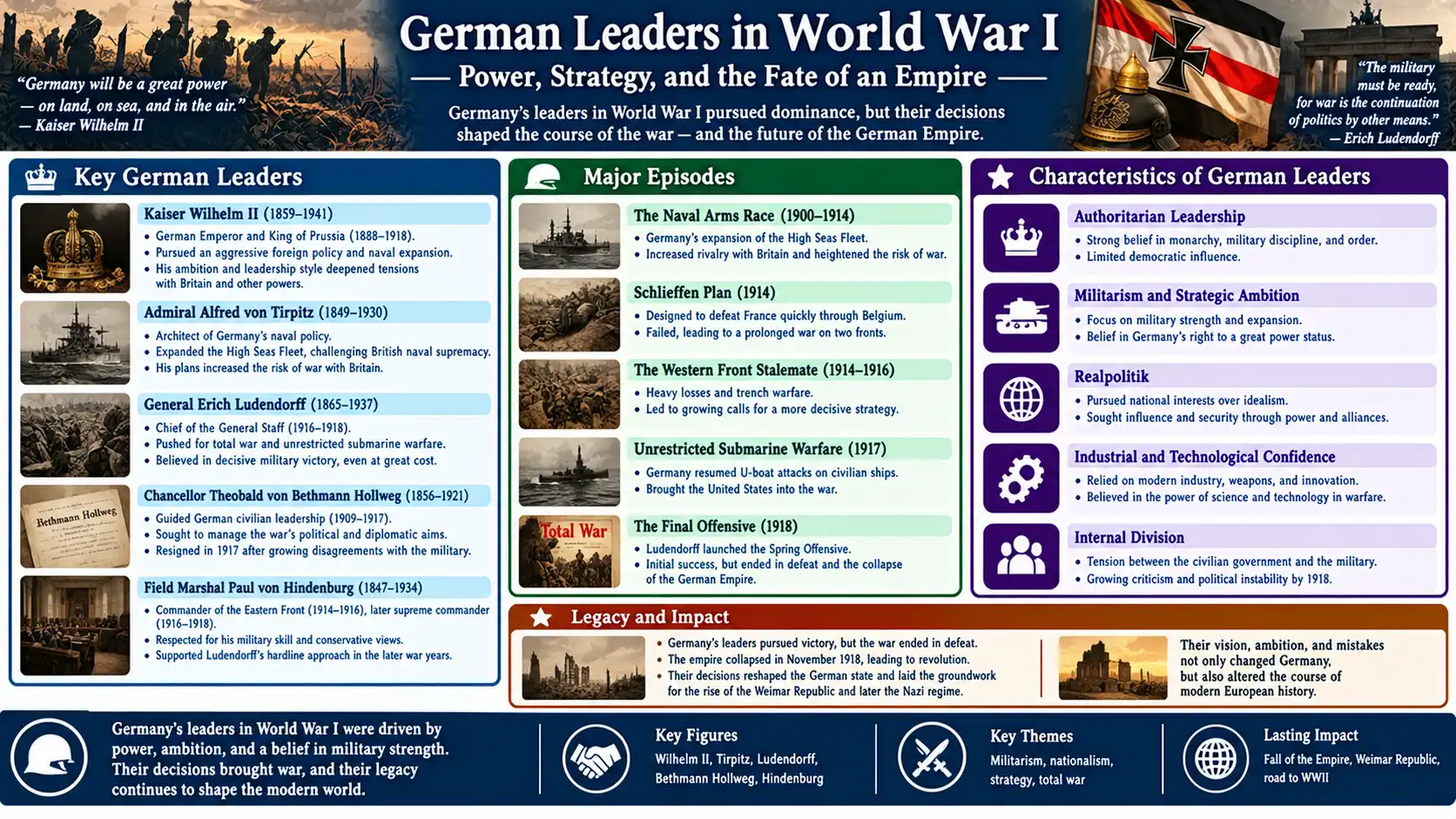
During World War I, Germany’s political and military leadership underwent dramatic transformations as the nation struggled between imperial ambitions and military collapse. Initially directed by Kaiser Wilhelm II and Chancellor Theobald von Bethmann-Hollweg, civil authority was increasingly sidelined by the Supreme Army Command under Paul von Hindenburg and Erich Ludendorff. Successive chancellors, including Georg Michaelis, Georg von Hertling, and Prince Max von Baden, struggled to manage domestic food shortages, parliamentary demands for peace, and military dominance. Max von Baden ultimately oversaw the shift toward a parliamentary monarchy, negotiated the armistice, and announced the Kaiser’s abdication, marking the end of the German Empire.

People

Birth Death Origin Age (Death)
1831
1843
1856
1857
1859
1867

Timeline

Category
Element
Year German Leader
1831
Birth of Friedrich III (Period: October 18, 1831, Location: Potsdam, Germany)
1843
Birth of Georg von Hertling (Period: August 31, 1843, Location: Darmstadt (Germany))
1856
Birth of Theobald von Bethmann-Hollweg (Period: November 29, 1856, Location: Hohenfinow (Brandenburg, Germany))
1857
Birth of Georg Michaelis (Period: September 8, 1857, Location: Haynau (now Chojnów, Poland))
1859
Birth of Wilhelm II (Period: January 27, 1859, Location: Berlin (Germany))
1860
Philosophical Studies and Doctorate (Georg von Hertling)
1867
Habilitation (Georg von Hertling)
Birth of Max von Baden (Period: July 10, 1867, Location: Baden-Baden (Germany))
1869
Marriage (Georg von Hertling, Anna von Biegeleben)
1870
Military Education as Crown Prince of Prussia
Kulturkampf (Culture Struggle)
1875
Legal Education
Growth of the Centre Party in the German Reichstag
Activities as Member of the German Reichstag
1876
Legal Studies
Foundation of the Görres Society
1880
Studies in Law and Public Finance
Activities as a Prussian Army Officer
1881
Marriage (Wilhelm II, Auguste Viktoria of Schleswig-Holstein)
1882
Appointment as Professor at the University of Munich (Georg von Hertling)
1885
Teaching German Law in Tokyo
1886
Appointment as Landrat of Oberbarnim (Theobald von Bethmann Hollweg)
1888
Death of Friedrich III
Acceding to the Throne as Emperor Wilhelm II
1889
Advancement as a Prussian Civil Servant
Marriage to Martha von Pfuel
Marriage (Theobald von Bethmann Hollweg, Martha von Pfuel)
1890
Wilhelm II's Pursuit of "Weltpolitik"
New Course after Bismarck's Resignation
Large-Scale Expansion of the German Navy
Dismissal of Bismarck
1891
Marriage (Georg Michaelis, Margarete Schmidt)
Appointment as Member of the Upper House of Bavaria (Georg von Hertling)
1896
Kruger Telegram Incident
1897
German Lease of Kiautschou Bay and Qingdao
1899
Second Boer War
Boxer Rebellion and Eight-Nation Alliance Expedition to China
Appointment as Regional President of Bromberg (Theobald von Bethmann Hollweg)
1900
Support for the Baghdad Railway Project
Marriage (Max von Baden, Marie Louise of Hanover-Cumberland)
1904
Herero and Nama Genocide
1905
Appointment as Prussian Minister of the Interior (Theobald von Bethmann Hollweg)
First Moroccan Crisis (Tangier Crisis)
1907
Becoming Heir Presumptive to the Grand Duchy of Baden
Appointment as State Secretary of the Imperial Home Office and Vice-President of the Prussian Cabinet (Theobald von Bethmann Hollweg)
1908
Daily Telegraph Affair
1909
Imperial Financial Reform
Appointment as Prussian Undersecretary of Finance (Georg Michaelis)
Leader of the Centre Party Parliamentary Group
Appointment as Chancellor of the German Empire (Theobald von Bethmann Hollweg)
1911
Second Moroccan Crisis (Agadir Crisis)
Agadir Crisis (Second Moroccan Crisis)
Alsace-Lorraine Constitutional Reform
Attempts to Improve Relations with Britain
1912
Appointment as Minister-President and Foreign Minister of Bavaria (Georg von Hertling)
1913
Zabern Affair (Saverne Affair)
1914
War Leadership in World War I
German War Leadership in World War I
The "Blank Check" at the Outbreak of World War I
July Crisis
Violation of Belgian Neutrality and "Scrap of Paper" Statement
September Program
Appointment as Honorary President of the Baden Red Cross (Max von Baden)
1915
German Food Crisis in World War I
Appointment as Head of the Imperial Grain Office (Georg Michaelis)
1916
Conflict Over Unrestricted Submarine Warfare
Participation in German-American Prisoner-of-War Relief Efforts
Peace Proposals at the End of 1916
1917
Resumption of Unrestricted Submarine Warfare
Response to Parliamentarization and Electoral Reform (Georg von Hertling)
Conflict Over the Resumption of Unrestricted Submarine Warfare
Appointment as State Commissioner for Food Supply (Georg Michaelis)
Response to the Russian February Revolution
Resignation of Theobald von Bethmann Hollweg (Georg Michaelis)
Handling of the Peace Resolution
Political Conflict Over the 1917 Reichstag Peace Resolution
Emergence as Candidate for Imperial Chancellor
July 1917 Crisis
Resignation as Chancellor of the German Empire (Theobald von Bethmann Hollweg)
Appointment as Chancellor of the German Empire and Minister-President of Prussia (Georg Michaelis)
Reichstag Peace Resolution of 1917
Wilhelmshaven Sailor Revolt
Second Kreuznach Conference
Conflict with the Reichstag in Autumn 1917
1917 German Imperial Government Change
Resignation as Chancellor (Georg Michaelis)
Appointment as Chancellor of the German Empire and Minister-President of Prussia (Georg von Hertling)
Formation of the Hertling Cabinet
1918
Exile in the Netherlands (Wilhelm II)
Peace Issue at the End of World War I
Retirement and Death (Georg von Hertling)
High President of the Province of Pomerania
Government Crisis on the Eve of the 1918 German Revolution
German Defeat in the War and Government Crisis
German Revolution and Kiel Mutiny
German Constitutional Reforms of October 1918
Amnesty for Political Prisoners Including Karl Liebknecht
Formation of a Government Based on the Parliamentary Majority
Transformation of the German Empire into a Parliamentary Monarchy
Resignation as Chancellor (Georg von Hertling)
Appointment as Chancellor of the German Empire and Minister-President of Prussia (Max von Baden)
Armistice Request to Wilson
Dismissal of Erich Ludendorff
Kiel Mutiny and German Revolution
Collapse of the German Empire
Issue of Wilhelm II's Abdication
Wilhelm II's Abdication and Exile to the Netherlands (Wilhelm II)
Announcement of the Emperor's Abdication and Transfer of the Chancellorship
1919
Prosecution Issue of the Kaiser under the Treaty of Versailles
Writing and Publication of "Reflections on the World War"
Declining the Invitation to Join the Weimar National Assembly
Publication of "The League of Nations and Lawful Peace"
1920
Participation in the German National People's Party
Establishment of Schule Schloss Salem
1921
Publication of "For State and People"
1922
Visit to Beijing
Marriage (Wilhelm II, Hermine Reuss of Greiz)
1926
Testimony before the Reichstag Investigating Committee
1928
Becoming Head of the House of Baden (Max von Baden)
1929
Death of Max von Baden
1930
Relationship with Adolf Hitler
1936
Death of Georg Michaelis
1940
World War II and Occupation of the Netherlands
1941
Death of Wilhelm II

Map

Category
Element
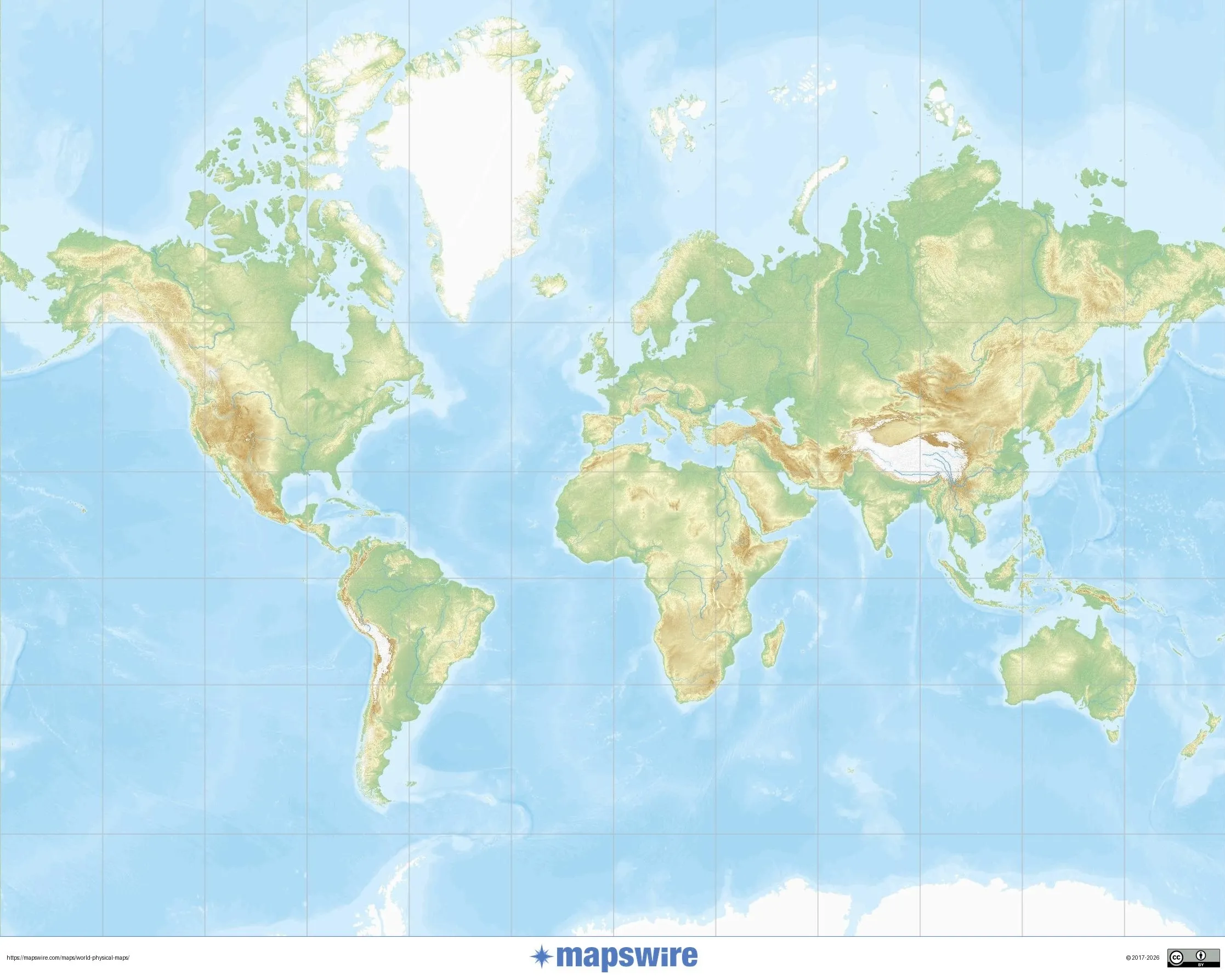
Europe World
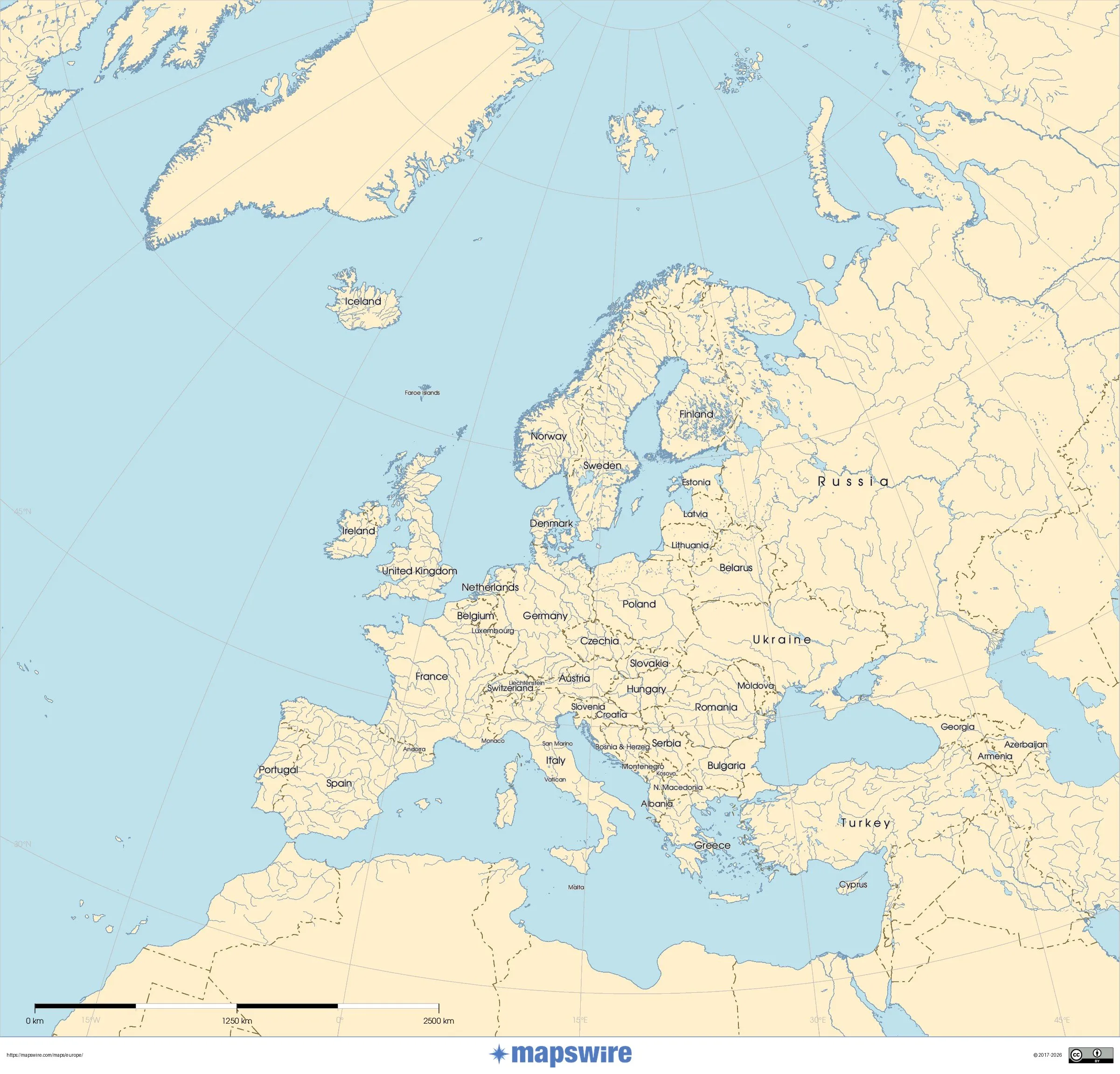
europe map

Related Links

Other Languages

Comments