The Prague Spring: Reform and Crisis
Prague Spring
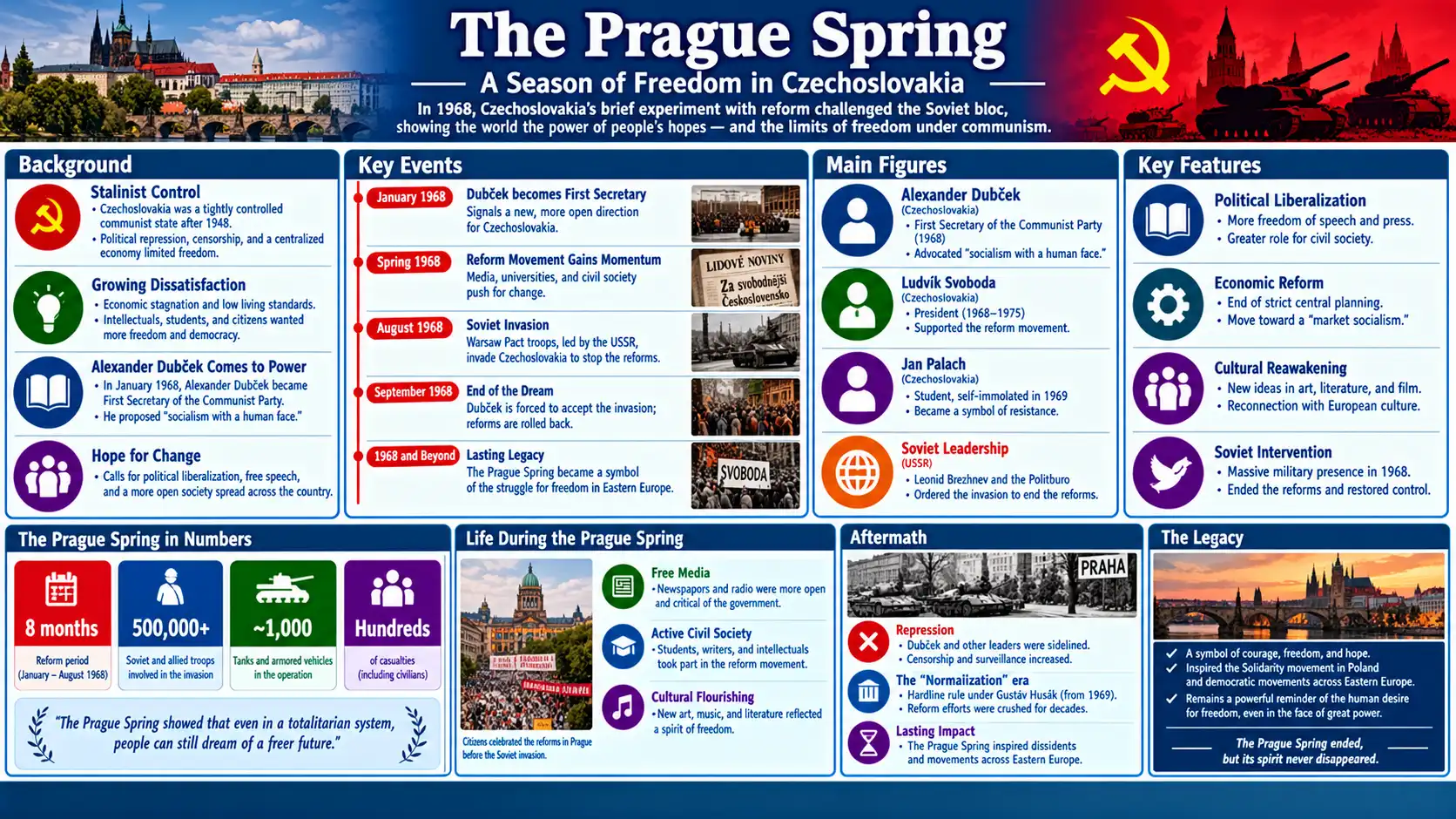
The Prague Spring of 1968 was a period of intense political liberalization in Czechoslovakia led by Alexander Dubček. Under the banner of "socialism with a human face," the movement sought to decentralize the economy, loosen state censorship, and guarantee civil liberties. This brief democratization challenged orthodox Soviet control and sparked immense hope among citizens for a more open society. However, alarmed by these democratic reforms, the Soviet Union and its Warsaw Pact allies launched a massive military invasion in August 1968, crushing the movement and ushering in decades of repressive political normalization.
People
Birth
Death
Origin
Age (Death)
| 1895 | |
|---|---|
| 1911 | |
| 1921 | |
| 1921 | |
| 1926 | |
| 1929 | |
| 1936 |
Timeline
| Category | |
|---|---|
| Element |
| Year | Prague Spring |
|---|---|
| 1895 |
Birth of Ludvík Svoboda (Period: November 25, 1895, Location: Hroznatín village, Třebíč District, Vysočina Region, Czech Republic. It is a village, not a city.)
|
| 1900 |
Agricultural education and early life
|
| 1911 |
Birth of Josef Smrkovský (Period: February 26, 1911, Location: Velenka village in the Kingdom of Bohemia, Austro-Hungarian Empire (present-day Velenka, Nymburk District, Central Bohemian Region, Czech Republic))
|
| 1914 | |
| 1916 |
Participation in the Czechoslovak Legion
|
| 1917 |
Russian Civil War
|
| 1921 |
Return to the Czechoslovak military
Birth of Oldřich Černík (Period: October 27, 1921, Location: Ostrava, Czech Republic)
Birth of Alexander Dubček (Period: November 27, 1921, Location: Uhrovec village, Trenčín Region, Slovak Republic)
|
| 1923 |
Marriage (Ludvík Svoboda, Irena Stratilová)
|
| 1924 |
Early childhood in the Soviet Union and return to Czechoslovakia
|
| 1926 |
Birth of Ludvík Vaculík (Period: July 23, 1926, Location: Brumov, Czechoslovakia (an area included in the city of Brumov-Bylnice, Zlín Region, present-day Czech Republic))
|
| 1929 |
Boyhood immersed in music (Period: 1929 to the 1940s, Location: Czechoslovakia, Brno.)
Birth of Milan Kundera (Period: April 1, 1929, Location: Brno, Czech Republic)
|
| 1930 |
Departure as a baker's apprentice and participation in the labor movement
Political education in the Soviet Union
Employment as a factory worker
|
| 1936 |
Birth of Václav Havel (Period: October 5, 1936, Location: Prague, Czech Republic)
|
| 1938 |
Munich Agreement and the territorial crisis of Czechoslovakia
|
| 1939 |
Participation in the "Defense of the Nation" resistance movement under Nazi occupation
Internment of Czechoslovak military units in Soviet territory
Joining the Communist Party of Slovakia
Occupation of the Czech lands by Nazi Germany
|
| 1941 |
Formation of the Czechoslovak Legion in the Soviet Union
Vocational training and employment at the Baťa company
|
| 1943 |
Participation in the Kiev Offensive
|
| 1944 |
Command of the 1st Czechoslovak Army Corps
Activities in the Czech National Council
Slovak National Uprising
|
| 1945 |
Assumption of roles related to nationalized and land policies
Activities as a communist member
Joining the Communist Party of Czechoslovakia
Assumption of office as Minister of Defense of Czechoslovakia
Prague Uprising
Marriage (Alexander Dubček, Anna Borseková)
|
| 1946 |
Study of political and social sciences and entry into journalism
|
| 1947 | |
| 1948 |
Joining the Communist Party and political activities
Studies at Charles University in Prague
Czechoslovak coup d'état of 1948 (communist seizure of power)
Communist seizure of power known as the "Victorious February"
Prague coup d'état (communist seizure of power)
|
| 1949 |
Promotion to party and administrative cadres in the Ostrava region
|
| 1950 |
Purges within the communist regime and the arrest of Svoboda
Entering the Central Committee of the Communist Party of Czechoslovakia
Beginning of activities as a playwright
Kundera's expulsion from the Communist Party
Early activities as a poet
|
| 1952 |
Graduation from the Academy of Performing Arts in Prague and appointment as a teacher
|
| 1954 |
Assumption of office as Commandant of the Military-Political Academy
|
| 1955 |
Employment in an agricultural cooperative after release and return to politics
|
| 1956 |
Return to the Communist Party
Marriage (Milan Kundera, Olga Haas)
|
| 1960 |
Assumption of office as Minister of Fuel and Power
|
| 1963 |
Political purges related to the Slánský trial
Release of the play "The Garden Party"
Assumption of office as Deputy Prime Minister and Chairman of the State Planning Commission
|
| 1964 |
Marriage (Václav Havel, Olga Havlová)
|
| 1965 |
Expansion of international recognition through "The Memorandum"
|
| 1966 |
Publication of the novel "The Axe"
|
| 1967 |
Publication of the novel "The Joke"
Marriage (Milan Kundera, Věra Hrabánková)
Systemic criticism at the 4th Congress of the Union of Czechoslovak Writers
Statements at the 4th Congress of Czech Writers
Six-Day War
|
| 1968 |
Publication of "What Will Happen Next"
Downfall under normalization policies
Assumption of office as First Secretary of the Communist Party of Czechoslovakia
Assumption of office as President of Czechoslovakia
Assumption of office as Chairman of the National Assembly
Adoption of the Action Programme
Participation in the reform policies of the Prague Spring
Assumption of office as Prime Minister of Czechoslovakia
Publication of the "Two Thousand Words" manifesto
Signing of the Moscow Protocol
Acceptance of the Moscow Protocol and retreat of reforms
Return from the Soviet Union and expression of the continuation of reforms
Invasion of Czechoslovakia by Warsaw Pact troops
Conclusion of the Moscow Protocol
|
| 1969 |
Establishment of the normalization regime
Exclusion of reformists through normalization policies
Transfer of power to Gustáv Husák
Resignation as First Secretary and the beginning of the "Normalization" era
|
| 1970 |
Deterioration of health and resignation from the presidency
Normalization policies
Publication of the novel "The Joke" (Note: "The Guinea Pigs")
Exclusion from political activities and employment in the forestry management sector
Kundera's second expulsion from the Communist Party and ban on publishing works
Resignation from the premiership
|
| 1971 |
Establishment of the samizdat publication "Petlice"
Expulsion from the Communist Party and political downfall
|
| 1974 |
Death of Josef Smrkovský
Authorities' control over death and burial
|
| 1975 |
Emigration to France
|
| 1977 |
Charter 77
Charter 77 movement
Activities as a founder of Charter 77
|
| 1978 |
Activities of the Committee for the Defense of the Unjustly Prosecuted (VONS)
Publication of the essay "The Power of the Powerless"
|
| 1979 |
First long-term imprisonment
Deprivation of Czechoslovak citizenship
Publication of "The Book of Laughter and Forgetting"
Death of Ludvík Svoboda
|
| 1980 |
Publication of "The Czech Dream Diary"
|
| 1981 |
Acquisition of French citizenship
|
| 1984 |
Publication of "The Unbearable Lightness of Being"
|
| 1985 |
Receipt of the Jerusalem Prize
|
| 1987 |
Receipt of the Austrian State Prize for European Literature
|
| 1989 |
Writing activities after democratization
Receiving the Sakharov Prize
Palach Week
Demand for democratization through "The Sentence"
Velvet Revolution
Formation of the Civic Forum
Assumption of office as Chairman of the Federal Assembly of Czechoslovakia
|
| 1990 |
Publication of "Immortality"
Transition to writing novels in French
Return to political activities after democratization
Re-election as President after free elections
|
| 1992 |
Joining the Social Democratic Party of Slovakia
Political conflicts surrounding the dissolution of Czechoslovakia
Death due to a traffic accident
Death of Alexander Dubček
|
| 1993 |
Assumption of office as first President of the Czech Republic
|
| 1994 |
Death of Oldřich Černík
Traffic accident and death
|
| 1995 |
Receipt of the Herder Prize
|
| 1996 |
Establishment of Forum 2000
|
| 1997 |
Marriage (Václav Havel, Dagmar Veškrnová)
|
| 1999 |
Czech Republic's accession to NATO
|
| 2003 |
Resignation from the presidency
|
| 2011 |
Death of Václav Havel
|
| 2015 |
Death of Ludvík Vaculík
|
| 2019 |
Restoration of Czech citizenship
|
| 2023 |
Death of Milan Kundera
|
| Unknown |
Marriage (Josef Smrkovský, cannot be confirmed from reliable public information, Period: Cannot be confirmed, Location: Cannot be confirmed)
Marriage (Ludvík Vaculík, Marie Vaculíková, Period: Exact dates cannot be confirmed, Location: Details cannot be confirmed.)
Marriage (Oldřich Černík, Božena Černíková, Period: Marriage is confirmed, but the exact dates cannot be determined from public sources., Location: The specific location of the wedding is not clearly confirmed in available public sources.)
|
Map
| Category | |
|---|---|
| Element |
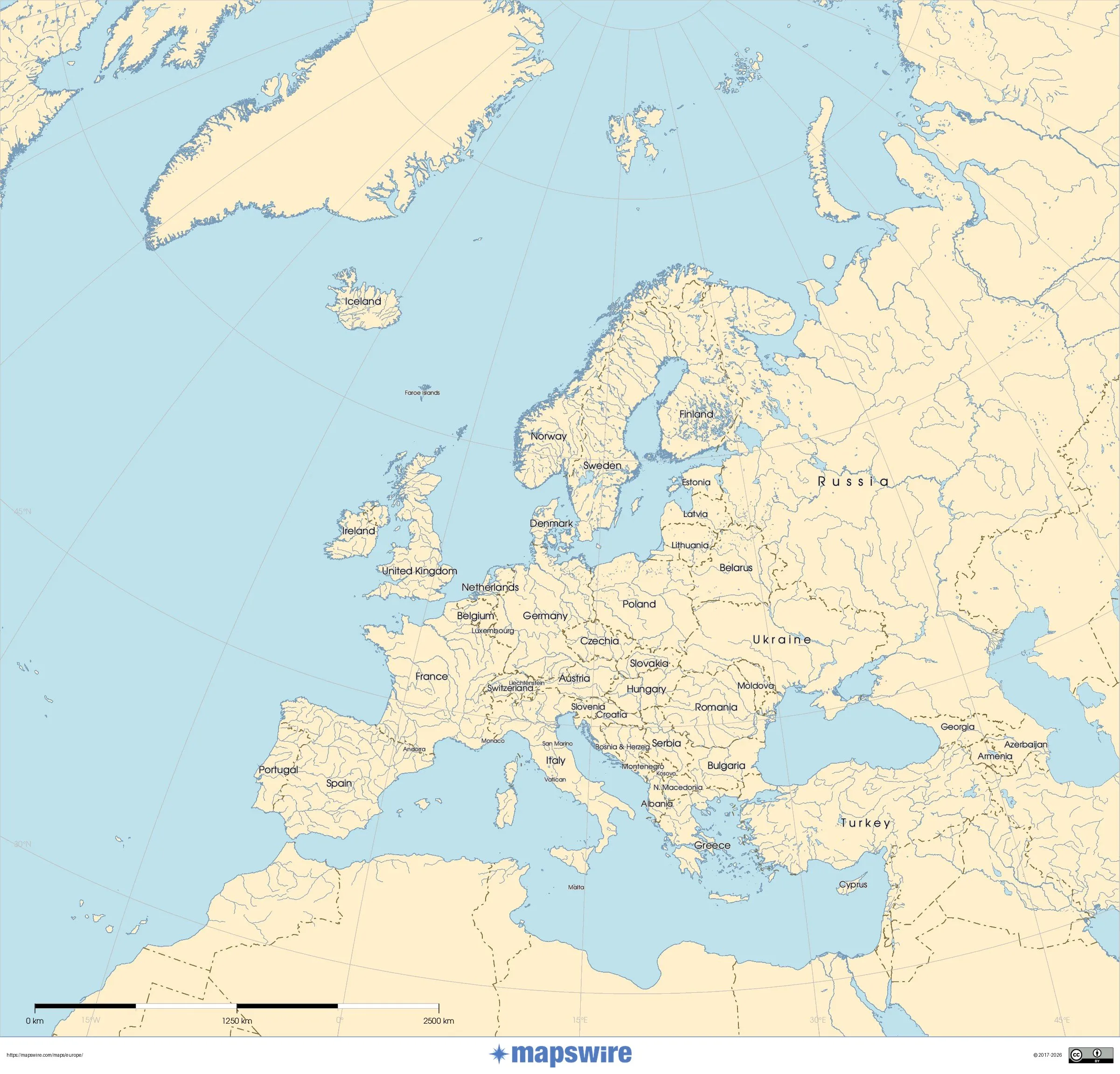
Europe
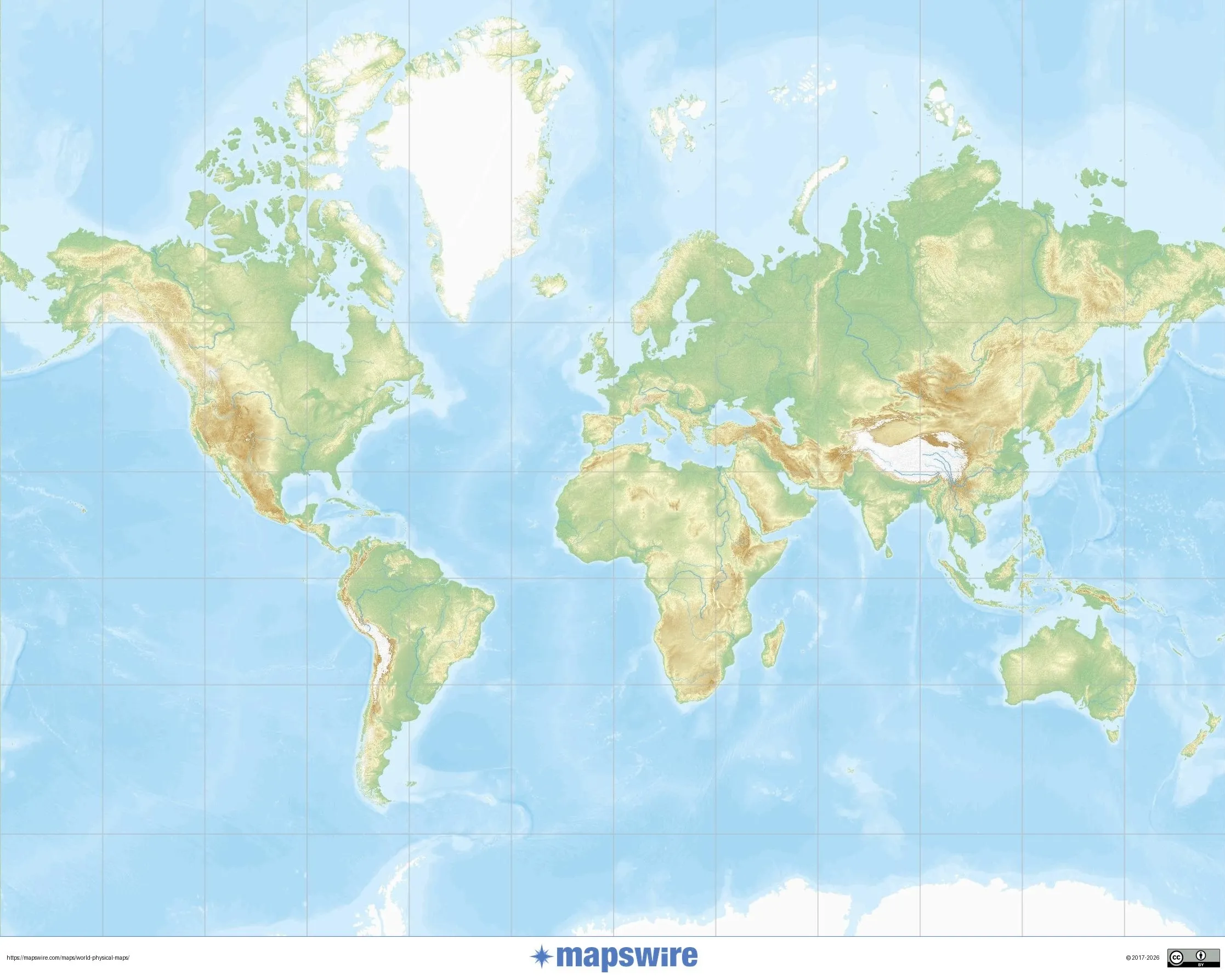
World
Related Links
| Group | List |
|---|---|
| Western Europe | NATO British Conservative Party British Labour Party Culture and Thought Science and Technology |
| Central Europe | The Division of Germany Prague Spring Fall of the Berlin Wall Literature and Thought Arts & Film |
Comments