The Division of Germany in the Cold War
The Division of Germany
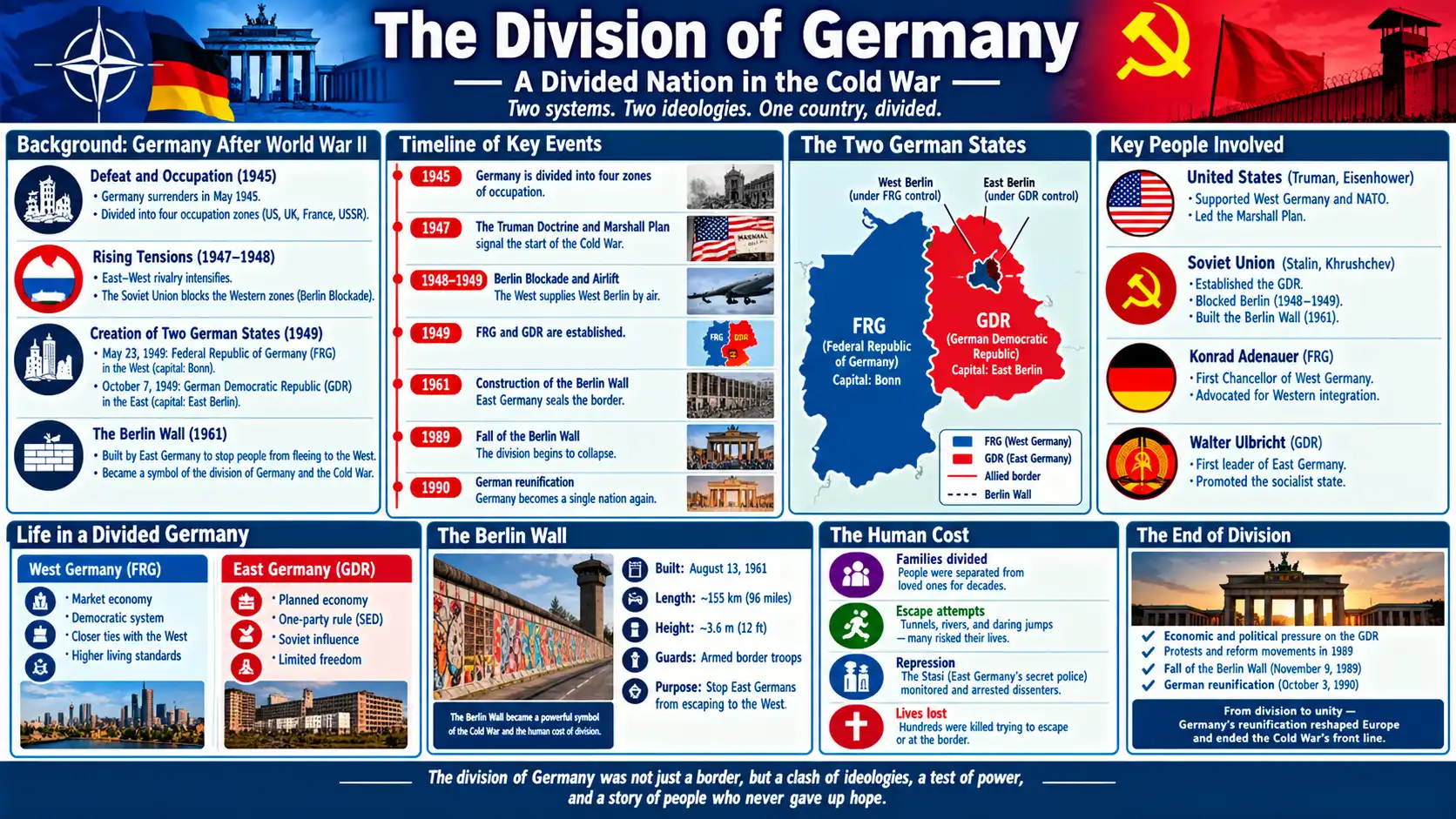
Following World War II, Germany was partitioned into four occupation zones before solidifying into two distinct ideological states: the democratic capitalist West Germany (FRG) and the Soviet-backed socialist East Germany (GDR). Berlin, similarly divided, became the frontline of Cold War confrontation. The erection of the Berlin Wall in 1961 sealed this physical and political rift. For decades, the divided nation symbolized the global struggle between East and West, culminating in the peaceful revolution of 1989 and the historic reunification of Germany in 1990.
People
Birth
Death
Origin
Age (Death)
| 1876 | |
|---|---|
| 1876 | |
| 1893 | |
| 1894 | |
| 1912 | |
| 1913 | |
| 1930 |
Timeline
| Category | |
|---|---|
| Element |
| Year | The Division of Germany |
|---|---|
| 1876 |
Birth of Wilhelm Pieck (Period: January 3, 1876, Location: Gubin, Poland (German name)
Birth of Konrad Adenauer (Period: January 5, 1876, Location: Cologne, North Rhine-Westphalia, Federal Republic of Germany)
|
| 1890 |
Apprenticeship as a cabinetmaker
|
| 1893 |
Birth of Walter Ulbricht (Period: June 30, 1893, Location: Leipzig, Germany)
|
| 1894 |
Birth of Otto Grotewohl (Period: March 11, 1894, Location: Braunschweig, Lower Saxony, Federal Republic of Germany)
|
| 1895 |
Joining the Social Democratic Party
|
| 1898 |
Marriage (Wilhelm Pieck, Christine Häfker)
|
| 1904 |
Marriage (Konrad Adenauer, Emma Weyer)
|
| 1906 |
Beginning of political activities in the Cologne City Council
Full-time SPD activities and approach to the party's left wing
|
| 1912 |
Joining the Social Democratic Party
Joining the Social Democratic Party (SPD)
Birth of Erich Honecker (Period: August 25, 1912, Location: Neunkirchen, Saarland, Federal Republic of Germany)
|
| 1913 |
Birth of Willy Brandt (Period: December 18, 1913, Location: Lübeck, Germany)
|
| 1914 |
Activities of the Spartacist League and formation of the Communist Party of Germany
|
| 1917 |
Participation in the Independent Social Democratic Party and the Spartacist League
Flight to the Netherlands and return to Berlin
Assumption of office as Mayor of Cologne
|
| 1918 |
German Revolution
German Revolution and activities of the workers' and soldiers' councils
Participation in the Independent Social Democratic Party (USPD)
Foundation of the Communist Party of Germany and activities as a leader
Establishment of the Communist Party of Germany (KPD)
|
| 1919 |
Marriage (Otto Grotewohl, Marie Martha Luise Aust)
Marriage (Konrad Adenauer, Auguste “Gussie” Zinsser)
|
| 1920 |
Rise as a leader of the Communist Party of Germany
Marriage (Walter Ulbricht, Marta Schmellinsky)
Assumption of a ministerial post in the Brunswick state government
Participation in the Socialist Youth Movement
|
| 1925 |
Assumption of office as a member of the German parliament
|
| 1929 |
Joining the Communist Party of Germany (KPD)
|
| 1930 |
Birth of Helmut Kohl (Period: April 3, 1930, Location: Ludwigshafen am Rhein, Rhineland-Palatinate, Federal Republic of Germany)
|
| 1931 |
Participation in the Comintern leadership
|
| 1933 |
Political exclusion under the Nazi regime
Communist suppression by the Nazi regime
Exile activities after the establishment of the Nazi regime
Political persecution under the Nazi regime
Resistance activities against the Nazi regime
Establishment of the Nazi regime and exile from Germany
Exile to Norway and political activities
Dismissal of the Mayor of Cologne by the Nazi regime
|
| 1934 |
Night of the Long Knives
|
| 1935 |
Moscow exile and anti-Nazi activities
Arrest and imprisonment by the Nazi regime
|
| 1936 |
The Great Purge of the Stalin era and suppression of German Communist exiles
Underground activities in Berlin
|
| 1938 |
Deprivation of German citizenship
|
| 1939 | |
| 1940 |
Exile to Sweden and journalist activities
Invasion of Norway by the German military
|
| 1941 |
Marriage (Willy Brandt, Anna Carlotta Thorkilsen)
|
| 1943 |
Participation in the National Committee for a Free Germany
Establishment of the National Committee for a Free Germany
|
| 1944 |
Arrests after the July 20 plot to assassinate Hitler
|
| 1945 |
Formation and leadership of the Christian Democratic Union (CDU)
Return to Germany and establishment of the Socialist Unity Party
Merger of the Social Democratic Party (SPD) and the Communist Party (KPD)
Rebuilding of the SPD after World War II
Forced merger of the Social Democratic Party and the Communist Party
Return to West Germany and rebuilding of the SPD
Reappointment and dismissal as Mayor of Cologne after World War II
Return to Germany and rebuilding of the KPD
|
| 1946 |
Founding and leadership of the Free German Youth (FDJ)
Participation in the Central Committee of the Socialist Unity Party (SED)
Joining the Christian Democratic Union (CDU)
Assumption of co-chairmanship of the Socialist Unity Party (SED)
Assumption of co-chairmanship of the Socialist Unity Party
Marriage (Erich Honecker, Charlotte Schueler)
|
| 1947 | |
| 1948 |
Chairmanship of the Parliamentary Council, leading the formulation of the Basic Law
Marriage (Willy Brandt, Rut Hansen)
Berlin Blockade
|
| 1949 |
Marriage (Otto Grotewohl, Johanna Schumann)
Assumption of office as the first Chancellor of West Germany
Founding of East Germany
Establishment of the German Democratic Republic (East Germany) and assumption of the office of first prime minister
Assumption of the office of first president of the German Democratic Republic
|
| 1950 |
Factually retirement from political activities due to deteriorating health
Public activities in later years and deteriorating health
Assumption of the position of SED First Secretary
Signing of the Treaty of Zgorzelec (Görlitz Agreement) with Poland
|
| 1953 |
Marriage (Walter Ulbricht, Lotte Ulbricht)
Workers' uprising of 1953 and stabilization of the regime
East Berlin uprising of 1953
East German popular uprising of June 17, 1953
|
| 1955 |
Training at the Higher Party School of the Communist Party of the Soviet Union
Marriage (Erich Honecker, Edith Baumann)
Marriage (Erich Honecker, Margot Feist)
West Germany's accession to NATO
|
| 1957 |
Support for the Rapacki Plan
Assumption of office as Governing Mayor of West Berlin
|
| 1958 |
Berlin Crisis of 1961
Rise in the Politburo of the SED Central Committee
Signing of the Treaty of Rome and establishment of the European Economic Community
|
| 1960 |
Assumption of the office of Deputy Chairman of the Council of State of East Germany
Marriage (Helmut Kohl, Hannelore Renner)
Death of Wilhelm Pieck
|
| 1961 |
Leading the construction of the Berlin Wall
Construction of the Berlin Wall
|
| 1963 |
Introduction of the New Economic System
Reconciliation with France and the Élysée Treaty
Departure from office as Federal Chancellor
|
| 1964 |
Assumption of the office of leader of the Social Democratic Party (SPD)
Death of Otto Grotewohl
Death of Grotewohl
|
| 1966 |
Assumption of office as Foreign Minister and Vice-Chancellor of West Germany
|
| 1967 |
Death of Konrad Adenauer
|
| 1969 |
Assumption of the office of Minister-President of Rhineland-Palatinate
Assumption of the office of West German Chancellor
|
| 1970 |
Improvement of intra-German relations
Conclusion of the Treaty of Moscow
Genuflection in front of the Warsaw Ghetto Uprising Monument
Conclusion of the Treaty of Warsaw and reconciliation with Poland
|
| 1971 |
Unification of economic and social policies
Resignation from the position of SED First Secretary
|
| 1972 |
Conclusion of the Basic Treaty between East and West Germany
|
| 1973 |
Guillaume spy ring affair
Assumption of the office of CDU leader
Death of Walter Ulbricht
Formal admission of East Germany to the United Nations
|
| 1974 |
Resignation as Chancellor due to the Guillaume affair
|
| 1975 |
Response to the Helsinki Final Act
|
| 1976 |
Assumption of the office of Chairman of the Council of State of East Germany
|
| 1980 |
Brandt Commission report on North-South issues
|
| 1982 |
Foreign policy as West German Chancellor and strengthening of the Western alliance
Assumption of the office of Federal Chancellor through a constructive vote of no confidence
|
| 1983 |
Marriage (Willy Brandt, Brigitte Seebacher)
|
| 1987 |
Official visit to West Germany
|
| 1989 |
East German Peaceful Revolution of 1989
Support for German reunification
Assumption of office as General Secretary of the SED
Resignation and political downfall
Prosecution of East German leaders
Fall of the Berlin Wall
Presentation of the "Ten-Point Plan" for German reunification
|
| 1990 |
Receipt of the Nobel Peace Prize
German reunification
Confirmation of the German-Polish border
|
| 1992 |
Bosnian War
Death of Willy Brandt
|
| 1993 |
Emigration to Chile and death
Signing of the Maastricht Treaty and establishment of the European Union
|
| 1994 |
Death of Erich Honecker
|
| 1998 |
Awarding of the title of Honorary Citizen of Europe
|
| 1999 |
CDU illegal donations scandal
|
| 2000 |
Resignation as Honorary Chairman of the CDU
|
| 2008 |
Marriage (Helmut Kohl, Maike Richter)
|
| 2017 |
Privacy lawsuit surrounding the "Kohl Protocol"
Death of Helmut Kohl
Death and European funeral ceremony
|
Map
| Category | |
|---|---|
| Element |
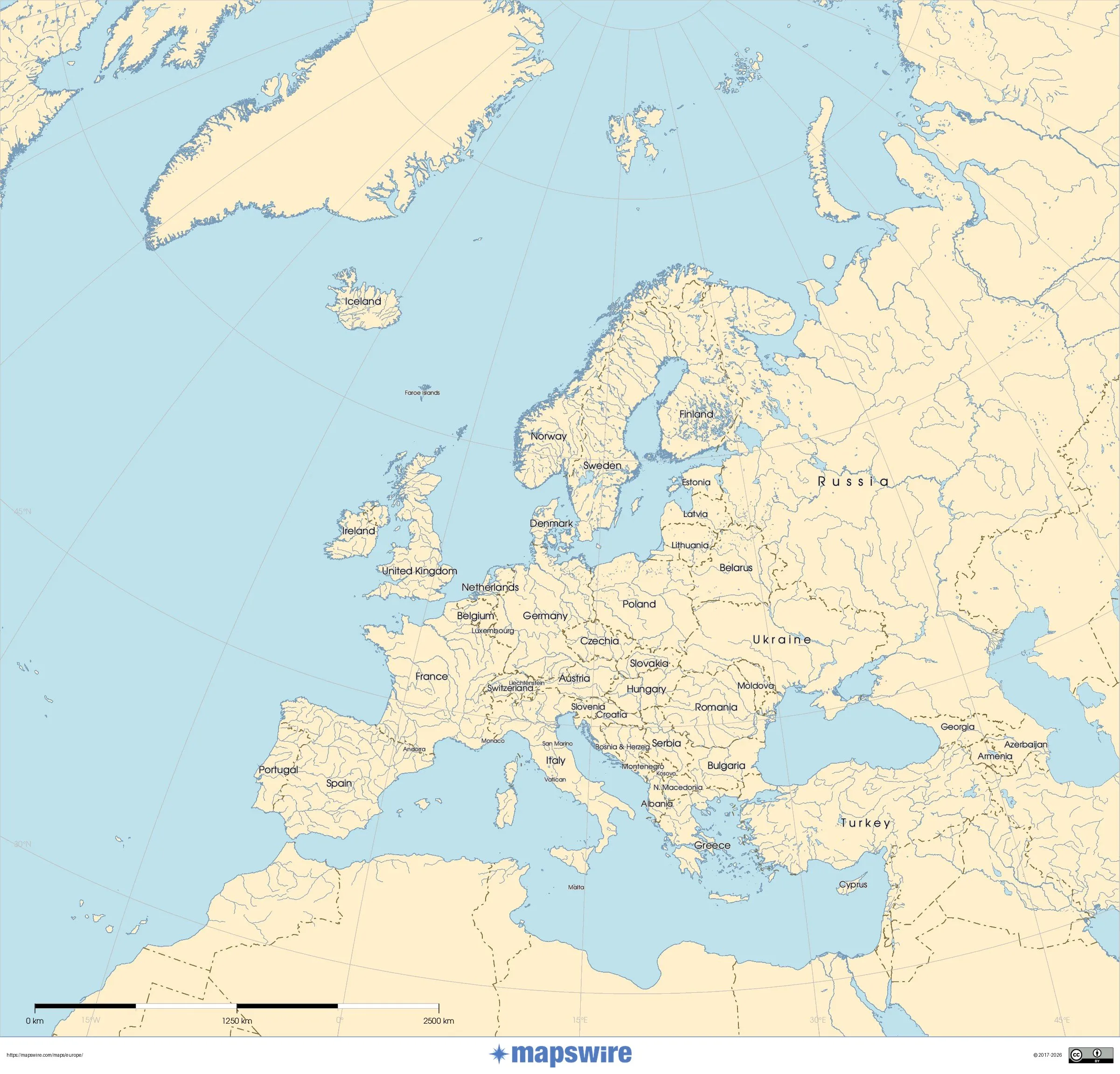
Europe
World
Related Links
| Group | List |
|---|---|
| Western Europe | NATO British Conservative Party British Labour Party Culture and Thought Science and Technology |
| Central Europe | The Division of Germany Prague Spring Fall of the Berlin Wall Literature and Thought Arts & Film |
Comments