The fall of the Berlin Wall: catalyst for European unity
Fall of the Berlin Wall
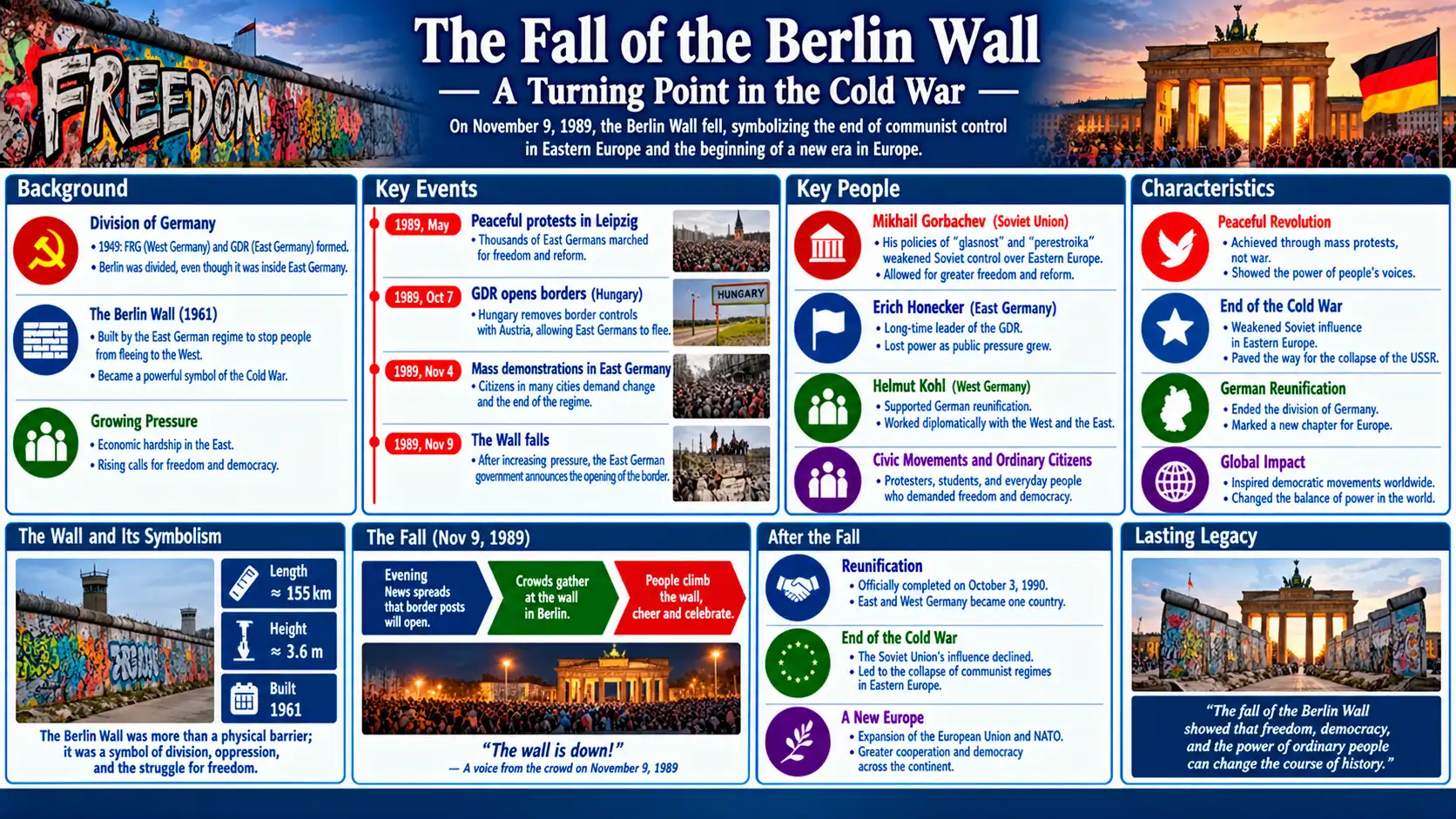
The fall of the Berlin Wall in November 1989 stands as the defining turning point of the Cold War, symbolizing the collapse of the Iron Curtain and the division of Europe. Driven by mass peaceful protests, economic stagnation in the Eastern Bloc, and Soviet leader Mikhail Gorbachev's refusal to use military intervention, the barrier's opening caught the global community by surprise. This monumental event triggered the rapid democratization of Eastern European nations, the reunification of Germany, and the ultimate dissolution of the Soviet Union, marking a historic triumph for human freedom over totalitarian oppression.
People
Birth Death Origin Age (Death)
1912
1913
1929
1930
1931
1937
Timeline
Category
Element
Year
Fall of the Berlin Wall
1912
Birth of Erich Honecker (Period: August 25, 1912, Location: Neunkirchen, Saarland, Federal Republic of Germany)
1913
Birth of Herbert Ernst Karl Frahm (Period: December 18, 1913, Location: Lübeck, German Empire (current city name is also Lübeck, Schleswig-Holstein, Germany))
1920
Start of socialist youth movement and political activities
1929
Joining the Communist Party of Germany (KPD)
Birth of Günter Schabowski (Period: January 4, 1929, Location: Anklam, Germany (Anklam, then part of the Province of Pomerania in the Free State of Prussia; currently the city of Anklam in Mecklenburg-Vorpommern, Germany))
1930
Birth of Helmut Kohl (Period: April 3, 1930, Location: Ludwigshafen am Rhein, Rhineland-Palatinate, Federal Republic of Germany)
1931
Birth of Mikhail Gorbachev (Period: March 2, 1931, Location: Privolnoye, Stavropol Krai, Russian Federation)
1933
Resistance activities against the Nazi regime
Establishment of the Nazi regime and emigration from Germany
Comments