Rise of Marxism in the Era of Revolution
Marxism
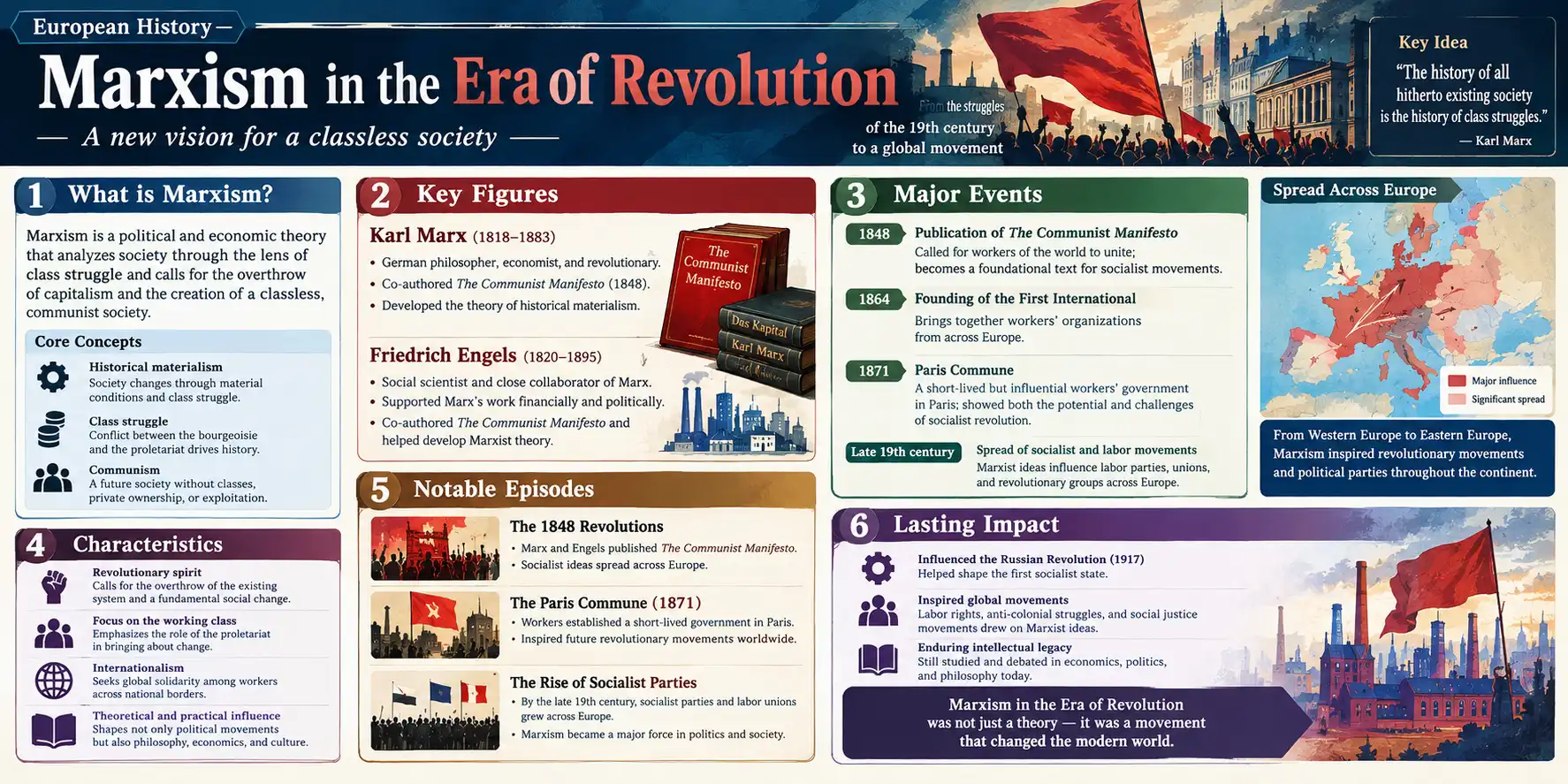
Emerging during nineteenth-century industrialization, Marxism transformed European political thought by analyzing history through the lens of class struggle and material conditions. Formulated as a critique of industrial capitalism, it asserted that economic structures dictate social relations and political power. By advocating for working-class solidarity and the eventual overthrow of bourgeois dominance, Marxism provided a theoretical framework for labor movements across Europe. It laid the foundation for modern socialist parties, trade unionism, and revolutionary movements, profoundly shaping European politics, social reform, and international relations throughout the nineteenth and twentieth centuries.
People
Birth
Death
Origin
Age (Death)
| 1818 | |
|---|---|
| 1820 | |
| 1825 | |
| 1826 | |
| 1840 | |
| 1850 | |
| 1857 |
Timeline
| Category | |
|---|---|
| Element |
| Year | Marxism |
|---|---|
| 1818 |
Birth of Karl Marx (Period: May 5, 1818, Location: Trier, Germany)
|
| 1820 |
Birth of Friedrich Engels (Period: November 28, 1820, Location: Wuppertal, Germany (then Barmen))
|
| 1825 |
Birth of Ferdinand Lassalle (Period: April 11, 1825, Location: Wrocław, Poland (then Breslau, Province of Silesia, Kingdom of Prussia))
|
| 1826 |
Birth of Wilhelm Liebknecht (Period: March 29, 1826, Location: Giessen, Germany)
|
| 1835 |
Studies at the Universities of Bonn and Berlin
|
| 1838 |
Commercial Activities and Ideological Studies in Bremen
|
| 1840 |
Enrolling in and Dropping out of the Leipzig Trade School
Ideological Differences with Marx
Birth of August Bebel (Period: February 22, 1840, Location: Cologne, Germany (then Rhine Province, Kingdom of Prussia))
|
| 1841 |
Obtaining a Doctorate at the University of Jena (Karl Marx)
Military Service in Berlin and Contact with the Young Hegelians
|
| 1842 |
Activities at the *Rheinische Zeitung*
Working-Class Studies in Manchester
University Studies in Philosophy, Philology, and Theology
|
| 1843 |
Relocation to Paris and Beginning of Collaboration with Engels (Karl Marx)
Philosophical Studies at the University of Berlin
Marriage (Karl Marx, Jenny von Westphalen)
|
| 1844 |
Reunion with Marx and Beginning of Joint Research
|
| 1845 |
Communist Movement in Brussels
Publication of *The Condition of the Working Class in England*
Heraclitus Research
|
| 1846 |
Establishment of the Communist Correspondence Committee
Countess Sophie von Hatzfeldt Marriage Case
Hatzfeldt Marriage Case
1846 Giessen University Student Strike
|
| 1847 |
Writing the *Communist Manifesto*
Demonstration Supporting Sylvester Jordan and Flight from Germany
Teacher and Journalist Activities in Zurich
Sonderbund War
|
| 1848 |
Revolutions of 1848
German Revolutions of 1848
Activities at the *Neue Rheinische Zeitung*
Armed Uprisings in the German States during the Revolutions of 1848
Participation in the German Revolutions of 1848
Participation in the Revolutions of 1848
Baden Revolution and Imperial Constitution Campaign
Publication of the *Communist Manifesto*
Editing the *Neue Rheinische Zeitung*
Imprisonment for Treason in Freiburg
|
| 1849 |
Relocation to London and Economics Studies (Karl Marx)
Exile to London (Friedrich Engels)
Marx's Cologne Trial
Closure of the *Neue Rheinische Zeitung* and Marx's Expulsion from Germany
Elberfeld Uprising
Baden-Palatinate Revolutionary War
|
| 1850 |
Business Activities in Manchester and Financial Support for Marx
London Exile and Interaction with Marx and Engels (Wilhelm Liebknecht)
Birth of Eduard Bernstein (Period: January 6, 1850, Location: Berlin, Germany (then Schöneberg, now within Berlin))
Expulsion from Switzerland
|
| 1852 |
Cologne Communist Trial
|
| 1854 |
Apprenticeship as a Woodturner
Marriage (Wilhelm Liebknecht, Ernestine Landolt)
|
| 1857 |
Publication of *The Philosophy of Heraclitus*
Birth of Clara Zetkin (Period: July 5, 1857, Location: Wiederau, Saxony, Germany (now Königshain-Wiederau municipality))
|
| 1859 |
Founding and Editing *Das Volk*
|
| 1860 |
Life as an Artisan in Leipzig
|
| 1861 |
American Civil War
Publication of *The System of Acquired Rights* (Ferdinand Lassalle)
Participation in the Leipzig Workers' Educational Society
Political Activities in the Workers' Educational Society
|
| 1862 |
Prussian Constitutional Conflict
Full Transition to the Labor Movement
Return to Germany (Wilhelm Liebknecht)
|
| 1863 |
Secret Negotiations between Lassalle and Bismarck
Political Activities including *The Workers' Program*
Participation in the General German Workers' Association
Establishment of the General German Workers' Association (ADAV)
Founding of the General German Workers' Association (ADAV)
Establishment of the Federation of German Workers' Associations (VDAV)
|
| 1864 |
Participation in the International Workingmen's Association
Breakdown of Lassalle's Engagement to Helene von Dönniges
Marriage (Ferdinand Lassalle, Helene von Dönniges)
Lassalle's Duel with Racoviță
Injury and Death from Duel
Death of Ferdinand Lassalle
|
| 1865 |
Beginning of Collaboration with August Bebel
|
| 1866 |
Establishment of the Saxon People's Party
Marriage (August Bebel, Johanna Carolina Henrietta Otto)
|
| 1867 |
Publication of *Capital*, Volume I
First Election as Member of the North German Reichstag (August Bebel)
Taking Office as Member of the North German Reichstag (Wilhelm Liebknecht)
|
| 1868 |
Marriage (Wilhelm Liebknecht, Natalie Reh)
|
| 1869 |
Establishment of the Social Democratic Workers' Party of Germany (SDAP)
Establishment of the Social Democratic Workers' Party of Germany
Founding of the Social Democratic Workers' Party of Germany (SDAP)
|
| 1870 |
Re-relocation to London (Friedrich Engels)
Opposition to the Franco-Prussian War
Arrest for Opposing the Franco-Prussian War
|
| 1871 |
Writing *The Civil War in France*
Paris Commune
Leipzig High Treason Trial
|
| 1872 |
Fortress Imprisonment and Prison Studies
Joining the Social Democratic Workers' Party
|
| 1874 |
Activities in the German Reichstag
|
| 1875 |
Writing *Critique of the Gotha Programme*
Participation in the Unification of Socialist Factions in Gotha
Establishment of the Socialist Workers' Party of Germany
Gotha Unification Congress
|
| 1878 |
Publication of *Anti-Dühring*
Enactment of the Anti-Socialist Laws
Party Leadership under the Anti-Socialist Laws
Anti-Socialist Laws
Persecution under the Anti-Socialist Laws
Joining the Socialist Workers' Party
Marriage (Friedrich Engels, Lizzie Burns)
|
| 1879 |
Publication of *Woman and Socialism*
|
| 1880 |
*Socialism: Utopian and Scientific*
Forming Friendship with Friedrich Engels
Wieden Party Congress
|
| 1881 |
Editing *Der Sozialdemokrat*
|
| 1882 |
Exile to Zurich and Paris (Clara Zetkin)
|
| 1883 |
Editing *Capital* after Marx's Death
Death of Karl Marx
|
| 1884 |
Publication of *The Origin of the Family, Private Property and the State*
|
| 1888 |
Expulsion from Zurich
|
| 1889 |
Influence on the Second International
Founding of the Second International
Activities in the Second International
|
| 1890 |
Expiration of the Anti-Socialist Laws and Reorganization into the SPD
Transition of the SPD into a Mass Party
Response to the Revisionism Debate
Bernstein Revisionism Debate
Warnings against Imperialism and World War
|
| 1891 |
Drafting of the Erfurt Program
Appointment as Editor-in-Chief of *Vorwärts* (Wilhelm Liebknecht)
Editing *Die Gleichheit*
|
| 1895 |
Death of Friedrich Engels
|
| 1897 |
Marriage (Eduard Bernstein, Regina Zadek)
|
| 1898 |
Support for Homosexual Emancipation
Revisionism Debate at the Stuttgart Party Congress
|
| 1899 |
Publication of *The Preconditions of Socialism and the Tasks of Social Democracy*
Marriage (Clara Zetkin, Georg Friedrich Zundel)
Critique of Revisionism at the Hanover Party Congress
|
| 1900 |
Military Tensions in Europe Prior to World War I
Death of Wilhelm Liebknecht
|
| 1901 |
Return to Germany (Eduard Bernstein)
|
| 1902 |
Election to the Reichstag (Eduard Bernstein)
|
| 1905 |
SPD Mass Strike Debate over the Russian Revolution
|
| 1910 |
Proposal of the International Socialist Women's Conference and International Women's Day
|
| 1912 |
Emergence of the SPD as the Largest Party
|
| 1913 |
Death of August Bebel
Death and International Funeral
|
| 1914 |
World War I
|
| 1915 |
Organization of the International Socialist Women's Anti-War Conference
Participation in the Zimmerwald Conference
|
| 1916 |
Founding of the Spartacist League
Participation in the Spartacist League
|
| 1917 |
Establishment of the Independent Social Democratic Party
|
| 1918 |
German Revolution
Return to the SPD
|
| 1919 |
Spartacist Uprising
Joining the Communist Party of Germany
|
| 1920 |
Activities in the Comintern
Conversation with Lenin on Women's Issues
|
| 1921 |
Publication of *The German Revolution*
Involvement in the Görlitz Program
|
| 1922 |
Socialist Revolutionary Party Trial
|
| 1928 |
Retirement from the Reichstag and National Assembly (Eduard Bernstein)
|
| 1932 |
Opening Address of the Reichstag (Clara Zetkin)
Death of Eduard Bernstein
Death and Anti-Nazi Memorial Service
|
| 1933 |
Exile to the Soviet Union and Death (Clara Zetkin)
Reichstag Fire Incident and Persecution of the KPD
Death of Clara Zetkin
|
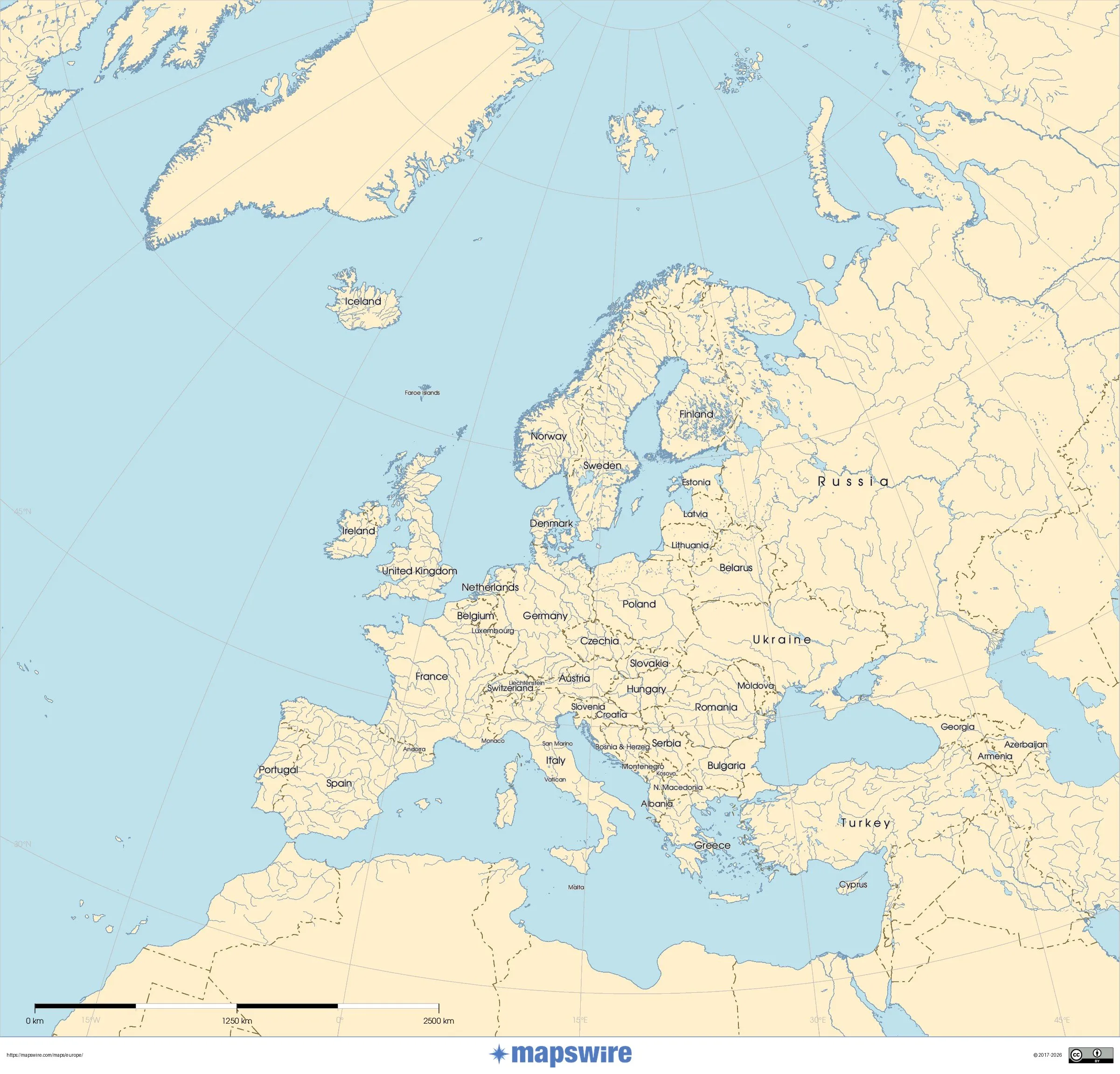
Map
| Category | |
|---|---|
| Element |
Europe
World
Related Links
| Group | List |
|---|---|
| Western Europe | Napoleonic Era Victorian Era Music |
| Central Europe | liberalism German Empire Musical Revolution Marxism |
Comments