Post-war Reconstruction of Japan
Post-war Reconstruction of Japan
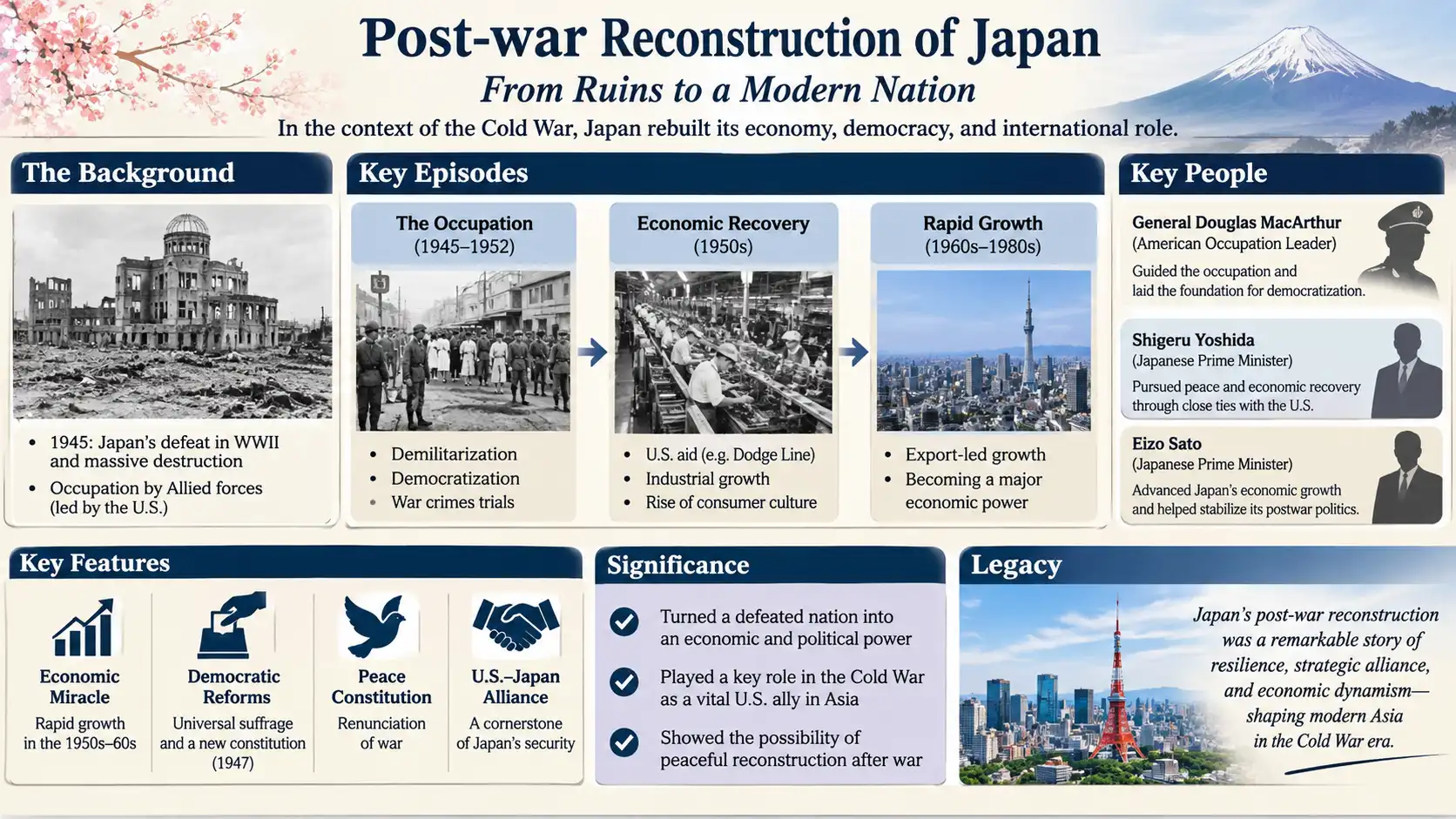
Following World War II, Japan underwent rapid economic recovery and state rebuilding under Allied occupation and subsequent sovereignty. Grounded in democratic reforms, demilitarization, and U.S. security cooperation, the nation prioritized industrial expansion and infrastructure modernization. This foundation enabled Japan to transform from a devastated territory into the world's second-largest economy, establishing a resilient model of peaceful growth and institutional stability that defined East Asian development throughout the Cold War era.
People
Birth
Death
Origin
Age (Death)
| 1878 | |
|---|---|
| 1883 | |
| 1896 | |
| 1899 | |
| 1901 | |
| 1905 | |
| 1907 | |
| 1910 | |
| 1918 | |
| 1918 |
Timeline
| Category | |
|---|---|
| Element |
| Year | Post-war Reconstruction of Japan |
|---|---|
| 1878 |
Birth into the Takeuchi family and adoption into the Yoshida family (Period: Around 1878–1881, Location: Tokyo, Yokohama)
Birth of Shigeru Yoshida (Period: September 22, 1878, Location: Tokyo (present-day Tokyo))
|
| 1883 |
Birth of Ichiro Hatoyama (Period: January 1, 1883, Location: Higashigoken-cho, Ushigome Ward, Tokyo City, Tokyo Prefecture (present-day near Higashigoken-cho, Shinjuku Ward, Tokyo))
Birth into the Hatoyama family and childhood (Period: 1883–1900, Location: Ushigome Ward, Tokyo City, Tokyo Prefecture; within Tokyo Metropolitan Area)
|
| 1890 |
Enrolling in and graduating from Tokyo Imperial University (Shigeru Yoshida)
|
| 1896 |
Birth of Nobusuke Kishi (Period: November 13, 1896, Location: Hachikenya, Yamaguchi City, Yamaguchi Prefecture. Spent early childhood in Tabuse Village, Kumage District, Yamaguchi Prefecture (present-day Tabuse Town).)
Birth and childhood (Period: November 13, 1896–1913, Location: Yamaguchi City, Yamaguchi Prefecture; Tabuse Village, Kumage District, Yamaguchi Prefecture)
|
| 1899 |
Birth of Hayato Ikeda (Period: December 3, 1899, Location: Yoshina Village, Toyota District, Hiroshima Prefecture (present-day Takehara City, Hiroshima Prefecture))
|
| 1901 |
Birth of Eisaku Sato (Period: March 27, 1901, Location: Tabuse Village, Kumage District, Yamaguchi Prefecture (present-day Tabuse Town, Kumage District, Yamaguchi Prefecture))
|
| 1903 |
Enrolling in and graduating from Tokyo Imperial University (Ichiro Hatoyama)
|
| 1904 |
Russo-Japanese War
|
| 1905 |
Birth of Takeo Fukuda (Period: January 14, 1905, Location: Asakado-machi, Takasaki City, Gunma Prefecture (formerly Oaza Asakado, Kaneko Town, Gunma District))
Birth (Period: January 14, 1905, Location: Adachimoto-machi, Oaza, Kaneko-machi, Gunma District, Gunma Prefecture (present-day Ashikado-machi, Takasaki City, Gunma Prefecture))
|
| 1906 |
Joining the Ministry of Foreign Affairs and service in China
|
| 1907 |
Birth of Takeo Miki (Period: March 17, 1907, Location: Gosho Village, Itano District, Tokushima Prefecture (present-day Gosho, Donari Town, Awa City, Tokushima Prefecture))
|
| 1908 |
Appointment as lecturer at Waseda University (Ichiro Hatoyama)
Marriage (Ichiro Hatoyama, Kaoru Hatoyama)
|
| 1909 |
Marriage (Shigeru Yoshida, Yukiko Makino)
|
| 1910 |
Enrollment in the Fifth Higher School
Birth of Masayoshi Ohira (Period: March 12, 1910, Location: Wada Village, Mitoyo District, Kagawa Prefecture (present-day Wada, Toyohama Town, Kanonji City, Kagawa Prefecture))
|
| 1912 |
Election as a member of the Tokyo City Assembly
|
| 1913 |
Enrollment in the First Higher School
|
| 1914 |
World War I
|
| 1915 |
First election to the House of Representatives
|
| 1918 |
Participation in the Paris Peace Conference
Birth of Kakuei Tanaka (Period: May 4, 1918, Location: Futada Village, Kariwa District, Niigata Prefecture (present-day near Futada, Nishiyama Town, Kashiwazaki City, Niigata Prefecture))
Birth of Yasuhiro Nakasone (Period: May 27, 1918, Location: Suehiro-cho, Takasaki City, Gunma Prefecture)
|
| 1919 |
Marriage (Nobusuke Kishi, Ryoko Kishi)
|
| 1920 |
Graduation from the Faculty of Law, Tokyo Imperial University (Nobusuke Kishi)
Entry into the Ministry of Agriculture and Commerce
Enrolling in and graduating from the Faculty of Law, Kyoto Imperial University (Hayato Ikeda)
Enrollment in Takamatsu Higher Commercial School
Student days at Tokushima Prefectural Commercial School and other institutions
Enrollment in Meiji University
|
| 1924 |
Party duties in the Rikken Seiyukai and participation in political party realignment
Graduation from the Faculty of Law, Tokyo Imperial University (Eisaku Sato)
Entry into the Ministry of Railways
|
| 1925 |
Appointment as Consul-General in Mukden (Shigeru Yoshida)
Entry into the Ministry of Finance
|
| 1926 |
Marriage to Hiroko Sato
Marriage (Eisaku Sato, Hiroko Sato)
|
| 1927 |
First marriage
Marriage (Hayato Ikeda, Naoko Hirasawa)
Appointment as Chief Cabinet Secretary in the Giichi Tanaka Cabinet (Ichiro Hatoyama)
|
| 1928 |
Appointment as Vice-Minister for Foreign Affairs (Shigeru Yoshida)
|
| 1929 |
Leave of absence and resignation due to severe skin disease (Hayato Ikeda)
Graduation from the Faculty of Law, Tokyo Imperial University (Takeo Fukuda)
Entry into the Ministry of Finance
|
| 1930 |
Appointment as Ambassador to Italy (Shigeru Yoshida)
Service in London
|
| 1931 |
Manchurian Incident
Appointment as Minister of Education in the Tsuyoshi Inukai Cabinet (Ichiro Hatoyama)
|
| 1932 |
Remarriage to Michie Onuki
Marriage (Hayato Ikeda, Michie Onuki)
Study abroad in the U.S. and overseas inspection
Establishment of Manchukuo and Japanese rule
Minister of Education in the Makoto Saito Cabinet and involvement in the Takigawa Incident
May 15 Incident
|
| 1933 |
Kyoto Imperial University Takigawa Incident
Enrollment in Tokyo University of Commerce
|
| 1934 |
Teijin Incident
Study abroad and research on Western transportation systems
Move to Tokyo and employment in the construction industry
Reinstatement into the Ministry of Finance
|
| 1936 |
Appointment as Ambassador to the United Kingdom (Shigeru Yoshida)
Leadership position in the Seiyukai
Service in the Department of Industry and Department of Business of Manchukuo
|
| 1937 |
Second Sino-Japanese War
Establishment of Kyoei Architecture Office
Service as a Ministry of Finance bureaucrat during wartime
Marriage (Masayoshi Ohira, Shigeko Ohira)
|
| 1938 |
Graduation from Shizuoka High School (Yasuhiro Nakasone)
|
| 1939 |
World War II
Diplomatic policy conflict over the Tripartite Pact
Retirement from the Ministry of Foreign Affairs
Appointment as Vice-Minister of Commerce and Industry (Nobusuke Kishi)
Conscription and military service in Manchuria
Nomonhan Incident
World War II and the Pacific War
|
| 1940 |
Formation of the Dokokai and election victory in the Yokusan Election
Marriage (Takeo Miki, Mutsuko Miki (maiden name))
|
| 1941 |
Peace efforts toward ending the war
Military service as a Navy paymaster officer
Graduation from the Faculty of Law, Tokyo Imperial University (Yasuhiro Nakasone)
Entry into the Home Ministry and enlistment in the Imperial Japanese Navy (Yasuhiro Nakasone)
Appointment as Minister of Commerce and Industry in the Tojo Cabinet (Nobusuke Kishi)
Resumption of Tanaka Architecture Office
Pacific War
|
| 1942 |
Marriage to Hana Sakamoto
Marriage (Kakuei Tanaka, Hana Tanaka (maiden name))
Yokusan Election
Unrecommended election victory in the Yokusan Election
|
| 1943 |
Appointment as Vice-Minister of Munitions and Minister of State (Nobusuke Kishi)
Establishment of Tanaka Civil Engineering and Construction
|
| 1944 |
Marriage (Shigeru Yoshida, Kiyo Sakamoto)
Appointment as Director of the Osaka Railway Bureau (Eisaku Sato)
|
| 1945 |
Defeat in the war and release from Sugamo Prison
Appointment as Director-General of the Tax Bureau, Ministry of Finance (Hayato Ikeda)
Factory relocation construction work in the Korean Peninsula
Marriage (Yasuhiro Nakasone, Tsutako Nakasone (maiden name))
Peace efforts with Fumimaro Konoe and subsequent arrest
Appointments as Minister for Foreign Affairs in the Higashikuni and Shidehara Cabinets (Shigeru Yoshida)
Detention under suspicion of Class-A war crimes
Establishment of the Japan Liberal Party and assumption of the party presidency (Ichiro Hatoyama)
Return to the Home Ministry and engagement in police administration
|
| 1946 |
Public office purge and Ichiro Hatoyama's abandonment of party presidency (Shigeru Yoshida)
Public office purge and preparation for return to politics (Nobusuke Kishi)
Appointment as Director-General of the Railway Board (Eisaku Sato)
Public office purge (Ichiro Hatoyama)
Abandonment of assuming the premiership due to the public office purge (Ichiro Hatoyama)
Participation in the establishment of the Cooperative Democratic Party
Formation of the First Yoshida Cabinet
Promulgation and enforcement of the Constitution of Japan
Retirement from the Home Ministry
|
| 1947 |
Appointment as Vice-Minister of Transportation (Eisaku Sato)
Coal Mine State Control Scandal
Appointment as Director-General of the Budget Bureau, Ministry of Finance (Takeo Fukuda)
Appointment as Administrative Vice-Minister of Finance (Hayato Ikeda)
Establishment of the National Cooperative Party
Appointment as Minister of Communications (Takeo Miki)
|
| 1948 |
Career transition from railway bureaucrat to politics
Appointment as Parliamentary Vice-Minister of Justice (Kakuei Tanaka)
Showa Denko Scandal
Formation of the Second Yoshida Cabinet
|
| 1949 |
Implementation of the Dodge Line
Appointment as secretary to Hayato Ikeda (Masayoshi Ohira)
Formation of Seiunjuku
Appointment as Minister of Finance in the Third Yoshida Cabinet (Hayato Ikeda)
Formation of the Third Yoshida Cabinet and economic stabilization policies
|
| 1950 |
Appointment as Secretary-General of the Liberal Party (Eisaku Sato)
Korean War
Establishment of the National Police Reserve
Retirement from the Ministry of Finance
The "Let the poor eat barley" controversy
|
| 1951 |
Removal of public office purge and return to politics (Ichiro Hatoyama)
Appointment as Minister of Posts and Telecommunications in the Third Yoshida Cabinet (Eisaku Sato)
Participation in the San Francisco Peace Conference
Signing of the San Francisco Peace Treaty and the U.S.-Japan Security Treaty
|
| 1952 |
Interruption of political activities due to cerebral hemorrhage
Appointment as and resignation from Minister of International Trade and Industry (Hayato Ikeda)
Appointment as Minister of Construction in the Fourth Yoshida Cabinet (Eisaku Sato)
First election to the House of Representatives
Formation of the Fourth Yoshida Cabinet
Gaffe regarding small and medium-sized enterprises
|
| 1953 |
Joining the Liberal Party and return as a member of the House of Representatives
Bakayaro Dissolution
Formation of the Fifth Yoshida Cabinet
|
| 1954 |
Shipbuilding scandal and the exercise of prosecutorial directive (Shigeru Yoshida)
Retirement from politics and influence on successor politicians (Shigeru Yoshida)
Political realignment surrounding the conservative merger
Shipbuilding scandal
Appointment as Secretary-General of the Liberal Party (Hayato Ikeda)
Establishment of the Japan Democratic Party
Establishment of the Japan Democratic Party and assumption as Secretary-General (Nobusuke Kishi)
Resignation of the Yoshida Cabinet and moves toward the conservative merger
Formation of the First Ichiro Hatoyama Cabinet
|
| 1955 |
Merger from the Liberal Party into the Liberal Democratic Party
Formation of the Second Ichiro Hatoyama Cabinet
Establishment of the Liberal Democratic Party
Joining the Liberal Democratic Party
Participation in the establishment of the Liberal Democratic Party
Appointment as Minister of Transport (Takeo Miki)
Establishment of the Liberal Democratic Party and assumption as its first president (Ichiro Hatoyama)
Formation of the Third Ichiro Hatoyama Cabinet
|
| 1956 |
Appointment as Secretary-General of the Liberal Democratic Party (Takeo Miki)
Signing of the Soviet–Japanese Joint Declaration and restoration of diplomatic relations
Resignation as prime minister and political activities
Appointment as Minister for Foreign Affairs in the Ishibashi Cabinet (Nobusuke Kishi)
Appointment as Minister of Finance in the Ishibashi Cabinet (Hayato Ikeda)
Japan's admission to the United Nations
|
| 1957 |
Appointment to cabinet positions in the Kishi Cabinet (Hayato Ikeda)
Formation of Kochikai
Appointment as Minister of Posts and Telecommunications in the First Kishi Cabinet (Kakuei Tanaka)
Assumption of office as the 56th Prime Minister (Nobusuke Kishi)
|
| 1958 |
Appointment as Chairman of the Policy Research Council of the LDP (Takeo Fukuda)
Appointment as Minister of Finance in the Kishi Cabinet (Eisaku Sato)
Inauguration of the Second Kishi Cabinet
|
| 1959 |
1960 Anpo Protests
Miike Struggle
Appointment as Secretary-General of the Liberal Democratic Party (Takeo Fukuda)
Death of Ichiro Hatoyama
Passing (Ichiro Hatoyama)
Appointment as Minister of Agriculture and Forestry (Takeo Fukuda)
Appointment as Minister of State, Director-General of the Science and Technology Agency (Yasuhiro Nakasone)
|
| 1960 |
Influence on conservative politics after retirement from the political scene (Nobusuke Kishi)
Subsidience of political confrontation under the Ikeda Cabinet
Signing of the new U.S.-Japan Security Treaty
Ratification and entry into force of the new U.S.-Japan Security Treaty
Appointment as Chief Cabinet Secretary (Masayoshi Ohira)
Stabbing incident of Prime Minister Nobusuke Kishi
Assumption of office as President of the Liberal Democratic Party (Hayato Ikeda)
Mass resignation of the cabinet
Assumption of office as Prime Minister (Hayato Ikeda)
Announcement of the Income Doubling Plan
|
| 1961 |
Appointment as Chairman of the Policy Research Council of the LDP (Kakuei Tanaka)
Appointment as Minister of International Trade and Industry in the Ikeda Cabinet (Eisaku Sato)
Appointment as Minister of State, Director-General of the Science and Technology Agency (Takeo Miki)
|
| 1962 |
Formation of the Fukuda faction
Involvement in negotiations for the normalization of Japan-South Korea diplomatic relations
Appointment as Minister of Finance in the Second Ikeda Cabinet (Kakuei Tanaka)
Appointment as Minister for Foreign Affairs (Masayoshi Ohira)
|
| 1964 |
Inheritance of the Ikeda faction leadership (Masayoshi Ohira)
Resignation as prime minister due to laryngeal cancer
Hosting of the Tokyo Olympics
Resignation as prime minister and nomination of Eisaku Sato as successor (Hayato Ikeda)
Assumption of office as President of the Liberal Democratic Party (Eisaku Sato)
Appointment as Minister of Finance in the Sato Cabinet (Kakuei Tanaka)
Assumption of office as Prime Minister (Eisaku Sato)
|
| 1965 |
Base and nuclear issues surrounding the reversion of Okinawa
Evolution from the Kono faction to the Nakasone faction
Appointment as Secretary-General of the Liberal Democratic Party (Kakuei Tanaka)
Appointment as Minister of Finance (Takeo Fukuda)
Appointment as Minister of International Trade and Industry (Takeo Miki)
Signing of the Treaty on Basic Relations Between Japan and the Republic of Korea
Death of Hayato Ikeda
Passing (Hayato Ikeda)
First visit to Okinawa by a sitting prime minister in the postwar era
|
| 1966 |
Black Mist Scandal
Involvement in the establishment of the Asian Development Bank
Appointment as Minister for Foreign Affairs (Takeo Miki)
|
| 1967 |
Death of Shigeru Yoshida
Passing and state funeral (Shigeru Yoshida)
Appointment as Minister of Transport (Yasuhiro Nakasone)
Declaration of the Three Non-Nuclear Principles
|
| 1968 |
Reversion of the Ogasawara Islands
Appointment as Minister of International Trade and Industry (Masayoshi Ohira)
|
| 1970 |
Vietnam War
Appointment as Director-General of the Defense Agency (Yasuhiro Nakasone)
Signing of the Treaty on the Non-Proliferation of Nuclear Weapons (NPT)
Automatic extension of the U.S.-Japan Security Treaty
|
| 1971 |
Secret agreement issue surrounding the reversion of Okinawa (Nishiyama Incident)
Signing of the Okinawa Reversion Agreement
Nixon Shock
Appointment as Minister of International Trade and Industry in the Third Sato Cabinet (Kakuei Tanaka)
Appointment as Chairman of the General Council of the LDP (Yasuhiro Nakasone)
|
| 1972 |
Land price skyrocketing and rampant inflation associated with the Plan for Remodeling the Japanese Archipelago
The Kaku-Fuku War surrounding the 1972 Liberal Democratic Party presidential election
Realization of the reversion of Okinawa
Announcement of the Plan for Remodeling the Japanese Archipelago
1972 Liberal Democratic Party presidential election
Reappointment as Minister for Foreign Affairs and normalization of Japan-China diplomatic relations
Appointment as Minister of International Trade and Industry (Yasuhiro Nakasone)
Candidacy for the Liberal Democratic Party presidential election
Assumption of office as President of the Liberal Democratic Party (Kakuei Tanaka)
Resignation as Prime Minister
Assumption of office as Prime Minister (Kakuei Tanaka)
Normalization of Diplomatic Relations between Japan and China
Appointment as Deputy Prime Minister and Director-General of the Environment Agency (Takeo Miki)
Inauguration of the Second Tanaka Cabinet
|
| 1973 |
Response to the First Oil Crisis
Reappointment as Minister of Finance
|
| 1974 |
Tanaka money power scandal
Tanaka's money power scandal
Appointment as Minister of Finance (Masayoshi Ohira)
Resignation as prime minister and mass resignation of the cabinet (Kakuei Tanaka)
Appointment as Deputy Prime Minister and Director-General of the Economic Planning Agency (Takeo Fukuda)
Appointment as Secretary-General of the Liberal Democratic Party (Yasuhiro Nakasone)
Assumption of office as the 66th Prime Minister (Takeo Miki)
Receipt of the Nobel Peace Prize (Eisaku Sato)
|
| 1975 |
Efforts to amend the Political Funds Control Act and Public Offices Election Act
Collapse due to stroke
Death of Eisaku Sato
Passing (Eisaku Sato)
|
| 1976 |
"Down with Miki" campaign
Allegations surrounding the Lockheed scandal
Setting of the 1% Defense Spending Cap
Lockheed bribery scandal
Efforts to uncover the truth of the Lockheed scandal
Arrest due to the Lockheed scandal
LDP defeat in the 1976 House of Representatives general election
Assumption of office as the 67th Prime Minister (Takeo Fukuda)
|
| 1977 |
Announcement of the Fukuda Doctrine
Reappointment as Chairman of the General Council of the LDP
|
| 1978 |
Signing of the Treaty of Peace and Friendship between Japan and China
Victory in the Liberal Democratic Party presidential election
Resignation as Prime Minister
Assumption of office as the 68th Prime Minister (Masayoshi Ohira)
|
| 1979 |
40-Day Struggle
Hosting of the Tokyo Summit
LDP defeat in the 1979 House of Representatives general election
Reappointment as the 69th Prime Minister
|
| 1980 |
Retirement from politics (Takeo Miki)
No-confidence motion against the Ohira Cabinet
Passing of the no-confidence motion and dissolution of the House of Representatives
Death of Masayoshi Ohira
Sudden passing during the election campaign
Appointment as Director-General of the Administrative Management Agency (Yasuhiro Nakasone)
|
| 1982 |
Assumption of office as President of the Liberal Democratic Party (Yasuhiro Nakasone)
Assumption of office as the 71st Prime Minister (Yasuhiro Nakasone)
|
| 1983 |
Strengthening of relations with U.S. President Reagan
First-instance guilty verdict in the Lockheed trial
|
| 1985 |
Split of the Tanaka faction and formation of the Takeshita faction
Hospitalization due to cerebral infarction
Privatization of Nippon Telegraph and Telephone Public Corporation
Privatization of Japan Tobacco and Salt Public Corporation
Diplomatic issue surrounding official visits to Yasukuni Shrine
Official visit to Yasukuni Shrine
|
| 1986 |
Passing leadership of the Fukuda faction to a successor (Takeo Fukuda)
Enactment of the Japanese National Railways Reform Acts and division/privatization of JNR
LDP landslide victory in the double elections for both houses
|
| 1987 |
Death of Nobusuke Kishi
Passing (Nobusuke Kishi)
|
| 1988 |
Recruit scandal
Death of Takeo Miki
Passing (Takeo Miki)
|
| 1989 |
Retirement from politics (Kakuei Tanaka)
|
| 1990 |
Retirement from politics (Takeo Fukuda)
|
| 1993 |
Death of Kakuei Tanaka
Passing (Kakuei Tanaka)
|
| 1995 |
Death of Takeo Fukuda
Passing (Takeo Fukuda)
|
| 2003 |
Retirement from politics (Yasuhiro Nakasone)
|
| 2019 |
Death of Yasuhiro Nakasone
Passing (Yasuhiro Nakasone)
|
| Unknown |
Financial advisor to the Wang Jingwei regime (Period: During World War II, Location: Nanjing, China)
Marriage (Takeo Fukuda, Mie Fukuda, Period: Uncertain, Location: Uncertain)
|
Map
| Category | |
|---|---|
| Element |
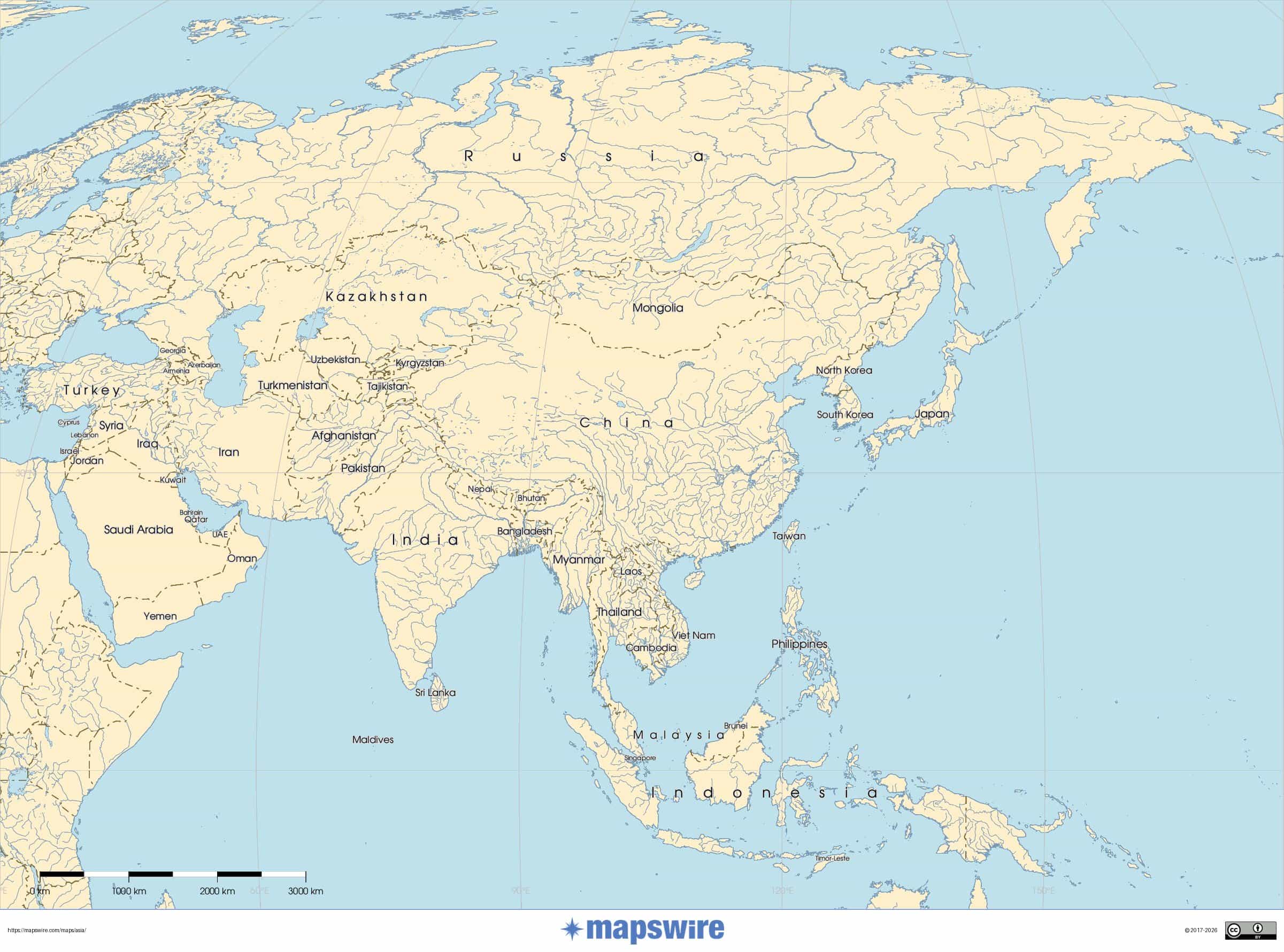
Asia
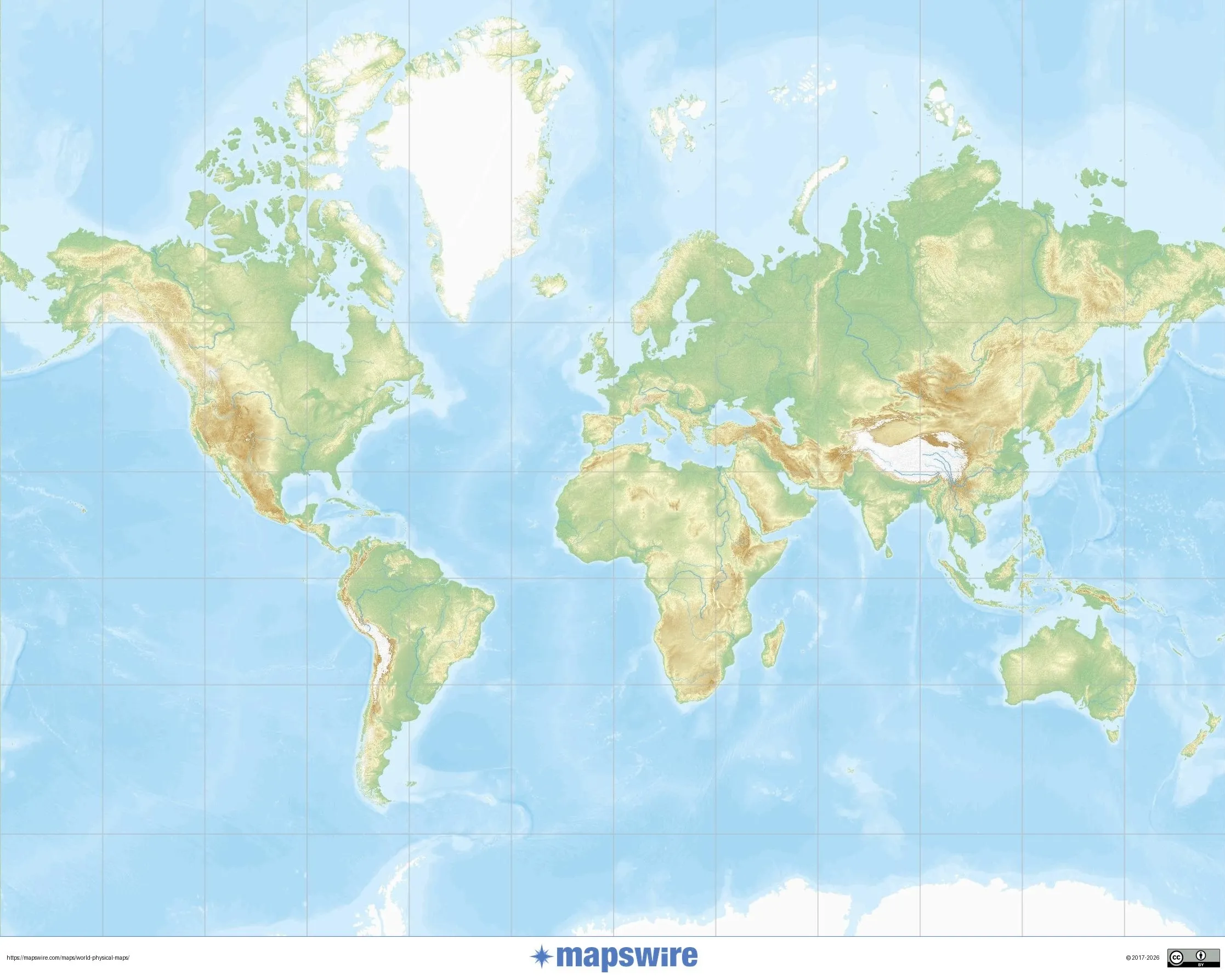
World
Related Links
| Group | List |
|---|---|
| East Asia | Founding of the PRC Nation-building in Taiwan State-building in South Korea Post-war Reconstruction of Japan |
| West Asia | Establishment of Israel Palestinian national movement Iranian Revolution |
Comments